The Lake Dunstan Trail: Cromwell to Clyde by bike
How long is the Lake Dunstan Trail and where does it start?
The Lake Dunstan Trail runs 41 kilometres between Cromwell and Clyde in Central Otago, opened in 2021 with a series of cantilevered walkways built out over the lake itself. It can be ridden in either direction in around 4 to 6 hours at a moderate pace, or split into shorter out-and-back sections using shuttle services based in both Cromwell and Clyde.
An engineered trail, not a wilderness track
The Lake Dunstan Trail is a relatively new addition to Central Otago’s cycling network, and it reads differently from most of the region’s older gravel trails. Rather than following an old rail formation or a farm track, large stretches of it are purpose-built: gravel path where the terrain allows, and steel walkways cantilevered directly off the cliff faces above the lake where it doesn’t.
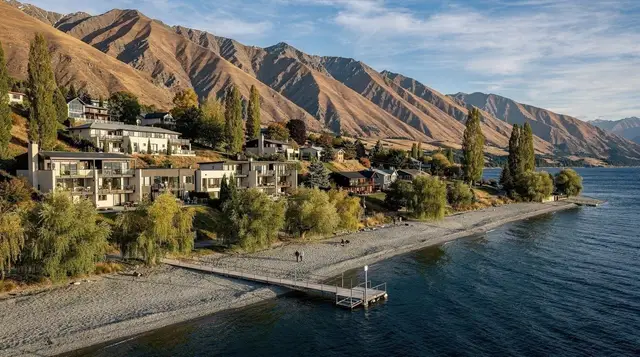
It opened in 2021 after several years of construction, and it links Cromwell to the small town of Clyde along the shore of Lake Dunstan, the reservoir formed when the Clyde Dam was completed in 1992. That history matters on the ride itself: the lake sits in a gorge the old highway used to run through, and the trail spends a lot of its distance suspended above water that didn’t exist before the dam went in.
The result is a ride that’s as much about the engineering as the scenery. It’s graded easy to intermediate, wide enough for two-way traffic along most of its length, and gentle in gradient — this isn’t the Skippers Canyon road or the Crown Range. What it does demand is respect for a trail with almost no shade, no reliable water sources, and a wind pattern that can turn a pleasant afternoon into a slog. More on that below, because it’s the detail most cyclists arrive without.
The route: Cromwell to Clyde, 41 kilometres
The full trail runs 41 kilometres between Cromwell and Clyde, following the shoreline of Lake Dunstan for almost its entire length. Most riders start in Cromwell, where bike hire, cafés and parking are easiest to organise, and finish in the smaller, quieter town of Clyde — itself a historic gold-era settlement of stone buildings that’s worth an hour of wandering once you’re off the bike.
Riding the whole thing one way at a moderate pace takes most people 4 to 6 hours, not counting stops, and there are plenty of reasons to stop: lookout points over the lake, the walkway sections themselves, and a café roughly halfway that’s reachable only by bike or by boat. Riders who don’t want to commit to the full distance can ride out and back from either end, with the halfway café as a natural turnaround point, or arrange a one-way shuttle so the return leg doesn’t eat into the day.
a guided e-bike trip that covers the trail’s cantilevered sections without the return slog is one way to do the full distance without needing to plan your own shuttle logistics, which is worth considering if this is your only day free for it.
The cantilevered sections
The most photographed — and most talked about — parts of the Lake Dunstan Trail are the sections where there simply wasn’t room for a path along the natural shoreline, so the trail was bolted onto the cliff face instead, suspended a short distance above the water on steel cantilevered walkways. These sections are narrower than the open gravel stretches, with a low barrier rather than open exposure, and they’re genuinely impressive engineering rather than a gimmick: they let the trail follow a continuous line through terrain that would otherwise have forced a long inland detour, or made the route impossible altogether.
They’re also where the trail narrows to a pinch point, so courtesy matters — slow down, call out or ring a bell when passing, and expect to give way if you meet a group coming the other way. In wind, these open sections above the water are where you’ll feel it most directly, with nothing to break the gusts on either side.
Which direction to ride, and why wind matters more than distance
Both directions cover the same 41 kilometres and the same modest total climbing, so the practical decision comes down to wind rather than terrain. Central Otago’s dominant wind is a nor’wester that tends to build through the day, and riders who start late from Clyde in the afternoon can find themselves pushing directly into it on the return. The more common approach is to start early from Cromwell — cooler air, calmer wind, and the option to be off the trail again before the afternoon heat and gusts build.
If you’re relying on a shuttle rather than riding both ways, direction matters less, since you can simply choose to ride with the wind at your back regardless of which town you start from. Ask the shuttle operator which direction they’d recommend on the day — locals adjust their advice to the forecast, not to a fixed rule.
The heat, wind and sun exposure — the trap most riders don’t plan for
This is the detail that catches people out. Unlike a forest trail or a river track with tree cover, the Lake Dunstan Trail runs almost entirely in the open: gravel path or steel walkway above bare, dry hillside, with very little shade for most of its length. Central Otago’s summer sun is intense — Queenstown’s region sits under some of the highest UV readings recorded anywhere, and the thinner, drier air here does nothing to soften it. Combine that with a wind that can pick up through the day and a ride that takes several hours, and dehydration or sunburn are the realistic risks, not bungy jumping or river crossings.
Carry more water than feels necessary, not just a single bottle — there’s no reliable refill point beyond the halfway café, and it isn’t guaranteed to be open. Sunscreen reapplied partway through, a hat that fits under a helmet, and a light wind layer are all worth the extra weight. If you’re riding with kids, plan a shorter out-and-back rather than the full 41 km, and treat the halfway café as your turnaround rather than a nice-to-have.
The café you can only reach by bike or by boat
Roughly halfway along the trail sits a small café that has no road access at all — the only ways in are by bike, on foot from the trail, or by boat across the lake. That isolation is part of its appeal, and it’s become a natural rest stop for riders doing the full distance, but it isn’t a guaranteed one. Opening days and hours vary through the year, closures happen without much notice, and there’s no backup café further along if it’s shut. Treat it as a bonus if it’s open, not as your only water plan for the day.
Bikes and rental: standard bike or e-bike
The trail’s gentle gradient means a standard mountain or gravel bike handles it comfortably — this isn’t technical singletrack, and there’s nothing steep enough to demand an e-bike on grade alone. Where an e-bike earns its keep is wind and distance: riding 41 km into a headwind, or doing an out-and-back rather than a one-way shuttle, is a different proposition with assisted pedalling than without it, and it makes the ride realistic for a wider range of fitness levels and family groups.
Rental is easiest arranged in Cromwell, where several operators offer both standard and e-bikes alongside trail advice and, in some cases, luggage transfer if you’re continuing on to Clyde or beyond. a bike rental and shuttle package based in Cromwell covers both ends of that logistics problem in one booking — the bike and the ride back.
Shuttles and one-way logistics
Because Cromwell and Clyde are 41 km apart by trail but a much shorter drive by road, shuttle services built specifically around this route are the standard way to avoid riding the same distance twice. Book a shuttle and you can ride one way, get dropped or picked up at the other end, and treat the whole thing as a point-to-point day rather than an out-and-back. In the December to March peak, shuttle demand — and the number of vehicles with bike racks — is limited, so booking a day or two ahead rather than turning up is the safer approach, particularly on weekends.
If a shuttle doesn’t suit your schedule, the halfway café makes a natural out-and-back turnaround from either Cromwell or Clyde, which halves the distance and removes the logistics question entirely, at the cost of not seeing the whole trail in one trip.
Seeing the lake by water as well as by trail
Lake Dunstan itself is part of the drawcard, not just the thing the trail happens to run beside, and a few operators combine the ride with time on the water — a boat crossing, a stretch on the lake to break up the cycling, or a return leg by water instead of by road. a combined boat and e-bike day that also stops at a Central Otago winery is a way to see the lake from both the trail and the water without adding a second full day to your itinerary.
Wine stops near the trail
The southern end of the Lake Dunstan Trail sits close to Bannockburn, one of Central Otago’s pinot noir sub-regions and a short detour from the Cromwell end of the ride for anyone not racing to finish the full 41 km before dark.
It’s a different vineyard scene from Gibbston Valley further towards Queenstown — flatter, warmer, and closer to the lake — but it runs on the same logic worth repeating here: cellar door tastings and cycling don’t mix well with driving afterwards, so treat a wine stop as the end of your riding day, not the middle of it. If wine is more the point of your day than the trail itself, comparing organised wine tours that include transport is the more sensible option than self-driving.
Extending onto the Otago Central Rail Trail
Clyde isn’t just the trail’s finish line — it’s also where the much longer, well-established Otago Central Rail Trail begins, heading on towards Alexandra and beyond. For strong riders with a full day and no shuttle booked back to Cromwell, continuing onto the rail trail rather than stopping in Clyde is a genuine option, and it turns a single-day ride into the start of a multi-day one if you’re set up for it. a self-guided rail trail package that picks up where the Lake Dunstan Trail leaves off is built around exactly that connection, with accommodation and luggage transfer organised along the way rather than left for you to arrange.
Distance and time, section by section
| Section | Distance | Typical time (moderate pace) |
|---|---|---|
| Full trail, Cromwell to Clyde | 41 km | 4–6 hours |
| Cromwell to the halfway café (out and back) | approx. 40 km round trip | 4–5 hours |
| Halfway café to Clyde (one way) | approx. 20 km | 2–2.5 hours |
| Onward from Clyde to Alexandra (rail trail) | approx. 20 km additional | +2 hours |
Times assume a standard bike at an unhurried pace with a couple of short stops; an e-bike or a fitter group will move faster, and photo stops at the walkway sections add time for almost everyone.
When to ride
The trail is rideable year-round, but conditions swing hard with the season. Summer (December to February) brings the longest daylight and the warmest water views, but also the strongest UV and the biggest wind risk through the afternoon — an early start matters more here than almost anywhere else in the region. Autumn, through April, brings noticeably calmer air and cooler temperatures without giving up much daylight, and it’s arguably the better window for the full 41 km.
Winter riding is possible and often very still, but short daylight hours limit how much of the trail you can comfortably cover, and a frosty start on an exposed walkway is genuinely cold. For a fuller picture of how Central Otago’s seasons differ from Queenstown’s own, see when to visit and the month-by-month weather guide.
Planning the day from Queenstown
Cromwell is about 45 minutes from Queenstown by road via the Kawarau Gorge, which makes the Lake Dunstan Trail a realistic day trip rather than something that requires a base change, though riders doing the full distance with a shuttle will want an early start to avoid rushing the return drive. Buses and shuttles around the southern lakes run to Cromwell, but a rental car gives more flexibility for carrying bikes and gear and for timing the drive around the trail shuttle rather than a fixed bus schedule.
If cycling is the centrepiece of your Central Otago time rather than a single add-on day, it’s worth looking at it alongside Queenstown’s other trail cycling options and the shorter e-bike wine tours around Gibbston, or building a dedicated three-day wine and food itinerary that uses Cromwell as a base for a night rather than a rushed there-and-back. For everything else worth doing around the town itself, Cromwell’s wider activity list covers the fruit-growing side of the district beyond the lake and the bike.
Questions about riding the Lake Dunstan Trail
How long does the Lake Dunstan Trail take to ride?
Riding the full 41 km one way takes most people 4 to 6 hours on a standard bike, less on an e-bike. Many riders treat it as a full day out once photo stops, a café break and a shuttle back are factored in, rather than a fast point-to-point ride.
Which direction should I ride, Cromwell to Clyde or Clyde to Cromwell?
Either direction covers the same distance and the same climbing, so the honest deciding factor is wind. Central Otago’s prevailing wind is a nor’wester, so riding from Clyde towards Cromwell in the afternoon can mean pushing into a headwind; many riders prefer to start early from Cromwell instead.
Is the Lake Dunstan Trail suitable for beginners or kids?
The trail is graded easy to intermediate, wide and well formed with a gentle grade, which suits confident young riders and casual adults. The exposure to sun and wind, not the terrain, is the real limiting factor for kids, so shorter out-and-back sections work better than the full 41 km with younger riders.
Where can I get water and food along the way?
There is one café roughly halfway along the trail that is reachable only by bike or by boat, with no vehicle access and no guarantee it will be open on any given day. Outside that, there is no reliable water or food on the trail itself, so carry more than you think you need.
Do I need an e-bike for the Lake Dunstan Trail?
No, the gradient is gentle enough for a standard bike, but an e-bike takes the edge off a headwind and off the return leg if you ride out and back rather than using a shuttle. Most rental operators in Cromwell offer both options.
Is there a shuttle service, and do I need to book it?
Yes, shuttle operators run between Cromwell and Clyde specifically for trail riders, which lets you ride one way and be driven back rather than doubling the distance. Book ahead in the December to March peak, when demand outstrips the number of vehicles and bike racks available.
Can I connect the Lake Dunstan Trail to the Otago Central Rail Trail?
Yes, Clyde is the shared endpoint: the Lake Dunstan Trail finishes there and the Otago Central Rail Trail begins, so a strong rider can continue on towards Alexandra and beyond on the same day, or treat the two as a multi-day trip.
What should I wear or pack for the ride?
Sunscreen, a hat that works under a helmet, sunglasses, more water than seems necessary, and a light layer for wind, even on a forecast warm day. There is very little shade on most of the route, and Central Otago’s UV runs high through summer.
Guided walks & hikes on GetYourGuide
Verified deep-linked GetYourGuide tours. Book through these links and we earn a small commission at no cost to you.
GetYourGuide does not provide a product photo for this activity — the image shows the meeting point, photographed by us.