Queenstown wine and food in 3 days
The driving question, dealt with first
Central Otago is the world’s most southerly wine region, and almost all of it sits along roads with no footpath, no verge, and traffic doing 80 to 100 km/h. Drink-driving limits in New Zealand are strict and enforced with roadside checkpoints, including around Gibbston Valley and Cromwell on tasting weekends. So this itinerary is built to avoid ever putting a driver who has been tasting behind the wheel.
The fix is different for each day. In Gibbston, the Gibbston River Trail runs beside most of the cellar doors, so you cycle between tastings instead of driving. In Cromwell and Bannockburn, a boat or a tour driver does the driving while you taste. In Arrowtown, the cellar doors and restaurants are close enough to walk or take a short taxi. If you’d rather hire a car and see the region on your own schedule, read driving in New Zealand’s South Island and car rental in Queenstown first, then plan on one non-drinking driver for the group on any day you’re behind the wheel.
Day 1: Gibbston Valley by bike, dinner in Queenstown
Base yourself in Queenstown for the three nights; see where to stay in Queenstown if you haven’t booked yet. Gibbston is a 25-minute drive or a 20-minute cycle from town along the Kawarau Gorge, and this is the one day of the trip where cycling solves the driving problem outright.
Start mid-morning at a Gibbston cellar door — the valley is the highest and coolest sub-region in Central Otago, which is why its pinot noir tends toward higher acidity and more restraint than the fruit-forward styles further down the Cromwell basin. Most cellar doors pour tasting flights of five to six wines for NZ$15–25, usually credited back against a bottle purchase.
a guided tasting flight through several Gibbston cellar doors takes the route-planning off your hands entirely, which matters if this is your first time in the valley and you don’t want to miss the smaller, less signposted producers. Background on the sub-regions and grape mix is in Gibbston Valley wineries and Central Otago pinot noir.
Lunch at a vineyard restaurant rather than in town — several Gibbston cellar doors run their own kitchens, and a two-hour lunch here is part of the point. One winery has cut its cellar into the gorge rock; ask locally which one, as the roster changes.
Cycle back to Queenstown by late afternoon (or arrange a shuttle if legs or weather say otherwise), then spend the evening in town. Fergburger’s queue is real and the burgers are good but not worth an hour’s wait on a food-focused trip — see the Fergburger question before you commit to the line.
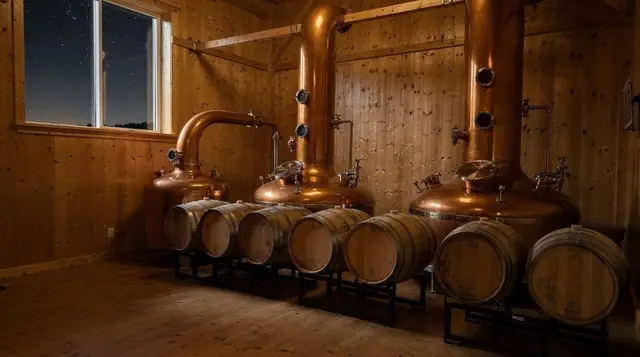
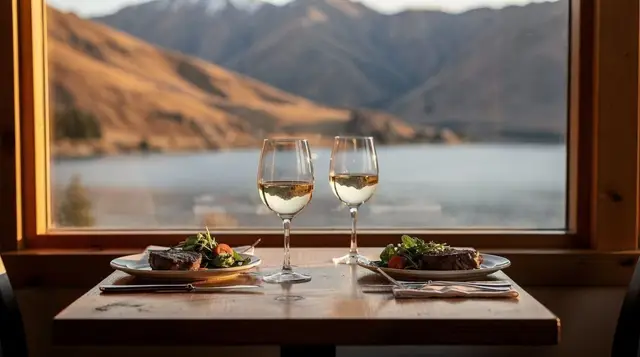
Better bets for a first dinner: the lake-front restaurants for Mackenzie basin salmon or high-country venison and lamb, or a gin flight at one of the town’s distilleries. Full options are in Queenstown restaurants and the food scene and gin, beer and distilleries of the southern lakes. Tipping isn’t expected in New Zealand, so the bill is the bill.
Day 2: Cromwell and Bannockburn, someone else drives
This is the day the “no self-drive” rule matters most. Cromwell sits on Lake Dunstan, about 45 minutes north of Queenstown, with Bannockburn’s vineyards ten minutes further on. It’s a bigger, warmer, more fruit-driven stretch of Central Otago than Gibbston, and the wineries are more spread out — not a practical day to cycle between unless you’re committed to a long ride and light tasting.
a Lake Dunstan cruise that stops at Central Otago wineries for tastings solves the drink-and-drive problem by taking the road out of the equation: the boat does the travelling, you do the tasting. It’s the easiest way to cover Bannockburn’s cellar doors without a driver, and it takes in the lake itself, which sits over the site of the original Cromwell township — flooded in 1992 when the Clyde dam went in, with the current town rebuilt above the waterline.
If you’d rather move under your own power and stay dry-ish, a Lake Dunstan e-bike and boat tour that finishes with a winery lunch covers a stretch of the Lake Dunstan Trail — 41 km end to end, opened in 2021, linking Cromwell to Clyde — with the wine kept to the one stop at the end rather than spread across several cellar doors. See the Lake Dunstan Trail for the full route and e-bike wine tours in Gibbston for the Gibbston equivalent if you’d rather add a second cycling day instead of the boat.
Cromwell itself is worth an hour beyond the wine: it’s Central Otago’s fruit-growing capital, and the old town precinct near the lake has cherries, apricots and stone fruit at roadside stalls in season (December to March). If comparing tour formats across the whole region matters to you, Queenstown wine tours compared lays out cruise-versus-coach-versus-bike options side by side.
Back in Queenstown by early evening — you’ve earned a quiet night. If the distillery didn’t happen on Day 1, this is the slot for it.
Day 3: Arrowtown, cellar doors and the ride home
Arrowtown is 20 km and about 20 minutes from Queenstown, a former gold-rush town from the 1862 Arrow River rush, with Buckingham Street’s heritage buildings now holding a mix of cafes, restaurants and a handful of wine-focused tasting rooms rather than large cellar doors. It’s a gentler final day: walkable, small, and easy on a group that’s had two days of tasting already.
Spend the morning on foot — the Chinese Settlement’s stone huts are the genuine remains of the 1860s Cantonese mining community, not a reconstruction, and the Lakes District Museum gives the gold-rush context in twenty minutes flat. Lunch on Buckingham Street.
For the ride back to Queenstown, a self-guided cycle route from Arrowtown back to Queenstown follows mostly flat trail and quiet lakeside path — a comfortable finish after two days that involved more sitting and tasting than moving. Do this leg before lunch or wine, not after: it’s the one part of the day where “self-guided” should also mean sober. Background on the wider trail network is in Queenstown Trail cycling.
If cycling isn’t for the group, a taxi or shuttle back to Queenstown is the honest alternative — don’t self-drive out of Arrowtown after tasting there, even for a 20-minute run. Close the trip with a last dinner in Queenstown and, if you skipped it earlier, the gin or whisky flight from distilleries of the southern lakes.
What it costs
Central Otago and Queenstown are not a budget wine region, and this itinerary is priced for that reality — treat the figures below as a guide, not a quote.
| Item | Typical range (NZD, per person) |
|---|---|
| Guided Gibbston tasting tour (half-day) | $150–220 |
| Lake Dunstan winery cruise | $180–260 |
| E-bike and boat tour with winery lunch | $220–320 |
| Self-guided Arrowtown–Queenstown cycle hire | $50–90 |
| Vineyard lunch, per person | $40–70 |
| Dinner, mid-range restaurant, per person | $55–90 |
| Cellar door tasting flight | $15–25 |
Three days of food and wine for two people, tours included, comfortably runs $1,200–2,000 — more with premium cruise cabins or a private driver for the day. Why the region carries these prices at all is covered honestly in why Queenstown is so expensive.
When to go
Harvest runs March–April, which is also when Arrowtown’s poplars and larches turn — a genuinely good pairing of late-harvest wine events and fewer crowds than midsummer, though it’s a narrow window of about two weeks and books out early. December–February is warmest and busiest, with the longest cellar-door hours. Winter (June–August) is quiet and some smaller cellar doors reduce their days or close, so check ahead rather than turning up.
Wine and food in Queenstown, answered
Do I need a rental car for this itinerary?
Not necessarily. You can cover all three days with a mix of cycling (Gibbston, and the Arrowtown–Queenstown leg), a Lake Dunstan cruise or driven tour (Cromwell and Bannockburn), and taxis or shuttles in and around Arrowtown. A car is only useful if you want to set your own pace and have a driver in the group willing to skip tastings that day.
Is Gibbston Valley really flat enough to cycle between wineries?
Yes — the Gibbston River Trail follows the Kawarau Gorge on a gentle grade, and most tasting rooms sit close to it. It’s an easy ride even for infrequent cyclists, which is why it’s the recommended way to taste there rather than driving.
What’s the difference between Gibbston and the Cromwell/Bannockburn wines?
Gibbston sits higher and cooler, and its pinot noir tends to be leaner and more acid-driven. Cromwell and Bannockburn are warmer and lower, producing riper, more fruit-forward styles. Tasting both sub-regions on consecutive days is the easiest way to feel the difference for yourself.
Can I do this trip in two days instead of three?
You can compress it, but something gives: either drop Arrowtown and its cycle leg, or combine Gibbston and Cromwell into one long day with a private driver, which cuts into tasting time at both. Three days lets each region get a proper morning or afternoon rather than a rushed hour.
Is Arrowtown’s wine scene worth a full day on its own?
Not really — Arrowtown’s strength is its heritage streetscape and food, with wine tasting as a smaller add-on rather than the main event. Pairing it with the ride back to Queenstown, as this itinerary does, makes better use of the day than treating it as a standalone wine destination.
Do cellar doors in Central Otago charge for tastings?
Most do, typically NZ$15–25 for a flight of five or six wines, often credited against a bottle purchase. A few of the larger operations waive the fee with a booking. It’s worth checking each cellar door’s website before you go, since policies vary and change.
What should I do if it rains for one of the three days?
Cromwell and Bannockburn work fine in light rain if you’re on a cruise or driven tour, since you’re mostly indoors or under cover. The Gibbston cycling day and the Arrowtown ride are the ones to move if heavy rain is forecast — swap in a driven Gibbston tasting tour instead and save the bikes for a clearer day.
Where should I stay for a wine-and-food-focused trip?
Queenstown itself is the practical base — central, with the widest range of restaurants and easy access to tours and transfers for all three days. See where to stay in Queenstown for area-by-area guidance.
Central Otago wine & food tours on GetYourGuide
Verified deep-linked GetYourGuide tours. Book through these links and we earn a small commission at no cost to you.
GetYourGuide does not provide a product photo for this activity — the image shows the meeting point, photographed by us.