Skiing Queenstown: the season guide
When is Queenstown's ski season and which field should I choose?
The season runs roughly June to early October, though exact opening and closing dates depend on snowfall each year. Coronet Peak and The Remarkables suit most visitors and sit closest to town; Cardrona is best for families and beginners; Treble Cone is the steepest and needs experience.
Queenstown sells itself as a summer adrenaline town, but from June to early October it runs a second, quieter business: four ski fields within roughly an hour’s drive, none of them requiring you to own a single piece of gear. This guide is about the practical side — when the season actually delivers snow rather than marketing, which field suits which skier, and why almost nobody who lives here drives to the mountain themselves.
The season, month by month
New Zealand’s ski season is short and weather-dependent, and the calendar dates you’ll see quoted are targets, not guarantees. Coronet Peak usually opens first, sometimes in the second week of June, with The Remarkables close behind. Cardrona and Treble Cone, both accessed from Wanaka, open around the same window. Closing dates cluster in late September to mid-October, again dependent on how the season has gone.
| Month | What to expect |
|---|---|
| Early-mid June | Fields opening, cover often thin and partly machine-made, fewer runs available |
| Late June-July | Season building, natural snowfall events start layering onto snowmaking |
| August | Usually the most reliable month for depth and coverage across all four fields |
| September | Strong skiing continues, days lengthen, spring corn snow on sunny afternoons |
| Late Sept-October | Fields wind down, lower runs close first, base thins on north-facing slopes |
The trap worth stating plainly: snow in early June is often mostly artificial. Coronet Peak and The Remarkables both run substantial snowmaking systems specifically so they can open on their advertised dates regardless of what the sky has done. If a booking site or a tour operator’s early-June photo shows perfect white slopes, that’s often snowmaking doing the work, not a big natural season.
It’s not a problem — the skiing is real and the surface is groomed and skiable — but if you’re picturing deep powder on day one of the season, adjust the expectation. The best natural conditions typically arrive from late July through August, once a few real snowfalls have layered onto the base. Check each field’s snow report (published daily on the operator’s own site) before locking in an early-season booking, and if your dates are flexible, August beats early June for reliability.
Which field, and why
All four fields are genuinely different mountains, not marketing variations on the same slope, and picking the right one matters more than picking the right day.
Coronet Peak, about 25 minutes from central Queenstown, was New Zealand’s first commercial ski field, opening in 1947, and it remains the most convenient for anyone based in town. It runs night skiing on selected evenings — floodlit runs after the day crowd has left, which locals rate as one of the better-value sessions of the season. The terrain suits intermediate skiers best, with a learner area for beginners and enough steeper pitches near the top to hold an experienced skier’s interest for a day or two.
The Remarkables, about 45 minutes out on an unsealed access road, sits in wide alpine bowls with terrain parks for freestyle skiers and boarders. It’s the field to pick if you want more open, varied terrain than Coronet Peak offers, and it tends to be quieter on weekdays.
Cardrona, roughly an hour from Queenstown via the Crown Range or a longer route via Wanaka, is the most family-oriented of the four, with broad, gentle beginner terrain, a genuinely good ski school, and a layout that doesn’t funnel everyone through the same narrow run. If you’re skiing with children or you’re a first-timer who wants room to fall over without an audience, this is the field.
Treble Cone, about 1.5 hours from Queenstown near Wanaka, is the biggest and steepest of the four, with the least beginner terrain and the most demanding advanced skiing in the region. It’s the field experienced skiers ask for by name and the one to avoid on your first day on snow.
| Field | Drive from Queenstown | Best for | Access road |
|---|---|---|---|
| Coronet Peak | ~25 min | Intermediates, night skiing, convenience | Unsealed, switchback |
| The Remarkables | ~45 min | Wide terrain, terrain parks, quieter | Unsealed, switchback |
| Cardrona | ~1 h | Beginners, families, ski school | Sealed via Crown Range summit, chains still required in snow |
| Treble Cone | ~1.5 h | Advanced and expert skiers | Unsealed, steeper |
Lift passes and multi-mountain tickets
Expect roughly NZ$150 to NZ$220 per adult for a single-day lift pass, varying by field and by how far in advance you book — online prices are consistently cheaper than paying at the ticket window on the day. Coronet Peak and The Remarkables are run by the same operator and sell multi-day and multi-mountain passes covering both fields, which is worth pricing out if you’re skiing three days or more; buying single-day tickets each morning is rarely the cheapest route once you’re past two days.
Cardrona and Treble Cone, under different ownership, sell their own multi-day products. If your trip covers both the Queenstown-side fields and the Wanaka-side fields, check whether a combined pass exists for your dates before assuming you need four separate tickets.
Hire gear in town, not at the mountain
The strong local recommendation is to hire skis, boots and outerwear in Queenstown before you go up, not from the counters at the ski field. Queenstown has dozens of ski hire shops competing directly with each other, which keeps prices down and stock wide — you’ll get a proper boot fitting and a choice of ski length that on-mountain hire counters, dealing with a queue of same-day walk-ins, generally can’t match.
Most shops offer overnight or multi-day hire with free delivery to your accommodation, so you can collect gear the evening before and walk straight onto the shuttle in the morning rather than queuing at altitude before your first run. Budget roughly NZ$60 to NZ$100 per day for a full package of skis or board, boots and poles; outerwear (jacket, pants, gloves, goggles) hires separately and adds more if you haven’t brought your own.
Getting there without a car
This is where Queenstown’s ski logistics differ from a lot of northern-hemisphere resort towns: you don’t drive yourself, and you shouldn’t try to. The access roads to Coronet Peak and The Remarkables are unsealed, narrow, and run in tight switchbacks up the mountainside, with chain requirements enforced whenever conditions call for it. Most rental car agreements in the region either exclude these roads outright or void your excess cover if you drive them without chains fitted correctly — read your contract before you assume the car is an option.
Daily shuttles run from central Queenstown to Coronet Peak and The Remarkables, timed around lift opening and closing, and Cardrona and Treble Cone are served by shuttles departing Queenstown and Wanaka on a similar schedule. Book the shuttle alongside your lift pass rather than as an afterthought — seats on the popular early departures fill up in peak weeks. The practical case for the shuttle isn’t just safety on a genuinely difficult road; it also means you’re not managing a car park, chains, and a return drive after a full day on snow.
Lessons for beginners
All four fields run ski schools with beginner packages that typically bundle a lesson, beginner-area lift access, and sometimes gear hire into one price — usually the better-value option for a first-timer rather than booking a pass and a lesson separately. A half-day beginner lesson with lift access generally runs NZ$150 to NZ$250. Cardrona’s beginner terrain and ski school are the most consistently recommended for children and first-time adults alike, thanks to wide, gentle slopes that don’t funnel learners into the path of faster traffic the way a narrower field can. Coronet Peak’s learner area is the better choice if you’d rather stay closer to Queenstown and skip the longer Cardrona transfer.
A day off the piste
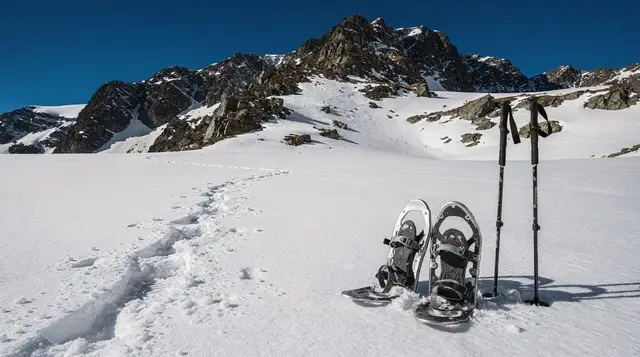
If you’d rather try something other than downhill skiing, or you’re travelling with a group that isn’t all skiing at the same level, a guided snowbike outing with transfer included is a lower-commitment way to spend a day on snow without needing prior ski experience. For a change of scene entirely, the Snow Farm above Cardrona runs cross-country skiing and snowshoeing across open high-country terrain, and a day tour out to the Snow Farm above Lake Wanaka covers transport and access in one booking, which matters given how remote the access road is.
Not everyone in your group needs to be on snow at all. A half-day trip pairing Coronet Peak with an Arrowtown winery stop gives non-skiers a reason to come along, and pairs neatly with a night in Arrowtown itself, whose autumn colours are a different-season draw but whose winter streets are worth a wander regardless.
If you’re building a longer winter trip and want the logistics handled end to end rather than piecing together shuttles and passes yourself, a three-day private winter tour with a driver-guide covers ski-field transfers plus the wider Queenstown winter itinerary without you having to drive any of the access roads yourself.
Packing and conditions
Layer for a mountain that can swing from clear and sharp to a whiteout within a few hours — this is true even mid-season, not just at the shoulders. Sunscreen matters more than most visitors expect: New Zealand’s UV index runs unusually high even in winter sun at altitude, and snow reflection makes it worse. A base layer, mid layer, waterproof outer shell, gloves, and goggles (not just sunglasses, given how quickly wind and snow can pick up) cover most days. Check each field’s snow report the morning of your trip rather than the night before — conditions and open-run counts genuinely shift overnight.
Beyond the season
If your trip falls outside June to October, or you’d rather do something at altitude without skis on your feet, snow activities beyond skiing covers the options, and the ski fields compared guide goes deeper on terrain and lift infrastructure at each of the four fields if you’re still deciding where to spend your day. For the rest of a Queenstown winter itinerary around the skiing, see our guide to Queenstown in winter, and if you’re weighing whether a rental car makes sense anywhere in your trip beyond the ski roads, car rental in Queenstown sets out where it does and doesn’t.
Skiing near Queenstown: your questions answered
When does the Queenstown ski season start and end?
Fields typically open in June and close in early October, but this shifts year to year with snowfall. Early June can be thin and partly machine-made; July through September is the reliable core of the season.
Is the snow in early June real or artificial?
Often mostly artificial. Coronet Peak and The Remarkables run snowmaking to open on schedule, and a light natural season can mean thin, patchy cover into late June. Check each field’s snow report before booking early-season lift passes.
Should I hire ski gear in Queenstown or at the resort?
Hire in town. Queenstown has dozens of hire shops with better prices and wider stock than the on-mountain counters, and most offer free delivery or overnight hire so you carry nothing to the shuttle.
Do I need a car to ski from Queenstown?
No. Coronet Peak, The Remarkables and Cardrona all run daily shuttles from central Queenstown, and access roads are unsealed and chain-restricted, which makes a rental car a liability rather than a convenience for most visitors.
Which ski field is best for beginners?
Cardrona, for its wide, gentle beginner terrain and dedicated learner areas. Coronet Peak also has a solid learner zone and is closer to Queenstown if you’d rather not commit to the longer Cardrona transfer.
How much does a day of skiing near Queenstown cost?
Budget roughly NZ$150 to NZ$220 per adult for a lift pass, and NZ$60 to NZ$100 more for hire gear and a shuttle. A half-day lesson with lift access typically adds another NZ$150 to NZ$250.
Can I ski more than one field on the same trip?
Yes. Multi-day and multi-mountain passes covering Coronet Peak, The Remarkables and sometimes Cardrona are sold by the ski field operators and are worth pricing against single-day tickets if you’re skiing three or more days.
Are the roads to the ski fields difficult to drive?
Yes. The access roads to Coronet Peak and The Remarkables are unsealed, narrow and switchback, with chain requirements enforced in poor conditions. Most rental agreements restrict or exclude cover on these roads, which is the main reason locals recommend the shuttle.
Ski, snow & winter activities on GetYourGuide
Verified deep-linked GetYourGuide tours. Book through these links and we earn a small commission at no cost to you.
GetYourGuide does not provide a product photo for this activity — the image shows the meeting point, photographed by us.