The mountains across the lake
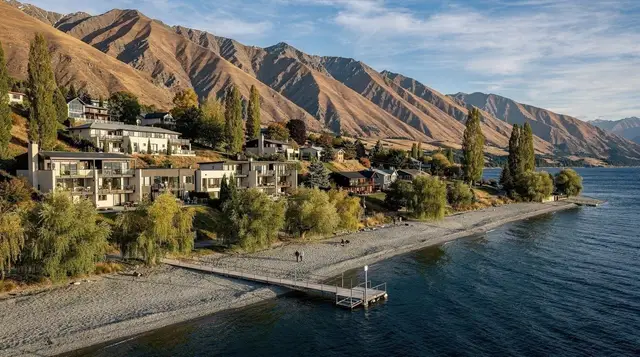
Stand on the Queenstown waterfront and look east across Lake Wakatipu and the jagged wall of rock you’re looking at is the Remarkables. The name isn’t marketing: early surveyors called them remarkable because they run north-south, and only one other range in New Zealand does that. Most of the country’s mountains follow an east-west grain. The Remarkables sit side-on to the prevailing weather instead, which is part of why they catch and hold snow so well, and why the jagged skyline looks so different depending on whether you’re seeing it lit from the west in the afternoon or backlit at sunrise.
The high point is Double Cone, at 2,319 metres, a twin-summited peak that’s a serious alpine climb, not a walk — it’s for experienced mountaineers with the right gear and local knowledge, not something to attempt off the back of a day trip. Most visitors experience the range from much lower down: from the ski field car park at around 1,600 metres, from the Lake Alta walking track above it, or simply from town, where the Remarkables catch the evening light and turn pink or gold most clear evenings, a free show that a lot of people photograph from the Queenstown Gardens or the lakefront without ever driving up.
The range sits directly opposite Coronet Peak, Queenstown’s other ski area, and the two are often bracketed together as “the ski fields,” but they’re different mountains with different roads, different weather exposure and different personalities on snow. Coronet is the older, more sheltered option; the Remarkables field is higher, more exposed to wind, and has the more dramatic terrain for it.
Getting there: the road is the first challenge
This is the detail that catches people out, so it goes near the top rather than buried in a tips section at the end: the Remarkables access road is not like the sealed road up to Coronet Peak. It leaves State Highway 6 near Frankton, close to Queenstown Airport, and climbs roughly 13 kilometres to the ski field car park. The lower section is sealed. The upper section — the steep part, with the switchbacks — is unsealed gravel, narrow in places, with drop-offs and no real shoulder to pass an oncoming car comfortably. It’s a slow road by design: allow 35 to 45 minutes from central Queenstown, more in poor conditions or when ski traffic is heavy in the first hour after the field opens.
In winter, snow and ice on the unsealed sections mean chains are compulsory when instructed, and rental cars need to actually carry a set — checking that the car has chains, and that you know how to fit them, is worth doing before you leave the rental yard rather than at the roadside in the dark. Ski buses and shuttles run daily from Queenstown and take the guesswork out of the drive; for a first visit in winter, especially without New Zealand experience of unsealed alpine roads, the shuttle is the easier choice. If you are driving, treat the last few kilometres as you would any mountain gravel road: low gear, no sudden braking, and give way on the switchbacks rather than assuming the other car will.
None of this makes the Remarkables hard to reach — thousands of people drive up every winter day of the season — but it does mean the road itself needs the same respect as Skippers Canyon or the Crown Range, even if it’s shorter. Rental car contracts that exclude Skippers Canyon and the Macetown ford don’t usually exclude the Remarkables road, but it pays to check your own agreement rather than assume.
Skiing and snowboarding season
The Remarkables ski field runs on roughly the same season as the rest of the region — June to early October, depending on snowfall, with the exact opening and closing dates set each year once the base is reliable. It sits higher than Coronet Peak and catches more natural snow as a result, though early-season conditions anywhere in the region can still mean a thin, partly artificial base in the first weeks of June.
What sets the Remarkables apart on snow is the terrain above the main basin: wide bowls, natural half-pipes and terrain parks that have made it one of the more freestyle-oriented fields in the area, alongside groomed beginner and intermediate runs lower down. It’s a field that works for a family learning to ski and, on the same day, for a snowboarder looking for park features — the two crowds mostly don’t collide because the terrain sorts itself by ability.
| Field | Drive from Queenstown | Character |
|---|---|---|
| Coronet Peak | ~25 minutes, sealed road | Older, sheltered, night skiing |
| The Remarkables | ~35-45 minutes, partly unsealed | Higher, more exposed, bowls and terrain parks |
| Cardrona | ~1 hour | Family-friendly, wide beginner terrain |
| Treble Cone | ~1 hour 30 from Queenstown | Largest, steepest, for confident skiers |
Multi-mountain lift passes covering several of these fields are common; buying a single-day lift ticket at the field or a season pass in advance both work, but it’s worth checking current pricing and conditions on the operator’s own site before you commit to a day, since an exposed field like this one closes lifts for wind more often than a sheltered one does. If skiing isn’t the plan, a broader look at what else the season offers around Queenstown — tobogganing, snow tubing, ice skating — is covered separately in our winter activities guide.
If you’re still deciding between fields, Queenstown ski fields compared lines up the options side by side, and the skiing season guide explains how a typical winter unfolds. Days off the snow are well served by snow activities beyond skiing, which is useful for anyone travelling with a non-skier.
Lake Alta and summer walking
Once the snow clears, usually from around November through to April, the ski field car park becomes the trailhead for the walk up to Lake Alta, a small alpine tarn sitting in a basin below the main ridgeline. It’s a genuinely alpine walk rather than a stroll — figure on around two to three hours return depending on pace and how long you linger at the lake, with a real gain in elevation from the car park and loose rock underfoot in places. The reward is a view that most day visitors to Queenstown never see: the lake sitting flat and often mirror-still against bare rock, with the Wakatipu basin and the town far below on a clear day.
Because you’re starting at around 1,600 metres already, weather up here changes fast and can be markedly colder and windier than in Queenstown itself, even in summer — a warm layer and wind protection are worth carrying even when the forecast in town looks mild. This isn’t a track with facilities at the top: no hut, no café, just rock, tussock and the tarn. It pairs naturally with a broader look at the region’s best day hikes if Lake Alta turns out to be an appetiser rather than the main event.
For those who’d rather see the range from above without the climb, scenic flights over the Wakatipu basin often route past the Remarkables’ ridgeline and glaciers, giving an aerial sense of Double Cone and the bowls that’s simply not available from the ground. A 35-minute helicopter circuit with an alpine landing takes in this kind of high terrain around Queenstown, weather permitting. For more on how these flights work, helicopter tours in Queenstown and the explainer on alpine and glacier landings cover what to expect.
If Lake Alta whets the appetite, best hikes around Queenstown lists longer options, and photography spots around Queenstown suggests where to catch the range at its best from lower down.
Lord of the Rings and the wider film history
The Remarkables’ jagged, uncompromising skyline made them an obvious choice for Peter Jackson’s Lord of the Rings trilogy, and several sequences were filmed on and around the range — most notably scenes set around the Ford of Bruinen were shot in this area, using the mountains’ dramatic backdrop rather than any single accessible landmark.
Unlike some other locations around Queenstown and Glenorchy, the actual filming sites here tend to be in terrain that’s difficult or impossible for casual visitors to reach without a guided trip, so this is one destination where “seeing where it was filmed” mostly means appreciating the range from a distance rather than standing on the exact spot. Fans planning a fuller circuit of the trilogy’s South Island locations are better served starting with a dedicated look at the film locations around Queenstown and Glenorchy, which covers the sites that are actually walkable or driveable.
Nearby: Gibbston, Kawarau and the gorge below
The Remarkables rise directly above the Kawarau Gorge and the Gibbston wine district, so a visit here often gets combined with a trip through Gibbston Valley or along the Kawarau Gorge road, where the historic Kawarau Bridge bungy site sits at the base of the range on the opposite side from the ski field access road. The river itself, running below the gorge, is used for commercial white-water trips; a white-water surfing trip on the Kawarau River is one way to see the gorge from water level rather than the road above it.
Further along toward the head of the lake, the Routeburn Track corridor offers a different kind of alpine terrain again — less exposed rock, more beech forest and river flats — and for a guided adventure day rather than a multi-day tramp, a full-day canyoning trip in the Routeburn Valley makes use of the same broader mountain system. None of these require the Remarkables access road itself, which makes them sensible alternatives on a day when the ski field road is chained-up-only or the wind has closed the lifts.
Practical notes
A day at the Remarkables costs very differently depending on what you’re doing. A winter lift ticket, plus rental gear if you don’t own your own, plus a shuttle or fuel for the drive, typically runs somewhere in the NZ$150-220 range for one adult for the day, more with lessons. A summer visit to walk to Lake Alta costs nothing beyond getting yourself there and back — no entry fee, no facilities to pay for — which makes it one of the better value mountain experiences around Queenstown if you’re already comfortable with the walk’s difficulty and the drive up.
Mobile phone coverage on the upper road and around the ski field is patchy at best; download maps or directions before you leave town rather than relying on a signal partway up the switchbacks. There’s no fuel available at the top, and nothing beyond the ski field’s own facilities in winter — nothing at all in summer once the field closes for the season. If you’re driving yourself in winter, check current road status before setting out; conditions on an exposed, unsealed alpine road change fast, and a field can close lifts for wind even on a clear day in town.
For a broader sense of how a Remarkables day fits into a longer Queenstown itinerary, our three-day adrenaline itinerary and five-day winter itinerary both build in flexibility around days when mountain access might not go to plan — worth checking if you’re trying to fit skiing, Milford Sound and the adventure activities into a single trip without over-planning any one day.
Questions about visiting the Remarkables
Do I need a 4WD to drive up to the Remarkables ski field?
Not in summer or in good winter conditions — a standard car manages the road, including the unsealed switchback section, as long as it’s driven carefully. In snow or ice, chains are what matter more than four-wheel drive; carry a set and know how to fit them if you’re driving up in winter.
How long does the Lake Alta walk take?
Around two to three hours return from the ski field car park, depending on pace and stops. It’s a genuine alpine walk with real elevation gain and loose rock in places, not a flat stroll, so allow more time than the distance alone suggests.
Is the Remarkables ski field better than Coronet Peak?
Neither is objectively better; they suit different days. The Remarkables sits higher, has more exposed terrain parks and bowls, and is more likely to close lifts for wind. Coronet Peak is more sheltered, has a sealed access road, and offers night skiing, which the Remarkables doesn’t.
Can I see Lord of the Rings filming locations at the Remarkables?
You can see the range that appears in the films, including scenes filmed around the Ford of Bruinen sequence, but the specific filming sites in this terrain are generally not accessible to casual visitors. A dedicated Lord of the Rings tour covering Glenorchy and other locations is a better fit if that’s the main goal.
Is there a fee to walk to Lake Alta?
No. The walk from the ski field car park is free; you’re only paying for transport to get there, whether that’s fuel, a shuttle, or a rental car for the day.
What should I pack for a summer visit to Lake Alta?
Warm layers and wind protection even on a warm Queenstown day, since the trailhead sits at around 1,600 metres and weather up there can differ sharply from town. Sturdy footwear for loose rock, water, and sun protection given New Zealand’s high UV levels.
Does the ski bus go all the way to the Remarkables, or do I need my own transport?
Ski buses and shuttles run daily from central Queenstown directly to the Remarkables field during the ski season, which avoids the unsealed road entirely. Outside the ski season, for the Lake Alta walk, you’ll need your own transport or a tour, since public ski shuttles don’t run in summer.