Why this isn’t a half-day trip
Doubtful Sound gets compared to Milford Sound constantly, and the comparison usually undersells how different a day here actually is. Milford has a road running right to the wharf. Doubtful Sound doesn’t - there is no public road into it at all, and there never has been. Getting to the water involves a boat across Lake Manapouri and a bus over a mountain pass, and then you do the whole thing again in reverse to get home.
Treat this as a full day from the moment you book it. If you’re staying in Queenstown, that’s closer to 11 or 12 hours door to door once you count the drive to Manapouri, the crossing, the pass, the cruise, and the return. Basing yourself in Te Anau or Manapouri the night before shortens it considerably, and it’s the better plan if your schedule allows it.
That trade-off is the whole story of Doubtful Sound. It rewards people who give it the time. It punishes anyone trying to squeeze it into an afternoon between other Queenstown activities.
The name, and the geography that makes it different
Captain Cook sailed past the entrance in 1770, decided against sailing in without knowing whether the wind would let him back out, and marked it “Doubtful Harbour” on his chart. Whalers and sealers later opened it up and the name softened to Doubtful Sound. Like Milford, it’s technically a fiord, carved by glaciers rather than a river, but the old whaling-era names stuck across the region and nobody bothered correcting them. The Māori name is Patea.
The scale is the number worth remembering: Doubtful Sound runs roughly three times the length of Milford and covers about ten times the surface area, with three main arms branching off the primary channel instead of one straight run out to the Tasman Sea. It sits inside Fiordland National Park, the largest national park in the country, and the same remoteness that keeps the road out also keeps the crowds down. Where Milford can feel like a procession of boats on a summer morning, Doubtful Sound routinely has long stretches where your boat is the only one moving.
Getting there: the lake, the pass, the fiord
The route has three legs, and all three only run as part of a booked cruise - there’s no way to drive yourself in.
Lake Manapouri crossing. From the small settlement of Manapouri, a passenger boat crosses the lake to West Arm, taking around an hour. Lake Manapouri is New Zealand’s second-deepest lake, ringed by bush-covered peaks, and this crossing alone is worth the trip for people who never make it further into Fiordland.
The Wilmot Pass. At West Arm, everyone transfers to a coach for a roughly 22-kilometre, 45-minute drive over the Wilmot Pass to Deep Cove. It’s one of the most expensive roads per kilometre ever built in New Zealand, constructed purely to service the power station rather than for tourism, and it’s still not connected to any other road in the country - you can only reach it by boat first.
The cruise itself. From Deep Cove, the boat heads out onto Doubtful Sound proper, typically running around three hours for a day cruise, longer if it overnights.
a full-day Doubtful Sound cruise departing Te Anau, covering the lake crossing, the Wilmot Pass and the fiord is the standard way most Queenstown-based travellers do this trip, with transport bundled in rather than driving to Manapouri separately.
The sound of silence
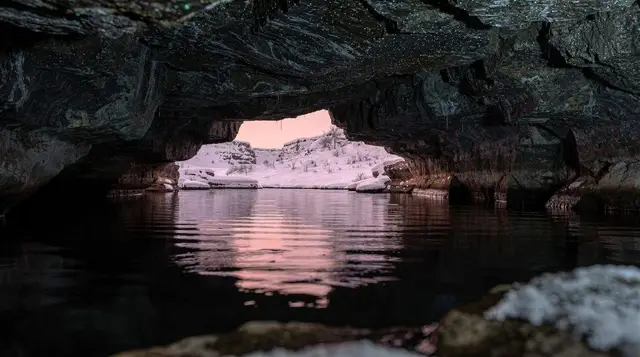
Cruise operators here lean on one moment that’s become the trip’s signature: partway through the cruise, the captain cuts the engines and asks everyone on deck to stay quiet for a minute or two. What’s left is what locals call the “sound of silence” - no engine, no other boats, just water against the hull, birdsong from the bush-covered cliffs, and occasionally nothing at all.
It sounds like a gimmick described on paper. On the water, with cliffs rising 900 metres straight out of water that’s often close to glass-flat in the arms sheltered from the open coast, it tends to land. This is the moment that separates Doubtful Sound from Milford for a lot of travellers - Milford rarely offers that kind of stillness because there are simply more boats sharing the water.
Wildlife: dolphins, fur seals, and the occasional penguin
A resident pod of bottlenose dolphins uses Doubtful Sound, and sightings are common though never guaranteed - no operator can promise wildlife, and be wary of any that do. New Zealand fur seals haul out on rocks near the fiord entrance where it opens to the Tasman Sea, and spotting them is close to a sure thing on most cruises. Fiordland crested penguins (tawaki) nest in the area and are most likely to be seen between roughly July and November, well outside the peak summer season - worth knowing if wildlife is the priority over calm weather. Humpback whales pass through occasionally on migration but sightings are rare enough that nobody should plan around them.
Day cruise or overnight cruise
This is the real decision to make when booking, and it changes the character of the trip more than any other choice.
| Day cruise | Overnight cruise | |
|---|---|---|
| Duration on the water | About 3 hours | Departs afternoon, returns late morning next day |
| Typical cost per person | NZD 250-320 | NZD 450-800, depending on cabin |
| Sleeps on board | No | Yes, in a cabin or shared berth |
| Kayaking or tender rides | Rarely included | Usually included at dusk and dawn |
| Best for | A first look, tighter schedules | Wildlife, stillness, no rush |
the coach-and-cruise combination from Te Anau covers the day-trip version of this route end to end. For travellers who can spare the extra time, an overnight cruise departing from Manapouri anchors in one of the side arms for the night with the engines off, and mornings on deck tend to bring more wildlife activity than any point in the day-trip window.
If overnighting appeals, our Doubtful Sound overnight cruise guide breaks down cabin types and what to pack for a night on the water, and the overnight itinerary lays out how to fit it around Te Anau and Manapouri.
West Arm and the power station
The reason the Wilmot Pass exists at all is the Manapouri hydroelectric power station, built underground into solid rock at West Arm in the 1960s and 70s to supply the aluminium smelter at Tiwai Point near Invercargill - one of the largest engineering projects New Zealand has undertaken. Some cruises include a stop at West Arm to view the turbine hall, an odd and genuinely interesting contrast to the rest of the day: a vast machine hall carved into a mountain, sitting inside a national park otherwise defined by silence and untouched bush. If seeing the power station matters to you, confirm it’s included before booking, since not every operator’s itinerary stops there.
Doubtful Sound versus Milford Sound
Both are worth doing if time and budget allow, but most people are choosing one. Our full Milford versus Doubtful Sound comparison goes deeper, but the short version:
| Doubtful Sound | Milford Sound | |
|---|---|---|
| Road access | None - boat plus coach only | Yes, via the Milford Road |
| Time from Queenstown | Full day (11-12 h) | Full day (12-13 h) or overnight in Te Anau |
| Waterfalls in dry weather | Fewer | Fewer without recent rain, either fiord |
| Crowds on the water | Low | High in summer |
| Cost | Higher | Lower |
| Wildlife | Dolphins, fur seals, penguins | Fur seals, occasional dolphins |
If Milford’s waterfalls are the priority, especially after rain, our guide to driving to Milford Sound and the roundup of Milford Sound cruises compared cover that route. If solitude matters more than ticking off the country’s most photographed fiord, Doubtful Sound is the better use of the day.
Practicalities: weather, packing, and cost
Fiordland’s weather doesn’t care which fiord you’ve booked. Rain is common year-round and it doesn’t cancel cruises - waterproof jackets, not umbrellas, are standard kit here, and layers matter more than any single warm item since West Arm and Deep Cove sit in different microclimates from Manapouri township. Sandflies are present at Manapouri, West Arm and Deep Cove; bring repellent and expect them to find any exposed skin during boarding and disembarking.
Cruises run year-round, but November to March offers the calmest water in the outer sound and the longest daylight for the drive home. Winter cruises still operate and can be strikingly still on a clear day, though the coach over the Wilmot Pass is more weather-dependent then.
Basing yourself overnight in Te Anau rather than Queenstown removes several hours from the day and is worth the trade-off for most travellers - the drive from Queenstown to Te Anau alone is around two hours each way. While you’re in Te Anau, the glowworm caves are a low-effort evening activity that pairs naturally with an early Doubtful Sound departure the next morning, and for a stretch-the-legs option before or after the cruise, a jet boat and bike ride tour on the Upper Waiau River fills a spare afternoon around Te Anau without eating into cruise time.
If you’re weighing this trip against the standard Milford day trip while deciding what to book, our Milford Sound day trip guide and the Queenstown to Milford in two days itinerary are useful side-by-sides, and the broader Milford and Fiordland category page lists every operator running trips into this part of the park.
Rain is genuinely part of the experience here, not a reason to cancel - our Milford Sound in the rain piece applies just as well to Doubtful, since both fiords look their most dramatic, not their worst, with water coming off every cliff face.
Doubtful Sound questions before you book
Is Doubtful Sound a day trip from Queenstown?
Yes, but it takes the whole day - roughly 11 to 12 hours door to door. You drive or are driven to Manapouri, cross the lake by boat, cross the Wilmot Pass by coach, then cruise the fiord before reversing the whole route. There is no shortcut and no road.
Can you drive to Doubtful Sound?
No. There is no public road to Doubtful Sound. The only way in is the Lake Manapouri crossing followed by the coach over the Wilmot Pass, both run as part of a booked cruise.
Is Doubtful Sound better than Milford Sound?
Different, not simply better. Doubtful Sound is quieter, with far fewer boats and a genuine sense of isolation, but it costs more, takes longer, and has fewer waterfalls than Milford in dry weather.
How long is the Doubtful Sound cruise?
The cruise itself on the fiord runs about 3 hours on a day trip. Including the lake crossing and both coach transfers, the whole excursion from Manapouri is around 7 hours, and closer to 11 to 12 hours from Queenstown.
Do you see dolphins at Doubtful Sound?
Bottlenose dolphins are seen often, though not on every cruise. Fur seals at the fiord entrance are close to a sure thing, and Fiordland crested penguins turn up between roughly July and November.
Is an overnight cruise on Doubtful Sound worth it?
If the budget allows it, yes. An overnight cruise adds a night at anchor in a side arm, kayaking or tender rides at dusk and dawn, and a genuinely quiet night with the engines off - something the day cruise cannot offer.
What is the West Arm power station?
It’s an underground hydroelectric station built into solid rock beside Lake Manapouri, generating power mainly for the Tiwai Point aluminium smelter near Invercargill. Some Doubtful Sound cruises include a stop to view the turbine hall.
Why is it called Doubtful Sound?
Captain James Cook charted the entrance in 1770 but didn’t sail in, unsure whether he could sail back out again against the wind - he marked it “Doubtful Harbour” on his chart. The Māori name is Patea.