The last stop before the Fiordland wilderness
Te Anau is a small town — around 2,000 people — strung along the eastern shore of the largest lake in the South Island, and it exists almost entirely to serve the Fiordland National Park at its back door. Everything past here gets wilder: one road out, no more fuel, no more reliable phone signal.
Most visitors treat Te Anau as a name on a signpost between Queenstown and Milford Sound. That undersells it. It’s the closest real town to Milford Sound, the start of three major tracks, and the only sensible base for Doubtful Sound. None of that is exciting to look at from the car park, which is probably why it gets skipped.
Why the four hours matter
This is the practical case for the page, so the numbers first. Milford Sound is 288 km from Queenstown by the only road that goes there, State Highway 94 — call it four hours each way, more with photo stops, less if you don’t stop at all (you should stop). From Te Anau, the same road is 119 km, about two hours. Do that arithmetic across a full day and it isn’t a rounding error:
| Starting point | One-way distance | Drive time each way | Typical door-to-door day |
|---|---|---|---|
| Queenstown | 288 km | ~4 hours | 12–13 hours |
| Te Anau | 119 km | ~2 hours | 7–9 hours |
A coach tour from Queenstown that includes the Milford Sound cruise routinely runs the 13-hour day nobody warns you about — up before dawn, back after dark, cruise time squeezed to whatever’s left once the bus has done its job. The same cruise from Te Anau leaves room for the drive itself, which is most of the point: Mirror Lakes, Knobs Flat, Monkey Creek, the Hollyford valley turnoff, the Homer Tunnel. None of that is worth doing at speed. If Milford Sound is the main reason for your trip, sleeping in Te Anau the night before is the single change that does the most for the day. See driving to Milford Sound for the stop-by-stop version.
The town and the lake
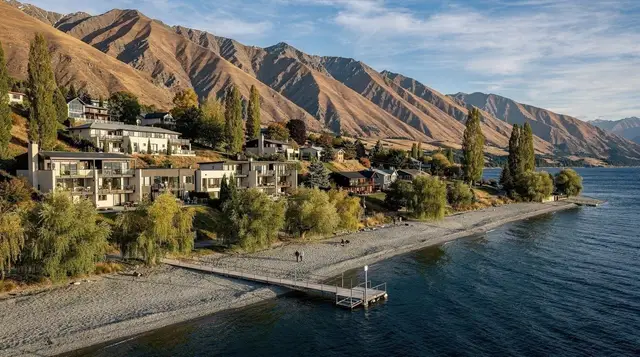
Lake Te Anau is the largest lake in the South Island and second-largest in the country, and the town sits low against its eastern arm with the Kepler and Murchison Mountains rising straight out of the water on the far side. The lakefront is compact — a walk, a jetty, a handful of cafés and outdoor shops, one supermarket, several tour operator offices clustered within a few minutes of each other. There isn’t a Queenstown-style main street of bars and adventure-sport queues here; the pace is closer to a service town for the national park than a destination in its own right, and most people who like it like it for exactly that reason.
Te Anau Glowworm Caves
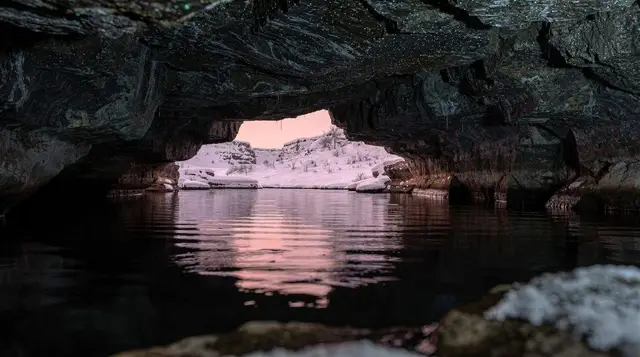
The caves are on the lake’s western shore, reachable only by boat, and they’re the one attraction in town that doesn’t require driving anywhere near Milford. A short cruise across the lake is followed by a walk into a limestone cave system carved by an underground river, then a silent boat ride through a chamber lit by thousands of glow-worms — Arachnocampa luminosa, a fungus gnat larva, not a worm, and photography isn’t permitted once the lights go out. The caves themselves are geologically young and still forming; parts of the walking track duck under low ceilings and past an underground waterfall.
a Te Anau glowworm caves tour runs several times daily and takes a little over two hours door to door, which makes it an easy evening addition to a Te Anau overnight rather than something that needs its own day. Don’t confuse this with Waitomo — that’s a North Island cave system, over 1,700 km away, and not something you can pair with a South Island trip.
A sample evening and morning in town
The easiest way to understand Te Anau is to spend an evening in it. Arrive in the afternoon, drop your bags, and walk the lakefront while the light changes on the mountains across the water. If you have booked the caves, the Te Anau glowworm caves guide explains what the boat, the walk and the dark chamber are actually like, so nothing about the evening comes as a surprise. Dinner is a short stroll from wherever you are staying, and nobody needs a car to get to it.
The next morning is the payoff. You are already on the right side of the mountains, so there is no pre-dawn departure from a hotel in another town. Pack lunch, check the road and weather information at the visitor centre, and head up the valley while the buses from Queenstown are still on the road. If you are weighing the two approaches, the Milford Sound day trip from Queenstown describes what that longer day involves, and the contrast makes the case for a night here better than any argument could.
Weather, sandflies and what to pack
Fiordland makes its own weather, and Te Anau is the last place where you can see it coming. A clear morning on the lake can turn wet by the afternoon, and the reverse is just as likely. Treat rain as part of the plan rather than a failure of it: Milford Sound in the rain is a fair account of why a grey day on the fiord is not a wasted one. Bring a proper waterproof layer, warm clothes even in summer, and shoes that cope with wet boardwalks.
Sandflies are the other constant of the region, especially near water and in still air. Repellent costs little and saves a lot of irritation, and sandflies: a survival guide covers what actually works. For the broader question of timing, the best time to visit Queenstown and the month-by-month weather guide give the seasonal picture for the whole region, which Te Anau shares in most respects.
Trailhead for the Great Walks
Te Anau is the starting point — or the last supply stop — for three of the region’s best-known multi-day tracks, and this is the other reason to base here rather than pass through.
- Kepler Track — 60 km, usually walked in 3 to 4 days, and unusual among the Great Walks for starting and finishing at the same point, a short drive or water taxi from Te Anau itself. Alpine ridgeline, forest, and Lake Manapouri views.
- Milford Track — 53.5 km over 4 days, walked in one direction only, finishing at Milford Sound. It doesn’t start in Te Anau but the town is where most trampers stage, buy last supplies, and catch the boat or bus to the trailhead.
- Hollyford Track — a longer, less-booked route down the Hollyford Valley toward the West Coast, with a road-end trailhead reached from the Milford Road rather than from town, but Te Anau is still where most people organise transport for it.
DOC opens Great Walks hut and campsite bookings for the following summer season in May, and the good dates — anything in December or January especially — go within hours. If you’re building a trip around the Kepler Track or want the wider picture of what’s on offer near Queenstown, the Great Walks near Queenstown guide compares them side by side, and shorter day walks in Fiordland cover options for anyone not committing to multiple nights.
The Department of Conservation visitor centre
Te Anau’s DOC centre, on the lakefront, is worth the stop even if you’re not tramping. It’s the place to check current hut and track status, river levels, weather for the Milford Road, and any temporary closures — genuinely useful information given how fast conditions change in Fiordland, and not something an app reliably has. Staff also handle Great Walks bookings and can talk through what’s realistic in the time you’ve got, which matters more here than in most places: rivers rise fast after rain, and the DOC advice is the one source that isn’t trying to sell you a tour.
Driving the Milford Road from Te Anau
The 119 km SH94 from Te Anau to Milford Sound is the same road everyone drives, just a shorter bite of it. Fill the tank in Te Anau — there’s no fuel again until Milford, and the last stretch has patchy to no phone signal. The road climbs to the Homer Tunnel, a 1.2 km single-lane bore cut through solid rock between 1935 and 1953, controlled by traffic lights in the busier months.
Classic stops along the way: Mirror Lakes, Knobs Flat, Monkey Creek (often with kea working the car park — don’t feed them), The Chasm, and the wide glacial sweep of the Hollyford Valley and Lake Gunn. Milford Sound itself gets around 182 rainy days a year and somewhere near 6,400 to 6,800 mm of rain — treat a wet day as the photogenic one, since the waterfalls off Mitre Peak only run at full strength when it’s pouring.
a Milford Sound cruise day tour from Queenstown is the option most visitors book by default because it’s the one that turns up first in search results, but starting the same cruise from Te Anau saves the four hours covered above without changing what you see on the water. Compare the two properly with Milford Sound cruises compared before booking.
Doubtful Sound, the quieter fiord
If Milford feels like it might be crowded — it can be, especially over summer — Doubtful Sound is the alternative, and Te Anau is the only realistic base for it. There’s no road in. Access is a boat crossing of Lake Manapouri (about an hour), then a bus over the Wilmot Pass (about 45 minutes) down to Deep Cove. It’s a longer day than Milford and it needs to be booked as a guided crossing rather than driven, but the fiord is ten times the surface area of Milford and sees a fraction of the boat traffic. Bottlenose dolphins and fur seals are common; Fiordland crested penguins show up less often.
a Doubtful Sound day tour from Te Anau covers the full Manapouri crossing and Wilmot Pass transfer in one booking. For anyone deciding between the two fiords, Milford versus Doubtful Sound lays out the trade-offs properly, and the overnight cruise itinerary is worth a look if a single day on the water isn’t enough.
On and around the lake
Lake Te Anau itself is underused by visitors who drive straight past it toward Milford. a kayak tour on Lake Manapouri with a water taxi transfer gets you onto the water at a pace the road trip doesn’t allow, and a jet boat and bike combination on the Upper Waiau River covers ground the road misses entirely, following the short stretch of river between Lake Te Anau and Lake Manapouri that also stood in for parts of the Anduin River in the Lord of the Rings films — see Lord of the Rings locations near Queenstown for the wider list if that’s of interest.
Wildlife on the road and the lake
The Milford Road is one of the better places in the country to see native birds, and the most memorable encounter is usually with a kea, the alpine parrot that treats unattended cars as entertainment. Meeting a kea is a first-hand account of how that tends to go. Keep food out of sight, keep your distance, and never feed them. Nearby Manapouri is the departure point for the Doubtful Sound crossing, and the quiet shoreline there is a good place to slow down after a busy day.
Getting around without a car
Not everyone arrives behind the wheel. Shuttles and coaches connect the Southern Lakes towns, and buses and shuttles in the Southern Lakes lays out how those links work. Once in town, most of what you need is within walking distance, and the tours listed on this page include their own transfers. If you would rather drive, car rental in Queenstown and the notes on driving in New Zealand’s South Island cover the practical side, from hiring to the habits of local roads.
Where to stay and what a day costs
Te Anau is noticeably cheaper than Queenstown for the same standard of room, particularly outside the Christmas–January peak. A realistic daily budget runs NZD 120 to 220 per person, covering a mid-range room, meals, and one paid activity — glowworm caves or a Milford cruise, not both in one day unless the budget stretches further. Backpacker beds and campsites bring that down considerably; a Doubtful Sound overnight cruise or a private Milford charter pushes it well past the top of that range. Petrol, parking, and a lakefront meal are all cheaper here than in Queenstown, which is consistently the most expensive town in the region.
Getting to Te Anau
There’s no commercial airport at Te Anau — the nearest is Queenstown, 170 km and about two hours by road. Self-driving is the most flexible option and the road is sealed and straightforward, unlike the Milford Road further on. Shuttle buses run between Queenstown and Te Anau daily, and most Milford Sound coach tours from Queenstown pass through without stopping meaningfully. For a full South Island loop, Te Anau also sits on the Southern Scenic Route toward the Catlins and Invercargill, and a Queenstown to Milford and back in two days itinerary is built around exactly this stopover.
Choosing between Te Anau and Queenstown as a base
Neither town is the right answer for every trip. Queenstown has the range: restaurants, nightlife and a long list of activities, all covered in where to stay in Queenstown. Te Anau has proximity to Fiordland and a calmer pace. Many travellers split the difference by spending most of their nights in Queenstown and one or two here, timed around the fiord day. Those watching costs will also find Queenstown on a budget useful when deciding how to divide nights between the two.
From Te Anau, the road south leads to Invercargill and onward to the Catlins, so the town also works as a quiet midpoint on a longer loop rather than a dead end.
Whichever way you arrive, the case for stopping rather than passing through comes down to the same four hours it always does: spend them driving twice, or spend one set of them here.