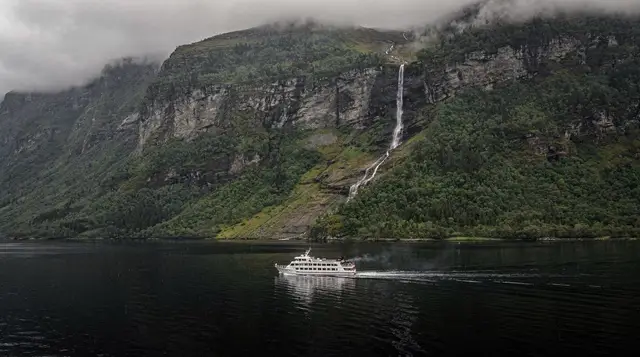
Kiwi spotting on Stewart Island
Can you really see a wild kiwi on Stewart Island?
Yes, more reliably than almost anywhere else in New Zealand — Rakiura's kiwi are active by day as well as night, and guided walks around Oban find them regularly. Nothing is guaranteed: weather, tides and the kiwi's own schedule all play a part, so treat a sighting as likely, not promised.
Most people who come to New Zealand hoping to see a kiwi end up in a darkened room at a wildlife park, looking at a bird through glass under red light. That’s not a criticism of those places — kiwi are shy, mostly nocturnal, and genuinely hard to find. Stewart Island, known in te reo Māori as Rakiura, is the exception. It’s one of the very few places in the country where a wild sighting, in the actual bush, is a realistic outcome of an evening rather than a fantasy sold on a brochure.
Why Rakiura is different from the rest of New Zealand
Around 85 percent of Stewart Island is protected as Rakiura National Park, and the resident human population is small — a few hundred people, almost all of them in Invercargill’s satellite village of Oban. That combination of scale and protection matters, but the bigger reason kiwi spotting works here comes down to the bird itself. The Rakiura tokoeka, the local form of the southern brown kiwi, doesn’t keep strictly to the night the way most of its North Island relatives do. It forages during the day as well, especially in the quieter, thickly vegetated corners of the island, which simply multiplies the hours in which a visitor might cross paths with one.
That doesn’t mean kiwi are wandering the streets of Oban. It means the odds, stacked across a guided walk that knows where to look and when, are genuinely good — better than almost anywhere else in New Zealand. It’s still a wild animal in a wild place, and the honest way to think about a trip here is as a strong chance, not a booking you can hold the bird to.
Guided night walks: where the real chances are
The most direct route to a sighting is a guided night walk, usually run by boat from Oban to quieter bays and beaches where kiwi are known to forage after dark. Guides keep groups small, torches dimmed, and noise down, because a kiwi that senses a crowd coming will simply move off into the bush. What you’re doing, essentially, is following people who go out looking for kiwi routinely enough to have a working sense of where the birds currently are — which is a very different proposition to wandering a track yourself and hoping.
a guided wild kiwi experience out of Oban is the activity most visitors build their Stewart Island trip around, and it’s worth treating as the priority booking rather than an add-on, since weather and tides can affect which nights run at all.
It’s also worth being upfront about what a sighting actually looks like. It might be a kiwi crossing a beach in torchlight for thirty seconds, or rustling in the undergrowth just out of clear view, rather than a long, close encounter. Guides won’t promise otherwise, and neither should any article about this — the honest pitch for a Rakiura night walk is a real chance at a real wild kiwi, not a guaranteed photograph.
Ulva Island: birdlife you don’t have to be lucky for
A short water taxi from Oban across Paterson Inlet takes you to Ulva Island, a predator-free sanctuary that’s one of the best places in New Zealand to see native forest birds up close in broad daylight, no torch required. Because introduced predators have been removed and kept out, birds here behave with a confidence they don’t show on the mainland — kākā, weka and tūī are commonly seen at close range, and the birdsong alone is worth the crossing.
Kiwi are occasionally seen on Ulva Island too, since a few range across from the main island, but it isn’t the reason to go. Think of it as a bird sanctuary trip that happens to carry a small kiwi chance, rather than a kiwi trip that happens to have other birds. A guided Ulva Island walk is the easiest way to get the context — which calls, which birds, which bit of bush — that turns a pleasant walk into a genuinely memorable one, and it pairs naturally with an evening kiwi walk on the same trip.
| Experience | Best for | Day or night |
|---|---|---|
| Wild Kiwi Experiences | The best realistic chance of seeing a kiwi in the wild | Night |
| Ulva Island Explorer | Native birdlife guaranteed; kiwi a bonus, not a promise | Day |
| Village and Bays Tour | Oban’s history and the island’s coastal scenery | Day |
| Guided Wilderness Walk | Rakiura’s forest away from the main circuits | Day |
Oban, the village and the wider bush
Oban itself is tiny and unhurried — a general store, a pub, a scattering of houses along Halfmoon Bay — and most visitors are surprised by how little “town” there is to see. A village and bays tour is a low-key way to get oriented on arrival, covering the short history of the settlement (fishing and muttonbirding, long before tourism) and the bays within easy reach on foot.
For those who want more time in the bush itself, a guided wilderness walk covers ground away from the main tourist routes, through the kind of dense coastal forest that makes it obvious why Rakiura’s ecosystems have stayed so intact.
Stewart Island also carries the start of the Rakiura Track, one of New Zealand’s Great Walks, for those with more than a day or two to give the island. Most visitors on a Queenstown-based trip won’t have time for the full multi-day walk, but even a few hours on its early sections gives a sense of forest most people never reach.
Getting there: Bluff, Invercargill, or straight from Queenstown
There’s no direct route from Queenstown — Stewart Island sits off the very bottom of the South Island, and getting there means routing through Invercargill or the port town of Bluff first.
| Route | Departs from | How it works |
|---|---|---|
| Ferry | Bluff | About an hour across Foveaux Strait, a crossing with a real reputation for being rough |
| Short flight | Invercargill | Quick hop across the strait by air, weather permitting |
| Scenic flight | Queenstown | A direct day trip by air straight from Queenstown, weather permitting |
The Bluff–Oban ferry is the standard, budget-friendlier way across, but Foveaux Strait earns its reputation — expect a firm crossing on a windy day, and don’t plan anything delicate either side of it. For visitors based in Queenstown who don’t want to commit to an overnight stay, a scenic flight day trip from Queenstown compresses the whole journey into a single day, though it’s entirely dependent on flyable weather and isn’t something to book on a tight itinerary with no slack around it.
Given how weather-dependent both the crossing and the kiwi walks themselves are, an overnight stay in Oban gives you a far better shot at everything working out than trying to squeeze a kiwi walk into a same-day return. If your schedule allows it, staying the night is the single biggest thing you can do to improve your odds.
When to go
Kiwi don’t migrate, so Rakiura’s population is present on the island all year — there’s no strict “season” for the bird itself the way there is for, say, wildlife around the Otago Peninsula. What actually varies through the year is the weather, and by extension how comfortable and reliable the Foveaux Strait crossing and the night walks themselves are. A calmer, drier stretch of weather makes for a more pleasant walk and a smoother crossing; it doesn’t meaningfully change whether a kiwi shows up.
The practical advice, then, isn’t about picking a month — it’s about picking a period with a settled forecast where possible, and building a spare day into your itinerary if you can. A cancelled ferry or a fogged-in flight can undo an otherwise well-planned Stewart Island stop, and that’s a far more common disappointment than simply not seeing a kiwi.
The ethics of watching a wild animal
Kiwi are a taonga species — treasured and protected — and the etiquette around watching them isn’t optional politeness, it’s how the whole thing keeps working. No flash photography, ever: a kiwi’s eyesight is built for near-total darkness, and a sudden flash can genuinely disorient a bird going about a completely ordinary evening. Groups stay quiet, keep a respectful distance, and follow the guide’s lead on when it’s appropriate to move, speak, or raise a camera at all.
The same principle applies more broadly across this part of the country. On the Otago Peninsula and around Dunedin, critically endangered hoiho and other seabirds are watched under the same no-flash, kept-distance rules, and it’s worth carrying that habit with you rather than treating Stewart Island as a one-off exception. None of this is about spoiling the moment — it’s about there being a next visitor, and a next kiwi, after you’ve gone.
Rakiura after dark: kiwi, and sometimes the sky itself
The Māori name Rakiura is usually translated as “the land of the glowing skies,” a reference to the aurora australis, which is occasionally visible from the island on a clear, dark night with the right solar activity. It’s not something any operator can promise, any more than a kiwi sighting can be promised — but it’s a genuine possibility that turns an already good night walk into something rarer still, and it’s part of why staying overnight on the island, rather than rushing back on the same crossing, is worth the extra planning.
Building it into a wider South Island trip
For most visitors, Stewart Island is a one- or two-night detour bolted onto a longer loop through the Catlins, Dunedin and Invercargill rather than a Queenstown day trip in its own right — see our rundown of the southern scenic route as a five-day itinerary for how the pieces fit together. If you’re weighing it against closer options, our guide to the best day trips from Queenstown and the broader wildlife of Otago and Southland puts Rakiura’s kiwi chances in context against penguins, albatross and seals elsewhere in the south.
A couple of practical notes before you book: check your travel insurance covers adventure and wildlife activities, since cancelled crossings and flights are common enough to be worth planning around, and if you’re arriving from overseas, sort your NZeTA and entry requirements well ahead of time — Stewart Island’s remoteness is exactly the kind of place where you don’t want paperwork problems eating into an already tight window.
Kiwi spotting on Stewart Island: your questions answered
Is Stewart Island really the best place in New Zealand to see a wild kiwi?
It’s widely considered the most realistic one. Rakiura’s kiwi population is large relative to the island’s tiny human footprint, and unlike most mainland kiwi, the Rakiura tokoeka forages during daylight as well as after dark, which gives visitors more hours when a sighting is possible.
What makes the Rakiura kiwi different from other kiwi?
The Rakiura tokoeka, the local form of the southern brown kiwi, is notable for being active by day and by night rather than strictly nocturnal. That habit is the main reason Stewart Island offers a realistic chance of a sighting where most of the country only offers captive encounters.
How likely am I to actually see a kiwi on a guided night walk?
Operators who run these walks regularly will say sightings are common but never certain — a kiwi is a wild animal on its own schedule, not a performer. Go in expecting a good chance rather than a guarantee, and treat the forest and the dark itself as worth the trip regardless.
Is Ulva Island worth it if I mainly want to see a kiwi?
Ulva Island is a predator-free sanctuary and one of the best places in the country to see other native birds such as kākā, weka and tūī at close range in daylight. Kiwi are occasionally seen there too, but it’s a bird sanctuary trip first and a kiwi chance second.
When is the best time of year to go kiwi spotting on Stewart Island?
Kiwi are present year-round since Rakiura’s population isn’t migratory, so weather and the Foveaux Strait crossing matter more than the season. Choose a period with a stable forecast and build in a spare night if you can, since a rough crossing is more likely to change your plans than the time of year.
Can I go looking for a kiwi on my own, without a guide?
It’s discouraged, and on the routes where kiwi are most reliably seen it generally isn’t how it works — those walks rely on guides who know current territories and keep noise and light to a minimum. Wandering alone at night in dense bush is also a real safety risk, not just an etiquette issue.
What’s the etiquette around photographing a wild kiwi if I’m lucky enough to see one?
No flash, ever — kiwi have eyesight adapted to darkness and a flash can disorient a bird otherwise going about its evening undisturbed. Keep your distance, stay quiet, and follow your guide’s instructions on when to raise a camera at all.
How do I actually get to Stewart Island from Queenstown?
There’s no direct link — you travel to Bluff or Invercargill first, then cross to Oban by ferry, about an hour over the often-choppy Foveaux Strait, or by short flight from Invercargill. Some operators also run a scenic flight direct from Queenstown as a day trip, weather permitting.
Wildlife & nature tours on GetYourGuide
Verified deep-linked GetYourGuide tours. Book through these links and we earn a small commission at no cost to you.
GetYourGuide does not provide a product photo for this activity — the image shows the meeting point, photographed by us.