Travel insurance for adventure activities in Queenstown
Does New Zealand's ACC cover travel insurance for adventure activities in Queenstown?
ACC pays for injury treatment for everyone in New Zealand, visitors included, but it does not cover rapatriation, cancelled trips, lost income or illness that isn't the result of an accident. Bungy, skydiving and heli-hikes are also commonly excluded or capped by standard travel insurance, so check each activity by name in the policy wording before you book.
The ACC isn’t travel insurance, and it doesn’t try to be
Queenstown sells adrenaline for a living, and most visitors arrive with some version of the same half-formed idea: that New Zealand’s accident compensation scheme means they’re covered for whatever happens on a bungy jump, a skydive or a heli-hike.
That’s partly true and mostly a trap. The Accident Compensation Corporation, ACC, is real, it’s generous by international standards, and it applies to visitors exactly as it applies to residents. It is also narrower than most people assume, and the gap between what it covers and what a bad day in Queenstown can actually cost is exactly where a decent travel insurance policy has to do its job.
This page sets out, plainly, what the ACC pays for, what it doesn’t, why bungy, skydiving and heli-hikes so often get excluded or capped on standard travel policies, and what to actually check before you hand over a credit card for a jump, a flight or a swing.
Buy your policy at home, ahead of the trip, and not from a desk in Queenstown after you have already picked a jump. Read the activity wording line by line, because a bungy, a skydive or a heli-hike can be excluded outright on one policy and only capped on another. Since the ACC covers only part of a bad day, you want a policy that fills the rest, and you can look at EKTA travel insurance options before you fly.
What the ACC actually covers
The ACC scheme covers the cost of treating a physical injury caused by an accident, for anyone in New Zealand at the time it happens. No application, no separate premium, no proof of fault. If you break an ankle on the Routeburn Track, dislocate a shoulder on the Shotover Canyon Swing or come off a mountain bike on the Queenstown Trail, ACC pays for ambulance transport, hospital treatment, GP visits, physiotherapy and a contribution towards ongoing rehabilitation, on the same basis as it would for a New Zealander.
In exchange for that cover, ACC removes your right to sue for personal injury in a New Zealand court. That’s a genuine trade-off, not a footnote, and it’s the reason New Zealand doesn’t have the kind of injury litigation culture some visitors expect.
| ACC covers | ACC does not cover |
|---|---|
| Treatment for an injury caused by an accident | Illness not caused by an accident (food poisoning, altitude sickness, a burst appendix) |
| Ambulance transport within New Zealand | Rapatriation or medical evacuation home |
| Hospital and GP treatment | Ongoing income while you recover |
| Some rehabilitation costs | Cancelled flights, tours or accommodation |
| Visitors, on the same terms as residents | Lost, stolen or damaged gear |
| Cover regardless of fault | Treatment received outside New Zealand |
The pattern is consistent: ACC pays for the treatment itself, inside New Zealand, for an accident. It stops at the hospital door for anything else.
Where the gap actually bites
The costs that turn a bad afternoon into a genuinely expensive one are almost never the treatment itself. They’re the flight home you now need on a stretcher, the week of prepaid activities you can no longer do, the connecting flight to Sydney or London you missed because you were in Lakes District Hospital, or the helicopter or scenic flight that never happened because Milford Road closed for weather and the operator’s own cancellation policy only goes so far.
None of that is an ACC matter, because none of it is the injury treatment itself. It’s exactly what travel insurance exists for, and it’s where a policy bought on price alone tends to fall over. A few figures to put it in context, in NZD, as ranges rather than promises: a medical evacuation flight out of the South Island can run from a few thousand dollars for a straightforward transfer to well over 100,000 dollars for an international air ambulance with a medical escort. A single missed connecting flight after a hospital stay can cost several hundred to a few thousand dollars to rebook. Neither of those is unusual, and neither is covered by ACC.
Search and rescue callouts in the backcountry, on the Milford Track or around Aoraki / Mount Cook, are typically coordinated and funded by the state and free at the point of use, which surprises a lot of visitors who assume the opposite. But a resulting hospital stay or evacuation flight still runs into the same ACC-plus-travel-insurance split as any other accident, and a private helicopter lift called in when a rescue coordinator judges the situation doesn’t warrant a state-funded one is a cost insurance needs to carry.
Bungy, skydiving and heli-hikes: where policies actually exclude you
This is the part that catches people out, because “adventure sports cover” on a policy summary sounds comprehensive and often isn’t. Insurers work from an activities list, and the specific wording, altitude limits, height limits and named exclusions, matters more than the marketing.
| Activity | What often trips up standard cover |
|---|---|
| Bungy jumping | Height caps well below the Nevis Bungy’s 134 metres; some policies exclude bungy entirely unless named |
| Skydiving | Altitude caps, sometimes below the 15,000-foot option offered over the Queenstown basin |
| Heli-hikes and scenic flights | Helicopter travel excluded unless specifically listed, which matters for glacier access since 2012 |
| Canyon swinging and canyoning | Frequently grouped under “extreme sports” and excluded as a category |
| White-water rafting | Usually covered, but class III-IV grading on the Shotover can push it into an excluded tier |
| Jet boating | Commercial jet boat trips are usually fine; check if it’s the exception |
| Backcountry hiking and Great Walks | Often fine at standard elevations, but check any altitude clause against alpine routes |
The pattern worth remembering: an insurer that lists “adventure activities” as covered is not the same as an insurer that lists bungy jumping, skydiving and heli-hiking by name. Generic language is where the exclusions hide.
If you’re planning any of The Ledge, the Nevis Bungy, a paraglide off Bob’s Peak or a glacier landing, it’s worth booking the activity and buying the policy in the same sitting, so you can check the exact wording against the exact activity rather than assuming afterwards.
Reading a policy before you commit
A few minutes with the policy wording document, not the summary page, answers most of the questions that matter:
- Is the specific activity named, not just implied by a category like “adventure sports”?
- Is there an altitude, height, depth or speed limit attached to that activity, and does your planned activity sit under it?
- Is helicopter travel covered, separately from the activity itself, given how much of the region beyond Queenstown depends on it?
- Does the policy cover medical evacuation and rapatriation as standard, or as a paid add-on?
- What’s the excess, and does it apply per claim or per incident?
- Is cancellation cover included for weather-related disruption, which is common on Milford Road and for scenic flights?
- Does the policy exclude claims linked to activities undertaken outside a commercially guided or licensed operation, which matters if you’re self-driving into Skippers Canyon rather than joining a tour?
None of this is unique to New Zealand, but Queenstown concentrates more named exclusions per day of travel than almost anywhere else most visitors go.
A realistic itinerary and where the gaps sit
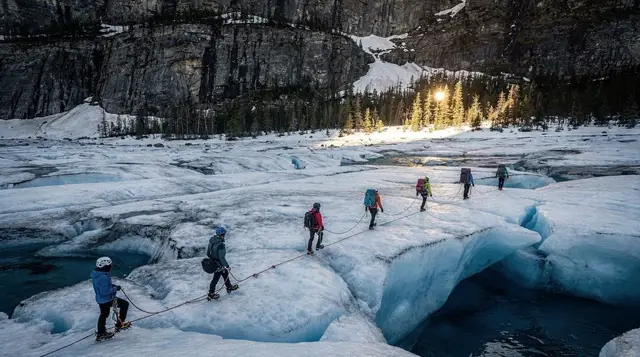
Take a fairly ordinary three-day Queenstown itinerary: a half-day canyoning trip on day one, a Milford Sound overnight cruise with water activities on day two, and a helicopter flight to Franz Josef Glacier on day three. Add a packraft trip on Lake Wanaka if there’s a spare afternoon.
Across those four activities, ACC covers exactly one thing: treatment if an accident actually injures someone. It says nothing about a canyoning trip cancelled for high river flow, a Milford cruise disrupted by a Fiordland Road closure, a helicopter flight grounded by cloud over the Southern Alps, or a packraft trip cut short by wind on the lake. All of those are ordinary, weather-driven disruptions in this part of the country, not edge cases, and every one of them is a travel insurance question, not an ACC one.
Before booking any of it, it’s worth reading how booking tours in Queenstown actually works, since most operators here run their own weather-based rescheduling policies that sit alongside, not instead of, your travel insurance.
Entry requirements and the paperwork around it
Travel insurance sits next to, not instead of, the basic entry paperwork. Most visitors need an NZeTA before departure and have to pay the International Visitor Conservation and Tourism Levy; neither of those has anything to do with ACC or with your insurance policy, but all three tend to get sorted, or forgotten, in the same pre-trip session, so it’s worth doing them together rather than assuming one covers the other.
If you’re driving yourself around the South Island, particularly on routes like the Crown Range or towards Milford Sound, check whether your car rental agreement itself excludes certain roads, since Skippers Canyon and Macetown are commonly excluded outright by rental contracts, separately from anything a travel insurer would exclude.
What to actually do before you land in Queenstown
Buy travel insurance before you leave home, not after you land, since most policies won’t backdate cover once you’re already in the country. Read the activities list against your actual plans rather than the general “adventure sports” claim on the front page. If bungy, skydiving, heli-hiking or canyoning are on your list, look specifically for those words in the policy, not a category that might or might not include them. Check the altitude and height limits against the real numbers: 134 metres for the Nevis Bungy, up to 15,000 feet for a tandem skydive, a helicopter flight for glacier access.
Confirm medical evacuation and rapatriation are included, since that’s the cost ACC will never touch. And build in a buffer for weather: scenic flights, heli-hikes and some cruises are cancelled often enough in Fiordland and around the glaciers that it’s worth checking the day before you arrive, not on the Queenstown Airport transfer on your way in.
None of this is complicated once it’s laid out, but it rarely is laid out, which is exactly why “the ACC covers me” is the assumption that costs people the most in Queenstown.
Travel insurance and ACC: common questions
Does the ACC cover tourists in New Zealand?
Yes. The Accident Compensation Corporation covers the cost of treating an injury caused by an accident for anyone in New Zealand at the time, residents and visitors alike. It applies automatically, with no application and no extra premium.
What doesn’t the ACC cover?
Rapatriation home, ongoing income while you recover, illness that isn’t caused by an accident such as food poisoning or altitude sickness, cancelled flights or tours, lost gear, and treatment received outside New Zealand. It also removes your right to sue for personal injury, a separate legal point worth knowing.
If the ACC covers accidents, do I still need travel insurance?
Yes. The ACC only ever pays for the injury treatment itself. Everything else around an accident or a cancelled activity, rapatriation, replacement flights, a missed connecting trip, a written-off holiday, is a travel insurance claim, not an ACC one.
Is bungy jumping covered by standard travel insurance?
Often not without an add-on. Many standard policies list bungy jumping as an excluded activity or cap the jump height they cover, commonly well below the Nevis Bungy’s 134 metres. Read the activities list in the policy wording, not just the marketing page.
Does travel insurance cover skydiving and heli-hikes?
Some policies cover skydiving up to a stated altitude and exclude anything higher; helicopter travel is sometimes excluded altogether unless it’s specifically named, which matters for heli-hikes onto Franz Josef or Fox Glacier where there is no other way up.
What happens if a Milford Sound flight or cruise is cancelled for weather?
That’s a trip disruption or cancellation claim on your travel insurance, not an ACC matter, since no accident occurred. Most operators offer a reschedule or refund for weather cancellations, and insurance is there for anything the operator’s policy doesn’t cover, like a missed onward connection.
Does the ACC cover search and rescue in the backcountry?
Search and rescue operations are typically state-funded and free at the point of use in New Zealand, but any resulting medical treatment falls under the same ACC rules as any other accident. Evacuation insurance still matters for costs like a private helicopter lift when a rescue coordinator judges one isn’t warranted.
How do I find a policy that actually covers adventure activities?
Search the policy’s activities list for each activity by name, bungy jumping, skydiving, jet boating, canyoning, heli-hiking, rather than relying on a general adventure sports label, and check for altitude, depth or speed limits attached to each one.
Trip-planning essentials on GetYourGuide
Verified deep-linked GetYourGuide tours. Book through these links and we earn a small commission at no cost to you.
GetYourGuide does not provide a product photo for this activity — the image shows the meeting point, photographed by us.