Wildlife of Otago and Southland
What wildlife can you actually see around Queenstown, Dunedin and Fiordland?
The best odds are on the Otago Peninsula near Dunedin, where royal albatross, yellow-eyed penguins, fur seals and sea lions all breed within a short drive of each other. Doubtful Sound adds bottlenose dolphins, kea turn up at Fiordland car parks and alpine passes, and Stewart Island is the realistic place to find a wild kiwi. None of it is guaranteed; several of these species are endangered, and strict distance rules apply.
None of this is Queenstown wildlife, strictly speaking. Bob’s Peak has kea if you’re lucky and not much else. Everything on this page sits a genuine drive away, mostly toward Dunedin and the Otago Peninsula, or out through Fiordland toward Doubtful Sound and Stewart Island. That’s the honest starting point for planning: this is a wildlife trip layered onto a Queenstown base, not something you’ll tick off on an afternoon in town.
Distance rules and no flash, before anything else
Several of the animals on this page are rare enough that a single bad encounter matters. Yellow-eyed penguins are critically endangered. New Zealand sea lions are one of the rarest sea lion species on the planet. Royal albatross raise one chick every two years at most. The rules aren’t bureaucratic box-ticking; they’re the difference between a colony surviving disturbance and one that doesn’t.
- Keep at least 10 metres from sea lions and fur seals, more if they show any sign of agitation — barking, rearing up, moving toward you.
- No flash photography, ever, around penguins, albatross nests or kiwi. Flash disorients nocturnal and burrow-nesting birds and can cause parents to abandon a nest.
- Never feed kea, or any wildlife. It changes their behaviour permanently and often kills them, whether through vehicle strikes at car parks or ingesting things that aren’t food.
- Stay on marked paths and behind hide screens where they exist — the Otago Peninsula’s penguin and albatross sites are built around hides for exactly this reason.
- Dogs stay in the car, or better, at home. A dog on a beach is enough to flush nesting penguins for the rest of the day.
Guided operators on the Otago Peninsula and around Doubtful Sound build all of this into how they run trips, which is the practical argument for going with one rather than trying to find these animals independently.
Royal albatross at Taiaroa Head
Taiaroa Head, at the tip of the Otago Peninsula near Dunedin, holds the only mainland breeding colony of royal albatross anywhere in the world — every other colony is on a remote sub-Antarctic island. Adults have wingspans over three metres and the colony is active nearly year-round: eggs from November, chicks through summer and autumn, and adults present in some numbers most of the year while a small population of non-breeding “gap year” birds patrols the headland.
The visitor centre runs timed, guided sessions to a viewing area above the nesting slopes; this is the only way to get close, and bookings matter in summer. From public viewpoints and boats offshore you can sometimes watch birds gliding past for free, but a close view of a nest is a paid, guided experience.
a half-day Otago Peninsula wildlife tour that takes in the albatross colony, penguins and seals in one guided trip is the most efficient way to see the peninsula’s headline species without organising several separate bookings.
Yellow-eyed penguins and blue penguins
Hoiho, the yellow-eyed penguin, is one of the rarest penguin species in the world and the Otago coast is one of the last strongholds. Unlike more sociable penguin species, hoiho nest in forest and scrub above the beach in loosely spaced, solitary pairs, and they’re easily disturbed by people on the beach between them and the sea — which is exactly why hide-based, guided viewing exists.
Late afternoon into dusk, when adults come ashore after a day fishing, is the reliable window. Sandfly Bay and the private reserves around the peninsula run guided access through hides; turning up on a public beach at random gives much lower odds and a higher risk of disturbing the birds. Blue penguins (kororā), the world’s smallest penguin species, are more numerous and easier to see, including at dedicated evening viewing sites in Oamaru where nightly returns are a reliable, low-impact show from a public grandstand.
a Dunedin wildlife and penguin tour focused on hide-based hoiho viewing is worth booking ahead in summer, when both light and penguin activity line up best.
Fiordland has its own penguin, the tawaki or Fiordland crested penguin, which nests in coastal forest rather than open beach and is genuinely difficult to see without a specific trip — it’s a bonus, not something to plan around.
Fur seals and sea lions
New Zealand fur seals are common along most of the Otago and Southland coast and turn up on rocks near Moeraki Boulders, around Oamaru, on the peninsula, and along the Catlins coastline. They’re used to a degree of human presence but are still wild animals capable of moving fast over short distances; the standard advice is to stay at least 10 metres back and never get between a seal and the water.
New Zealand sea lions (rāpoka) are far rarer — one of the rarest sea lion species anywhere — and a small breeding population has re-established on Otago Peninsula beaches after being largely wiped out by historical sealing. They’re bigger, bulkier and more assertive than fur seals, and males in particular will charge if they feel crowded. Sightings on peninsula beaches are genuinely possible but not guaranteed, and the same 10-metre rule applies with less room for error.
Doubtful Sound and dolphins
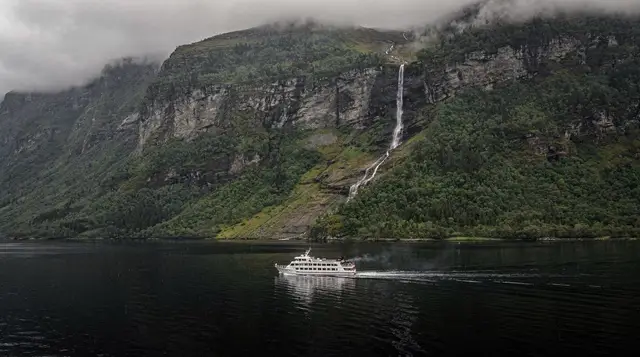
Doubtful Sound, or Patea, is quieter and considerably larger than Milford Sound, and its resident pod of bottlenose dolphins is one of the reasons operators emphasise the trip as wildlife-focused rather than purely scenic. Sightings happen on most cruises but aren’t scripted; the dolphins are wild and go where the fish are. Fur seals haul out on rocks near the sound’s entrance, and Fiordland crested penguins are an occasional, unpredictable sighting on the same water.
Getting there is part of the day: a boat across Lake Manapouri, then a bus over Wilmot Pass to Deep Cove, before the cruise itself. It’s a full day from Queenstown, or an overnight cruise if you’d rather not rush it — see our Doubtful Sound overnight cruise guide for how the logistics compare with a day trip. Milford Sound itself has its own wildlife along the fjord — seals on Seal Rock, occasional dolphins and penguins — on a shorter, more crowded run; a wildlife-focused Milford cruise is a realistic substitute if Doubtful doesn’t fit the itinerary.
a Milford Sound cruise built around wildlife and nature rather than just the scenery covers seals, dolphins when they’re around, and the fjord’s waterfalls in one trip departing from Te Anau.
Kea, the world’s only alpine parrot
Kea are intelligent, endangered, and the only alpine parrot on earth — found nowhere but the mountains of the South Island. Around the Queenstown region they show up at high car parks and picnic areas: the Milford Road, Homer Tunnel approach, and alpine passes into Fiordland are the most reliable spots, usually because a group of birds has learned that car parks mean people, and people sometimes mean food.
That last part is the problem. Kea that associate cars with food chew rubber trim and wiper blades, get hit crossing roads, and sometimes ingest things that make them sick. If a kea approaches, the right response is to enjoy watching an unusually smart bird and to make absolutely sure nothing edible is within reach — not to offer it anything. Read more in our account of meeting a kea on the Milford Road.
Takahē, a bird written off as extinct
Takahē were considered extinct for around fifty years until a small population was rediscovered in 1948 in a remote Fiordland valley. Wild takahē still survive in a handful of alpine valleys in the Murchison Mountains, but that population isn’t open to casual visitors and finding one there isn’t realistic for a normal trip.
Ōrokonui Ecosanctuary, a predator-fenced reserve in the hills above Dunedin, keeps a managed population of takahē in a large area of native bush alongside kākā, tuatara and other species that don’t survive well outside fenced sanctuaries on the mainland. It’s the practical way to see a takahē on a South Island itinerary, and it pairs naturally with a day built around Dunedin and the peninsula — see our guide to penguins and albatross near Dunedin for how to combine the two.
Kiwi on Stewart Island
Stewart Island, Rakiura, is one of the only places in New Zealand where seeing a wild kiwi is a realistic goal rather than a long shot. Around 85% of the island is national park, predator control is more effective on an island this size, and the local subspecies — the Stewart Island brown kiwi, or tokoeka — is unusual among kiwi in being active during the day as well as at night, especially on quieter beaches.
Guided evening walks from Oban, and daytime beach walks along stretches like Ocean Beach, are how most visitors get a sighting; going in blind without local knowledge of current activity is possible but far less reliable. Getting to the island means the ferry from Bluff across Foveaux Strait, or a short flight from Invercargill — see our Stewart Island kiwi-spotting guide for the full logistics, since it’s not a casual add-on to a Queenstown-based trip.
When to go, by species
| Species | Best site | Best season | Realistic odds |
|---|---|---|---|
| Royal albatross | Taiaroa Head, Otago Peninsula | Year-round; chicks Feb–Sep | High with a guided visit |
| Yellow-eyed penguin (hoiho) | Otago Peninsula hides | Year-round; best at dusk | Moderate, never guaranteed |
| Blue penguin (kororā) | Oamaru evening viewing | Year-round | High at dedicated sites |
| NZ fur seal | Otago Peninsula, Catlins, Oamaru coast | Year-round | High |
| NZ sea lion | Otago Peninsula beaches | Year-round; more pups Dec–Feb | Moderate |
| Bottlenose dolphin | Doubtful Sound | Year-round | Moderate to good on most cruises |
| Kea | Milford Road car parks, alpine passes | Year-round | Moderate, higher in shoulder season |
| Takahē | Ōrokonui Ecosanctuary, near Dunedin | Year-round | High at the sanctuary |
| Kiwi (tokoeka) | Stewart Island, guided walks | Year-round; slightly better in cooler months | Good with a guide |
Planning a wildlife day, or several
A single day covering the Otago Peninsula’s albatross, penguins and seals from Dunedin is realistic and is the most efficient wildlife day in this whole region. Doubtful Sound, Stewart Island and Ōrokonui are each their own trip and don’t combine well with the peninsula on the same day once travel time is honest — Dunedin alone is 280 kilometres from Queenstown, roughly three and a half hours each way.
a North Otago tour from Dunedin that pairs the Moeraki Boulders with wildlife-watching further up the coast is a useful way to combine two North Otago stops that don’t overlap with the peninsula circuit.
If Queenstown is the base for the whole trip, the realistic pattern is one dedicated overnight or two-day swing toward Dunedin and the peninsula, and a separate day (or overnight) for Doubtful Sound through Te Anau and Manapouri. Our Queenstown to Dunedin guide and the southern scenic route itinerary both lay out how to link wildlife stops with the rest of the south without turning it into a driving marathon. For a broader look at what else counts as wildlife and nature around the region, our wildlife and nature category page rounds up tours beyond the ones covered here.
a Milford Sound cruise that combines waterfalls, rainforest and wildlife in one run is a sensible option for travellers who only have time for Milford, not Doubtful, but still want the wildlife side of the fjord covered.
Wildlife-watching in Otago and Southland: common questions
What is the best chance of seeing a yellow-eyed penguin?
A guided hide visit on the Otago Peninsula around dusk, when adults return from feeding, gives the most reliable sighting. Hoiho are among the rarest penguins on earth, so numbers are low and a sighting is never certain even with a good operator.
Can I visit the royal albatross colony without a tour?
No. Taiaroa Head is the only mainland breeding colony of royal albatross in the world, and access to the nesting area is only through the visitor centre’s guided sessions. Public roads nearby give occasional flyover views for free, but no guaranteed close viewing.
Are the sea lions and fur seals dangerous?
New Zealand sea lions can move faster than they look and will charge if approached too closely, so keep at least 10 metres away and never get between one and the sea. Fur seals are more predictable but still wild animals; watch from a distance and keep dogs away.
Is it possible to see dolphins in Doubtful Sound?
A resident pod of bottlenose dolphins uses Doubtful Sound and cruise operators see them on most trips, but there is no guarantee on any single day. Sightings are more about visiting a large fjord where dolphins genuinely live than watching a scheduled show.
How likely am I to see a wild kiwi on Stewart Island?
Better than almost anywhere else in New Zealand, because Rakiura kiwi are unusual in being active by day as well as night. A guided evening or beach walk still isn’t a certainty, but sightings are common enough that operators run tours specifically around them.
Is it true you shouldn’t feed kea?
Yes, and it matters. Kea that learn to associate people with food approach cars and car parks, chew rubber seals and rubbish, and are more likely to be hit by vehicles or poisoned by food that isn’t good for them. Feeding kea, even accidentally by leaving food out, does real harm.
Where can I see takahē in the wild, or close to it?
Wild takahē survive in a handful of remote alpine valleys in Fiordland that are not open to casual visitors. Ōrokonui Ecosanctuary, a predator-fenced reserve a short drive from Dunedin, keeps a managed population in a large natural enclosure and is the realistic way to see one.
When is the worst time to visit for wildlife?
Outside each species’ breeding and moulting season, sightings drop off; yellow-eyed penguins and albatross are hardest to find in late autumn. Weather matters more than the calendar for boat-based wildlife such as dolphins and Doubtful Sound cruises, which run subject to the Fiordland forecast.
Wildlife & nature tours on GetYourGuide
Verified deep-linked GetYourGuide tours. Book through these links and we earn a small commission at no cost to you.
GetYourGuide does not provide a product photo for this activity — the image shows the meeting point, photographed by us.