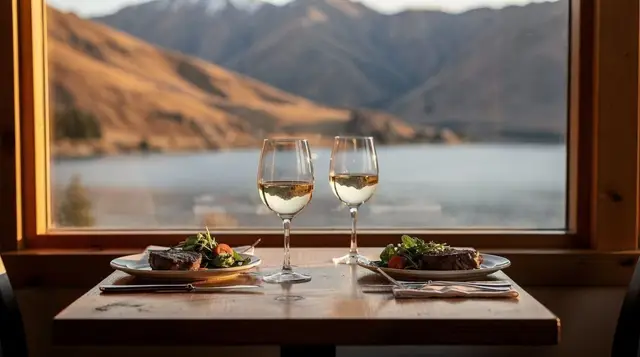
Twenty-five minutes east of Queenstown, SH6 drops into the Kawarau Gorge and the vineyards start. This is the Gibbston Valley: the highest and coolest wine sub-region in Central Otago, and by most measures the highest and southernmost wine region on earth. It’s a working answer to a question a lot of visitors don’t think to ask until day three in Queenstown: where does all that pinot noir on the restaurant list actually come from.
Why Gibbston is different from the rest of Central Otago
Central Otago is New Zealand’s only wine region with a genuinely continental climate — hot, dry summer days, cold nights, and a real winter that shuts vines down completely. That temperature swing is what the region’s winemakers point to when pinot noir here tastes more concentrated than the same grape grown on the coast. About three-quarters of everything planted in Central Otago is pinot noir, with pockets of pinot gris, riesling and chardonnay filling out the rest.
Gibbston sits at the cool, high end of that spectrum. The valley runs along the Kawarau Gorge, sheltered by schist hillsides, at a slightly higher elevation and a slightly cooler average than the Central Otago sub-regions further down the valley. Winemakers here talk about restraint and acidity rather than sheer power — the wines lean more savoury, less jammy, than what comes out of the warmer sites near Cromwell or Bannockburn. It’s a genuine style difference, not marketing, and it’s the reason serious pinot noir drinkers plan a Gibbston stop rather than treating it as a photo opportunity on the way to somewhere else.
Being 25 km from a major tourist town also means Gibbston never had to be a destination on its own terms. There’s no village centre, no high street, no accommodation cluster — just SH6, the river gorge below it, and a run of cellar doors set back from the road. That’s part of the appeal: you’re not competing with a bus tour crowd for a table, and most cellar doors here are small enough that a weekday visit can mean having the tasting room to yourself.
The wineries you can actually visit
Not every Gibbston producer has a public cellar door — some sell only through restaurants and export — but a working core is open for tastings, generally daily in the warmer months and with reduced hours in winter. Hours shift year to year, so treat this as a starting list rather than a timetable, and check ahead if you’re planning around one specific stop.
| Winery | Distance from Queenstown | Known for |
|---|---|---|
| Gibbston Valley Winery | ~25 km | The cave cellar, on-site restaurant, largest cellar door in the valley |
| Mt Rosa | ~23 km | Small-batch, family-run pinot noir |
| Valli | ~20 km | Single-vineyard pinot noir, serious tasting room |
| Several smaller cellar doors along SH6 | 20–27 km | Boutique, appointment-only tastings |
A guided tasting takes the guesswork out of who’s actually pouring on the day you’re there. A tasting session at Mt Rosa is a straightforward way to try a small producer’s range with someone who can explain what’s different about a Gibbston site versus a Bannockburn one.
For a single-vineyard focus, a tasting at Valli goes deeper into one producer’s pinot noir rather than skimming several. If you’d rather have the whole day organised — pickup, several cellar doors, food included — a half-day wine tour with an artisan cheeseboard solves both the driving problem and the “which winery” problem in one booking.
The cave cellar
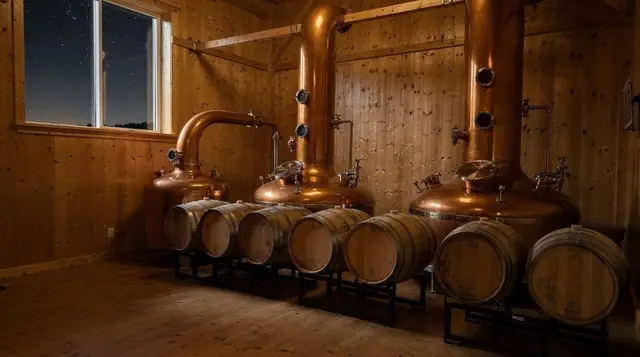
Gibbston Valley Winery is the valley’s largest producer and its main visitor stop, built around a cellar tunnelled into the schist hillside — New Zealand’s original cave cellar, kept at a stable temperature year-round without mechanical cooling. It’s a genuinely different way to see how wine is actually stored and aged, rather than a barrel room dressed up for visitors, and it anchors a site that also runs a restaurant with gorge views. If you’re only stopping at one cellar door in the valley and want the fullest visitor experience — cave, restaurant, cellar door — this is the one most people mean when they say “the Gibbston winery.”
Bannockburn, Cromwell and the rest of Central Otago
Gibbston is one sub-region among several, and understanding how they relate saves a wasted afternoon looking for something that isn’t there. Heading further from Queenstown along the same general route, the wine country continues through Cromwell — about 60 km and 45 minutes from Queenstown — where the old town was relocated and rebuilt above the waterline before the Clyde dam flooded the original site in 1992.
Bannockburn, ten minutes from Cromwell on the south side of Lake Dunstan, is warmer and lower than Gibbston and produces a noticeably different style of pinot noir: riper, more fruit-forward. Further sub-regions — Bendigo, Alexandra, and Pisa near Cromwell — extend the same pattern with their own microclimates.
For a single day trip focused on wine, most visitors do one or the other: Gibbston for the closest, coolest option, or a longer swing through Cromwell and Bannockburn for a wider range of styles. A winery cruise around Cromwell and Central Otago is the way to cover several of the further-out sub-regions without driving between them yourself, and it pairs naturally with a Gibbston stop on the way out or back. Doing both properly in one day is tight — plan for at least six hours if you want to taste at more than three or four cellar doors without rushing.
The problem nobody mentions: driving and tasting don’t mix
This is the part wine-region guides skip. New Zealand’s drink-drive limits apply to visitors exactly as they apply to residents, and Gibbston’s tasting rooms pour real measures, not token sips — three or four wineries in an afternoon adds up faster than most people expect. There’s no train, and cellar doors along SH6 are spaced too far apart to walk between. That leaves three realistic options: a designated driver who doesn’t taste, a guided tour with a driver included, or the bike.
None of the cellar doors will stop you tasting if you’re driving — that’s on you to manage, not them. Renting a car specifically to “do the wine trail yourself” is the option most likely to end with someone either not tasting at all or driving over the limit on the way back to Queenstown.
The Gibbston River Trail: taste by bike
The Gibbston River Trail is a flat, well-formed cycle path that runs through the valley roughly parallel to SH6, tracking the Kawarau Gorge and linking several cellar doors directly. It’s part of the wider Queenstown Trail network, gentle enough for an unfit rider on a standard or e-bike, and it turns the drink-drive problem into a non-issue: nobody on a bike needs a designated rider. Most operators rent both standard and electric bikes, and an e-bike is worth the extra cost here if you’re planning to stop at more than two or three wineries, since a few tastings in, the ride back feels considerably longer than the ride out.
The trail also connects, further along the same network, toward Cromwell and the Lake Dunstan Trail — a 41 km route opened in 2021 linking Cromwell to Clyde — for anyone who wants to extend a cycling day well beyond Gibbston itself. For a Gibbston-only day, though, the valley section alone is enough: a loop taking in two or three cellar doors and lunch is comfortably a half-day on two wheels.
What else is in the valley
Gibbston isn’t only wine. The valley is also where the Kawarau Gorge narrows around the historic Kawarau Bridge, a 43 m span built in 1880 and reopened in November 1988 as AJ Hackett’s original commercial bungy site — the first in the world, and still operating. It sits a few minutes off the same road as several cellar doors, which makes for an odd but genuinely workable pairing: a jump in the morning, wine in the afternoon, on the same short drive from Queenstown. Trying it the other way around is not recommended. Jumping off the original Kawarau Bridge is worth doing before you start tasting, not after, and spectators can watch for free if only one person in your group wants to jump.
Planning the rest of your wine day
Gibbston works best as one part of a wider plan rather than a stand-alone stop. Our Gibbston Valley wineries guide goes through the individual cellar doors in more detail, and the Central Otago pinot noir guide explains the style differences between sub-regions, which makes a tasting far more rewarding. If you are still deciding how to organise the day, Queenstown wine tours compared sets the guided options side by side, and the e-bike wine tours guide covers the cycling alternative.
If wine is the focus of your whole stay rather than a single outing, the Queenstown wine and food itinerary builds Gibbston into a longer plan alongside restaurants and slower mornings. Anyone nervous about the jump mentioned below can read the bungy jumping guide first, and the personal account in I jumped off the Kawarau Bridge gives a sense of what the morning feels like.
Getting there and getting around
SH6 from Queenstown to Gibbston is a straightforward 22 km, about 25 minutes without stops, running along the gorge with the Shotover River confluence and Kawarau Gorge scenery for most of the drive. There’s no fuel or ATM in the valley itself — fill up and get cash in Queenstown or Cromwell before you go. Mobile coverage is patchy in places along the gorge.
If you’re not driving yourself, a half-day or full-day tour with a driver is the simplest option and covers most of the cellar doors worth visiting in one trip. If you’d rather move at your own pace, renting an e-bike at the start of the trail and riding valley-to-valley is the other genuinely good option — see our guide to driving in New Zealand’s South Island before deciding which fits your plans, especially if you’re already renting a car for the wider trip.
| Getting around | Best for | Rough cost (NZD) |
|---|---|---|
| Guided wine tour, driver included | No car, want it organised | 150–260 pp |
| E-bike on the Gibbston River Trail | Active, flexible pace | 60–110 pp for the day |
| Self-drive with a non-tasting driver | Groups with a designated driver | Fuel + tasting fees only |
If you do take the self-drive route, the car rental guide and the driving guide for the South Island cover what to arrange before you set off. Travelling without a car is perfectly workable too: the Queenstown Trail cycling guide shows how the valley fits into the wider network of rides.
When to go
Tastings run year-round, but the valley looks and feels different by season. Harvest, typically March into April, is the most atmospheric time — vines turning colour, pickers in the rows, cellar doors busiest but also liveliest. Summer (December–February) is warm and reliable for cycling the trail but the busiest for tour bookings. Winter tastings are quieter and some smaller cellar doors reduce their hours or close on weekdays, so it’s worth checking ahead rather than turning up on spec. Spring is the quietest season for visitor numbers, though vines are only just leafing out and the valley looks its bareest.
Gibbston Valley wine touring: FAQ
How far is Gibbston Valley from Queenstown?
About 22 km by road, roughly 25 minutes’ drive via SH6 through the Kawarau Gorge. It’s the closest of Central Otago’s wine sub-regions to Queenstown.
Can I visit Gibbston Valley wineries without a car?
Yes. A guided wine tour with a driver, or renting a bike (standard or electric) for the Gibbston River Trail, are both realistic options that don’t require your own vehicle, and both solve the drink-drive problem at the same time.
Is Gibbston Valley the same as Central Otago wine country?
Gibbston is one sub-region within Central Otago, specifically the coolest and highest. Bannockburn, Cromwell, Bendigo and Alexandra are other Central Otago sub-regions further from Queenstown, each with a slightly different climate and wine style.
What’s the famous cave cellar in Gibbston Valley?
Gibbston Valley Winery has New Zealand’s original cave cellar, tunnelled into the hillside and kept at a stable temperature without mechanical cooling. It’s the valley’s largest producer and usual first stop for visitors.
Can I cycle between wineries in Gibbston Valley?
Yes, on the Gibbston River Trail, a flat, well-formed path that links several cellar doors and runs roughly parallel to SH6 through the gorge. It’s suitable for unfit riders, and e-bikes are widely available to rent.
What is Gibbston Valley known for besides wine?
The historic Kawarau Bridge, where AJ Hackett opened the world’s first commercial bungy jump in November 1988. It sits just off the same road as several wineries, making an odd but workable one-day pairing.
Is it possible to drive yourself and still taste wine in Gibbston Valley?
Only safely with a designated driver who isn’t tasting. New Zealand’s drink-drive limits apply fully to visitors, and cellar doors pour real measures — three or four stops adds up faster than expected. A guided tour or the cycle trail are the more reliable answers.
What’s the best season to visit Gibbston Valley?
Tastings run year-round. Harvest, roughly March into April, is the most atmospheric, with autumn colour in the vines. Summer is best for cycling; winter is quieter but some smaller cellar doors reduce their hours.