The lake that changed New Zealand
Manapouri is a village of a few hundred people at the southern end of Lake Manapouri, about 20 minutes south of Te Anau on the road toward nowhere much else — which is rather the point. Almost everyone who stops here is either catching a boat to Doubtful Sound or has read about what happened on this lake in the 1960s and 70s and wants to see it for themselves. Both are good reasons. Neither requires more than a day.
What makes Manapouri worth a paragraph before the practicalities: this is one of the few places in New Zealand where you can point to a specific campaign and say, with a straight face, that it changed the country’s relationship with its own landscape. That story sits underneath everything else here, including the power station that started it.
What almost happened to Lake Manapouri
In the 1960s, the government backed a scheme to raise Lake Manapouri by several metres, flooding its forested shoreline and dozens of small islands, in order to increase water storage for the underground hydro station being built at West Arm to power the aluminium smelter at Tiwai Point, near Bluff. The plan treated the lake as infrastructure, full stop.
A national campaign formed to stop it. The Save Manapouri Campaign Committee organised what became, at the time, the largest petition in New Zealand’s history — more than a quarter of a million signatures, gathered without email, social media or an easy way to travel between towns. The government dropped the raising scheme in 1972, and a body called the Guardians of Lake Manapouri and Te Anau was set up to keep watch on lake levels going forward, a body that still exists today.
The campaign is widely credited as the founding moment of New Zealand’s environmental movement — the point where conservation stopped being a fringe concern and became something governments had to answer to. If you only know Manapouri as a boat departure point, that context is worth having before you go.
West Arm: the power station that’s still there
The West Arm power station is the reason any of this happened, and it’s still running, entirely underground in a chamber cut into the rock beside the lake. It generates electricity for the Tiwai Point smelter using water dropped through tunnels to sea level at Doubtful Sound rather than back into Lake Manapouri — an engineering compromise that let the station go ahead without raising the lake.
West Arm sits on private, restricted land accessible only by boat and by the road over the Wilmot Pass, so you can’t simply drive there. Some Doubtful Sound tour packages include a stop and a look at the power station as part of the crossing; others don’t. If seeing it matters to you, check the itinerary before you book rather than assuming it’s included.
Getting to Doubtful Sound
This is the reason most visitors come. Doubtful Sound has no road access at all, and Manapouri is the only place you can start the journey. The route runs in two stages:
| Leg | Mode | Approximate time |
|---|---|---|
| Manapouri to West Arm | Boat across Lake Manapouri | About 1 hour |
| West Arm to Deep Cove | Bus over the Wilmot Pass | About 45 minutes |
From Deep Cove, cruises head out into the fjord itself, which is roughly ten times the surface area of Milford Sound and sees a fraction of the boat traffic. A day trip covers the whole loop and gets you home the same evening; an overnight cruise anchors in the fjord and gives you a much better shot at wildlife and quiet water at either end of the day. If you’re weighing the two fjords against each other before committing, our comparison of Milford versus Doubtful Sound lays out the trade-offs properly, and the Doubtful Sound overnight cruise guide covers what to expect on board.
an overnight cruise into Doubtful Sound from Manapouri is the fuller version of the trip; a full-day Doubtful Sound wilderness trip covers the same crossing and fjord cruise but has you back in Manapouri by evening.
Choosing between the day trip and the overnight
The two formats share the same crossing, so the real question is how you want to spend your energy. The day trip suits travellers who are already based in Te Anau or Queenstown and want to tick off the fjord without rearranging the rest of their route. It asks a lot of you, though: an early start, long stretches sitting on a boat or a bus, and a late return. Our write-up of the 13-hour day trip nobody warns you about is a candid account of how that kind of day feels in practice.
The overnight option changes the rhythm entirely. You spend the quiet hours in the fjord rather than rushing through it, you wake up to still water, and the travel time stops feeling like the main event. If your itinerary has any slack at all, the Doubtful Sound overnight itinerary shows how to fit it in around Te Anau and the drive back, and the Queenstown to Milford and back in two days plan is a useful comparison if you are still deciding which fjord deserves your limited time.
What to bring and how to dress
Fiordland weather does what it likes, and the crossing exposes you to it twice: once on the lake and once in the fjord. Layers matter more than any single heavy jacket. Bring a waterproof shell, something warm for the deck, and sun protection for the days when the cloud lifts. Sandflies are a fact of life near the water, so insect repellent is worth packing; our sandfly survival guide explains what actually works. Keep your camera or phone somewhere dry and reachable, because wildlife and waterfalls appear without warning.
Because there is little to buy in the village itself, treat your bag as the whole supply chain for the day. Snacks, water and anything you might need for a long boat ride should be sorted before you reach the wharf, which is another argument for doing your shopping in Te Anau first.
Why sleeping in Te Anau works better
Most visitors discover that Manapouri is easier to enjoy as a morning drive than as an overnight base. Te Anau has the beds, the restaurants and the supplies, and the drive south is short enough that an early boat is entirely manageable. If you are still sorting out where to sleep across the region, our where to stay in Queenstown guide covers the wider picture, while the driving in New Zealand’s South Island advice is worth reading before you take to the road, particularly if you are collecting a rental from Queenstown and heading south.
If you do want to be on the spot for a first departure, book accommodation well in advance and arrive with food already in hand. A relaxed evening by the lake, with the islands going dark and almost no light pollution, is a pleasant bonus rather than something to build a trip around.
Fitting Manapouri into a bigger Fiordland loop
Manapouri works best as one link in a chain rather than a destination. Pair it with a day in Fiordland National Park, a morning at the Te Anau glowworm caves, or a longer drive on the Southern Scenic Route itinerary if you are heading toward Invercargill. Travellers who prefer not to drive can look at the buses and shuttles across the Southern Lakes, and anyone nervous about the road will find the car rental guide helpful. Travel insurance that covers boat trips and remote locations is also sensible; see our travel insurance for adventure activities page for what to look for.
Rain is part of the Fiordland experience, and it is not a reason to cancel. Many people find the fjords at their most dramatic in wet weather, with waterfalls pouring off every cliff. Our account of Milford Sound in the rain makes the same point about the neighbouring fjord, and the rainy day guide for Queenstown has ideas for the days when you would rather stay dry.
The piège: Manapouri has almost no services
Be honest with yourself about this before you plan a stop here. Manapouri is a small settlement with one general store and a limited handful of places to eat near the wharf. There’s no real supermarket, no wide choice of fuel stations, and opening hours are short outside the main summer months. If you’re driving down for a morning cruise departure, fill the tank and buy your snacks, water and any picnic supplies in Te Anau first — it has proper supermarkets, several fuel stations and a far wider range of cafés and restaurants, and it’s only about 20 minutes back up the road. Turning up in Manapouri assuming you’ll sort out breakfast or a full tank there is a common and avoidable mistake.
This is also why most visitors treat Manapouri as a departure point rather than a base: it’s genuinely more comfortable to stay in Te Anau and drive down for an early boat than to try to find a bed, dinner and a coffee locally.
Local walks
Manapouri isn’t a hiking destination in the way Te Anau or Fiordland National Park more broadly are, but the village does have a small network of DOC-marked walking tracks leaving from around the control gates and the lakefront, ranging from a short forested loop of well under an hour to longer half-day options heading toward Hope Arm and the lower slopes of Fraser Peak. None of them compete with the region’s Great Walks, and none require booking — they’re a way to fill a couple of hours before or after a boat, not a reason to travel here on their own. For proper day walks in the wider region, see our Fiordland day walks guide.
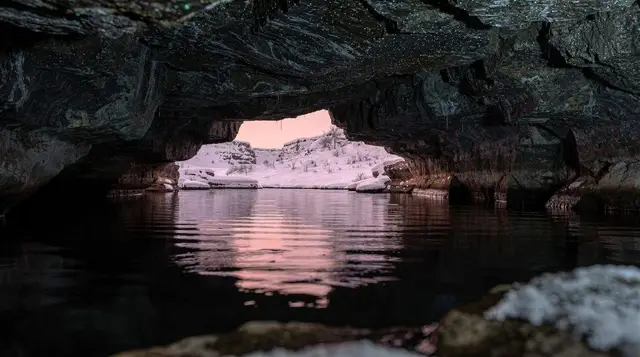
The lake itself is worth a slow look while you wait for a boat: dozens of forested islands sit close to shore, and the water is often glassy in the early morning before any wind picks up on the Wilmot Pass side. A short kayak on the lake is one of the more relaxed ways to spend the hour before a cruise departure — a guided kayak tour on Lake Manapouri with water taxi support covers this without requiring your own gear.
If you’re not doing Doubtful Sound
Some travellers pass through Manapouri without booking the fjord crossing at all, usually on a longer Southern Scenic Route loop or a drive between Te Anau and Invercargill. If that’s you, be realistic: Manapouri on its own is a pleasant stop for a coffee and a lake view, not a destination that rewards a detour by itself. The better use of a spare hour or two in this part of Fiordland is usually the Te Anau glowworm caves, back up the road, which run tours daily regardless of weather.
Practicalities
| Detail | |
|---|---|
| Distance from Queenstown | 190 km, about 2 hours 15 minutes |
| Distance from Te Anau | About 20 km, 20 minutes |
| Services | One general store, a small number of eateries near the wharf; no supermarket |
| Fuel | Not reliable — fill up in Te Anau |
| Mobile coverage | Limited to none beyond the village |
| Doubtful Sound bookings | Essential in advance; capacity on both boat and bus is limited |
Most people build Manapouri into a longer Fiordland stop rather than a standalone trip from Queenstown — the drive alone is close to what you’d spend on the Milford Sound day trip, and Doubtful Sound repays an overnight far more than a rushed same-day dash. If you’re mapping out the wider region, the best day trips from Queenstown guide and the things to do in Fiordland hub are useful starting points, and the Te Anau glowworm caves tour pairs naturally with a Manapouri stop on the same day if timing allows.
a Te Anau glowworm caves tour is the easiest way to combine both stops without a rental car of your own, since it departs from Te Anau and returns the same evening.
Manapouri and Doubtful Sound: your questions answered
Is Manapouri the same as Lake Te Anau?
No. Manapouri is a separate village on a separate lake, Lake Manapouri, about 20 minutes south of Te Anau town. The two are often confused because both are Fiordland gateway towns, but only Manapouri has boats to Doubtful Sound.
Can I buy food or fuel in Manapouri?
Barely. Manapouri has a small store and a couple of places to eat near the wharf, but choice and opening hours are limited. Fill up on fuel and groceries in Te Anau before you drive down.
Do I need to book the Doubtful Sound cruise before I arrive?
Yes. Every Doubtful Sound trip runs as a fixed package that includes the boat across Lake Manapouri and the bus over the Wilmot Pass, and capacity is limited, so book ahead rather than turning up at the wharf.
Can I visit the West Arm power station without a Doubtful Sound cruise?
Not independently. West Arm sits on private, road-restricted land, and the only way in is as part of a Doubtful Sound tour package that specifically includes the power station stop, so check that detail before booking if it matters to you.
How long does the Doubtful Sound crossing take?
Reaching Deep Cove from Manapouri takes around 1 hour and 45 minutes: about an hour by boat across Lake Manapouri, then roughly 45 minutes by bus over the Wilmot Pass. A day trip is a long day; an overnight cruise spreads it out.
Is Manapouri worth visiting without doing Doubtful Sound?
For most travellers, no. Manapouri’s own attractions are a handful of short walks and a lake view, honestly outclassed by other stops in the region. It earns a detour mainly as the door to Doubtful Sound and for its place in New Zealand’s conservation history.
What is the Save Manapouri campaign?
It was a nationwide protest against a 1960s government plan to raise Lake Manapouri by several metres to increase hydro storage for the West Arm power station. A petition signed by more than a quarter of a million New Zealanders forced the plan to be dropped in 1972, and the campaign is widely credited as the founding moment of New Zealand’s environmental movement.