Kayaking Lake Wakatipu
What's the best way to kayak Lake Wakatipu?
Launch from Frankton or Sunshine Bay early in the morning, before the afternoon wind picks up and the lake surface turns choppy. The water sits around 10°C year-round, so a spray jacket or wetsuit and a guided or well-briefed self-hire trip matter more than fitness.
Two launch points, one narrow weather window
Lake Wakatipu is 80 kilometres long, shaped like a lightning bolt, and sits right at the edge of Queenstown. That makes it look like the obvious place to paddle. It is, but only for part of the day. The lake is large enough to generate its own weather, and the same afternoon breeze that fills the sails of the yacht charters off the town pier turns a flat morning into a choppy slog for anyone in a kayak. Plan around that, and paddling here is straightforward. Ignore it, and you’ll be fighting a headwind back to shore with cold hands.
This guide covers the two practical launch points on Wakatipu itself, why timing matters more than paddling experience, what the cold water actually means for what you wear and how you plan a capsize, and the two credible alternatives — the Dart River near Glenorchy and Lake Wanaka — for when the wind has other plans.
Frankton and Sunshine Bay: the two launches that matter
Frankton, on the eastern arm of the lake near Queenstown Airport, has a boat ramp and open water frontage that several kayak and paddleboard operators use as a base. It’s flat, accessible by road without going through the town centre, and gives a view back across the water toward The Remarkables. It suits pickup-based tours, since vans can load and unload easily.
Sunshine Bay, on the opposite side, is a short walk from central Queenstown past the Queenstown Gardens, tucked into a small sheltered inlet. It’s the launch of choice for self-hire and for guided trips that want calmer water close to town before heading out onto the open lake. The bay itself blocks some of the wind, which matters more here than the scenery does.
Neither location is dramatically better than the other — the choice usually comes down to which one your operator or hire company uses, and whether you’d rather start from the town side or the airport side. What matters far more than which shore you leave from is what time you leave it.
Why mornings work and afternoons don’t
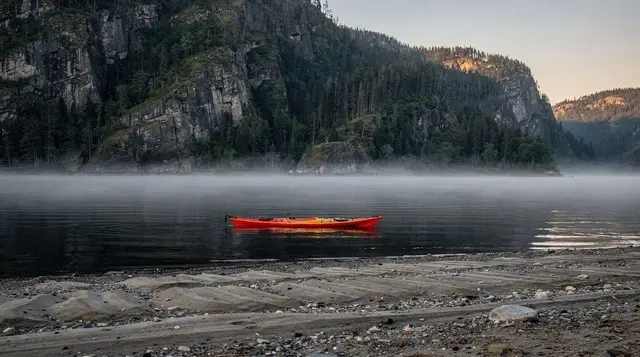
Lake Wakatipu tends to be at its calmest in the first few hours after sunrise. Cool, still air sits over the water, the surface is close to glassy, and paddling feels effortless. As the day warms up — usually from late morning through early afternoon — a breeze builds off the surrounding mountains and funnels down the lake. On an open stretch like the one between Queenstown and Frankton, that turns into a real chop within an hour or two, not a gentle ripple.
This is the single biggest planning mistake people make with Wakatipu: booking an afternoon slot because it suits the rest of the day’s itinerary, then finding the paddle cut short or genuinely hard work. The lake gets up quickly in the afternoon. Guided tours that operate on Wakatipu itself schedule around this and typically run early starts for exactly that reason — it isn’t marketing, it’s the difference between a pleasant hour on the water and a fight to get back to the ramp.
If you’re hiring independently rather than joining a guided trip, treat a dawn or early-morning slot as close to non-negotiable in summer, when the afternoon wind is most reliable. Check conditions with whoever you’re hiring from before you commit to a time — an operator based on the lake will know that day’s pattern far better than a forecast app will.
The water is cold, all year
Lake Wakatipu sits at around 10°C year-round. It doesn’t warm meaningfully in summer the way a shallow lake might, because it’s deep and glacier-fed. That’s manageable for paddling — hands and face in the air, not immersed — but it changes the risk profile of a capsize. Ten-degree water takes the strength out of your grip and the clarity out of your thinking within minutes, not through some slow chill.
Guided operators account for this: expect a spray jacket at minimum, sometimes a wetsuit or additional layer depending on the season and the operator, and a briefing on what to do if you go in. If you’re hiring a kayak independently, don’t skip the equivalent gear because the air temperature feels warm — the water doesn’t know what the thermometer on shore says. Staying closer to shore rather than crossing open water also matters more here than on a small inland lake, simply because help is further away if something goes wrong.
Guided tour or self-hire
A guided sit-on-top kayak tour from Frankton is the straightforward option for most visitors: no experience needed, a lead guide sets the pace, and the early departure time is built into the booking rather than something you have to arrange yourself.
a guided kayak tour on Lake Wakatipu with hotel pickup covers exactly this — a morning departure, gear supplied, and a guide managing the route around whatever the wind is doing that day.
Self-hire from Sunshine Bay works for people who’ve paddled before and want to set their own pace, but it puts the timing decision on you. If the operator’s morning slots are booked out and afternoon is all that’s left, it’s worth considering a different day rather than pushing into a windy crossing.
| Option | Launch point | Experience needed | Typical duration | Approx. price (NZD) |
|---|---|---|---|---|
| Guided kayak tour, Wakatipu | Frankton | None | 2–3 hours | $110–170 |
| Self-hire kayak or SUP | Sunshine Bay | Some | Flexible | $30–50/hour |
| Guided kayak, Moke Lake | Moke Lake (drive-in) | None | 2–3 hours | $150–190 |
| Guided kayak, Lake Wanaka | Wanaka township | None | 2–3 hours | $120–160 |
Prices are indicative and vary by operator, season and group size — always check the current rate at booking.
Alternative: Moke Lake, out of the wind entirely
If the point of the trip is a calm paddle rather than Wakatipu specifically, Moke Lake is worth considering instead of working around the wind. It’s small, tucked into hills a short drive from Queenstown, and largely sheltered from the afternoon breeze that affects the main lake. There’s no boat traffic to speak of, and the water, while still cold, sits in a much more contained basin.
a kayaking trip on Moke Lake trades Wakatipu’s scale and mountain backdrop for a quieter, more forgiving setting — a reasonable swap if timing an early Frankton departure doesn’t fit the rest of your plans.
Alternative: the Dart River
The Dart River flows into the top of Lake Wakatipu through a broad glacial valley beyond Glenorchy, and it’s a genuinely different kind of paddling from the open lake. Braided channels shift with the water level, gravel bars appear and disappear, and the valley itself — framed by peaks on both sides — is part of the appeal rather than a backdrop to get past. This is guided-trip territory rather than something to attempt independently; channels that were passable last week may not be this week, and reading them takes local knowledge.
It’s a worthwhile change of scene from lake paddling and pairs naturally with a day that also takes in Glenorchy and the drive out from Queenstown, one of the more scenic road trips in the region in its own right. Jet-boating is the more established way to see this stretch of river — see our comparison of jet boat operators around Queenstown if paddling isn’t the priority for the day.
Alternative: Lake Wanaka
Over the Crown Range from Queenstown, Lake Wanaka offers a second lake with its own launches and, generally, calmer late-morning conditions than Wakatipu — it’s a different shape and doesn’t funnel wind down its length in quite the same way. The town waterfront near the well-known lone tree is a straightforward launch point for guided trips.
a guided kayak tour on Lake Wanaka is worth building into a day that also takes in Wanaka itself, particularly if your Queenstown mornings are already booked with other activities and you’d rather paddle later in the day without fighting Wakatipu’s wind.
If a cruise rather than a paddle suits the day better, a scenic cruise on Lake Wakatipu covers the same water from a boat deck instead of a kayak seat — a reasonable fallback if the wind has already picked up by the time you’re free.
Planning it around the rest of your day
Because the paddling window on Wakatipu is really a morning window, it’s worth building a kayak trip around the start of the day rather than slotting it in wherever there’s a gap. That leaves afternoons free for things the wind doesn’t affect — a stroll through Queenstown Gardens, a coffee, or booking something indoors if the forecast looks unsettled. Our best hikes around Queenstown and rainy day guide both work well as afternoon pairings after a dawn paddle.
If you’re building a full itinerary rather than a single day, see how many days in Queenstown for how paddling fits alongside the bigger-ticket activities, and check best time to visit Queenstown for how the paddling season changes across the year — winter mornings are short and cold, and fewer operators run consistently once the ski season sets in. Whatever else is on the day’s list, book activities that depend on calm water first and build everything else around them, not the other way round — see our notes on booking tours in Queenstown for the same logic applied more broadly.
Kayaking Lake Wakatipu: your questions answered
What time of day should I kayak on Lake Wakatipu?
Mornings, ideally at or soon after sunrise. The lake is usually glassy for the first few hours, then an afternoon breeze builds and the surface gets choppy, particularly along the open stretch between Queenstown and Frankton. Most guided trips depart before 9am for this reason.
How cold is Lake Wakatipu for paddling?
The lake sits around 10°C all year, including in summer. It’s manageable for a paddle in a spray jacket, but a capsize is genuinely cold, not refreshing. Guides supply appropriate clothing; self-hire operators should too.
Where do kayak trips on Lake Wakatipu launch from?
The two common launch points are Frankton, on the eastern shore near the airport, and Sunshine Bay, a short walk or paddle from central Queenstown past the Queenstown Gardens. Some guided tours also use Kelvin Heights or private jetties depending on the operator and conditions.
Do I need paddling experience to kayak Lake Wakatipu?
No. Guided sit-on-top kayak tours are set up for first-timers, with a briefing, a lead guide, and short paddling sections between rests. Independent self-hire needs more judgement, particularly around reading the afternoon wind and staying close to shore.
Is Moke Lake a better option than Lake Wakatipu?
For a first paddle, often yes. Moke Lake is small, sheltered, and calm most of the day, without Wakatipu’s afternoon wind or boat traffic. It’s a short drive from Queenstown rather than a lakefront launch, so it suits people who want scenery without managing conditions.
Can I kayak on Lake Wakatipu in winter?
Some operators run through winter on calm days, but options thin out, mornings are short, and the cold water and cold air combine fast. Check with the operator directly for winter departures rather than assuming a summer schedule applies.
What’s the alternative to Lake Wakatipu for a longer paddling trip?
The Dart River, reached via Glenorchy, offers a braided glacial valley setting that’s different in character from the lake — better suited to a guided trip given the changing channels. Lake Wanaka, over the Crown Range, is a second lake option with its own launch points and generally calmer late-morning conditions.
Jet boat & rafting trips on GetYourGuide
Verified deep-linked GetYourGuide tours. Book through these links and we earn a small commission at no cost to you.
GetYourGuide does not provide a product photo for this activity — the image shows the meeting point, photographed by us.