A quieter lake town, one hour from Queenstown
Wanaka sits at the southern end of its own lake, about 9,000 people on a flat basin ringed by the Southern Alps, roughly an hour’s drive from Queenstown over the Crown Range. It gets compared to Queenstown constantly, usually as “the calmer version,” and that’s fair as far as it goes: there’s no bungy operator on the main street, no Fergburger-length queue, and the lakefront doesn’t feel like it’s performing for a camera the way parts of Queenstown do. But Wanaka isn’t a lesser Queenstown — it’s a different kind of base, with its own lake, its own hiking, its own wineries, and a much shorter run north to Aoraki/Mount Cook and the West Coast glaciers than Queenstown has.
The honest version of Wanaka is this: the town centre itself is small and can be seen properly in an afternoon. What takes real time is everything around it — Roys Peak, Rob Roy Glacier, the wineries scattered through the district, Lake Hawea fifteen minutes over the hill, and Makarora further north again. Treat Wanaka as either a relaxed day trip from Queenstown or a base for two to four nights if you want to actually walk the hills rather than just photograph the lake.
Lake Wanaka and #ThatWanakaTree
The lake is glacial, cold year-round and the reason the town exists in the first place — settled in the 1860s around gold and pastoral farming, it grew into a tourism town on the strength of the water and the mountains behind it. The lakefront path running from the town centre is where most visitors spend their first hour: cafés facing the water, a small beach, and a short walk south to the willow that has become, somewhat accidentally, one of the most photographed trees in the country.
#ThatWanakaTree stands alone in the shallows a few hundred metres from the town centre, and it draws a genuine queue for photos in summer — arrive at sunrise if you want the water still and the tree to yourself, because by mid-morning there’s usually a line of tripods. It’s a lone tree, not a landmark with facilities or a car park built around it; the appeal is entirely in the water and the mountain backdrop, and it photographs best in still, low light rather than the flat glare of midday.
For a different view of the lake, a guided kayak tour on Lake Wanaka gets you out on the water itself rather than looking at it from the shore, which is worth doing at least once if the weather cooperates — this is a wind-exposed lake and afternoons can turn choppy faster than the morning calm suggests.
Roys Peak: read this before you commit
Roys Peak Track is the walk everyone has seen a photo of — a solitary figure on a grassy ridge with the lake and mountains spread out below. What that photo doesn’t communicate is the climb required to get there, and it’s worth being blunt about it: this is 16 kilometres return with roughly 1,200 metres of elevation gain, almost entirely on an exposed, north-facing zigzag with no shade and, for much of the year, no water source on the track. Most people take five to six hours return, and it should be treated as a proper day hike, not a pre-breakfast stroll.
The famous viewpoint — the spot in every photo — sits at a fenced lookout roughly three-quarters of the way up the track, not at the true summit, which continues higher and is a longer, rougher undertaking most day visitors skip. Start early, carry more water than feels necessary, wear proper footwear, and check the forecast: the exposed ridge offers no shelter if wind or cloud rolls in. The lower section crosses private farmland and is sometimes closed during lambing season in spring — check current access before you drive out. If the full climb isn’t realistic for your fitness or time, the lower viewpoints still deliver good lake views for a fraction of the effort, and nobody should feel obliged to summit for the photo.
For a comparison against other South Island day walks and a sense of how Roys Peak stacks up on difficulty, see best hikes around Queenstown.
Puzzling World and the rest of the town
Puzzling World sits just outside town on the road toward the Crown Range — a maze and illusion attraction that’s been running since the 1970s, built around a large outdoor maze (the Great Maze, typically 30–90 minutes depending on how efficiently you navigate it) and a set of indoor illusion rooms, including a leaning tower and a room where water appears to run uphill. It suits families and travellers with kids well; solo adult travellers on a tight schedule will get more out of the lakefront and a walk than the maze.
The town centre itself is compact: a strip of cafés, outdoor gear shops and restaurants facing the lake, plus a small cinema (Cinema Paradiso, known for its sofa seating and interval ice cream) that’s a genuinely good wet-weather option. Wanaka doesn’t have Queenstown’s density of adventure operators, but what it does have tends to be less rushed and, generally, a little cheaper.
Wineries and the Central Otago wine district
Wanaka sits within reach of the same Central Otago wine country that runs through Cromwell and Gibbston further south — the world’s most southerly wine region, built almost entirely on pinot noir thanks to its continental climate. Several vineyards and cellar doors operate in the Wanaka basin itself, generally smaller and quieter than the Gibbston Valley operations closer to Queenstown, and a short drive or organised tour is the sensible way to visit more than one without anyone having to skip the tasting. For background on the grape and the district as a whole, see Central Otago pinot noir.
Mount Aspiring National Park and Rob Roy Glacier
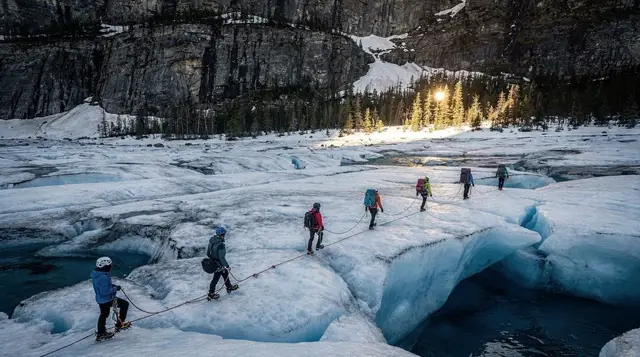
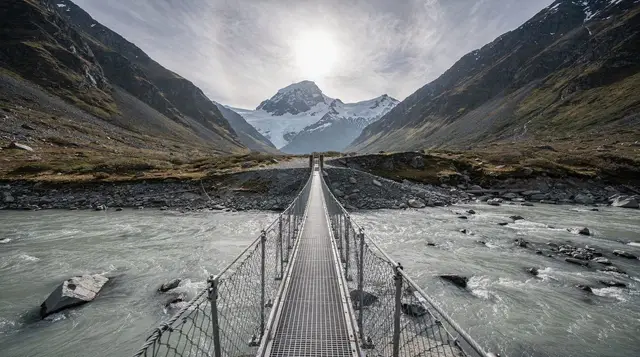
Wanaka is the practical gateway to Mount Aspiring National Park, home to Tītitea/Mount Aspiring itself and a network of valleys, glaciers and Great Walk-adjacent tracks that get considerably less foot traffic than the Routeburn or Milford. The Rob Roy Glacier Track, reached via Raspberry Creek beyond the small settlement of Glendhu Bay and a stretch of unsealed road, is the most accessible glacier walk from Wanaka — a return day walk through beech forest and a swing bridge to views of hanging glacier ice, without the technical difficulty of an alpine route.
For visitors who’d rather see the alpine terrain from the air than walk into it, a helicopter flight into the Siberia Valley combined with a hike and jet boat return covers a genuinely remote part of Mount Aspiring National Park in a single day, weather permitting — and weather is the operative qualifier for anything in this park, so build a spare day into your itinerary if this is a priority.
Treble Cone, Cardrona and winter
Wanaka is the access town for two of the four ski fields serving the region. Treble Cone, roughly an hour’s drive on an unsealed access road requiring chains in poor conditions, is the largest and most challenging ski area on the South Island, with terrain that skews toward intermediate and advanced skiers.
Cardrona, around 35 minutes on a sealed road via the Crown Range, is the more family-friendly option with a strong freestyle and terrain-park reputation. Both draw on the same June-to-early-October snow season as Coronet Peak and The Remarkables closer to Queenstown; see Queenstown’s ski fields compared for how all four stack up against each other.
Lake Hawea and Makarora: what’s further north
Fifteen minutes over a low saddle from Wanaka sits Lake Hawea, a separate lake divided from Lake Wanaka by a narrow ridge called The Neck — quieter again than Wanaka, with a much smaller township and a lakefront that rarely sees a queue for anything. It’s a worthwhile short detour rather than a destination in its own right for most itineraries.
Further north again, roughly an hour past Wanaka, is Makarora, a tiny settlement that marks the start of the Haast Pass route toward the West Coast glaciers. The main draw here is the Blue Pools, a short, easy walk (about 30 minutes return) to a pair of startlingly clear glacial pools crossed by a swing bridge — genuinely worth the stop if you’re driving through, and manageable for almost anyone regardless of fitness.
A guided day walk to the Blue Pools at Makarora is a low-effort way to fit this in if you don’t want to self-drive the full Haast Pass route. Makarora is also the point where travellers heading on to Franz Josef or Fox Glacier commit to the long haul over Haast Pass — allow the better part of a day for that drive, and treat Wanaka as your last reliable fuel and food stop before you go.
Getting there and getting around
The choice between Queenstown and Wanaka as your base often comes down to the Crown Range Road: it’s the direct route, about an hour, but it’s New Zealand’s highest sealed road at 1,121 metres, narrow with tight switchbacks, and it requires chains and extreme caution — or avoidance altogether — in winter conditions, since most rental car contracts exclude driving it in snow.
The alternative via Cromwell adds roughly fifteen minutes but is wider, faster and the only sensible choice when the Crown Range is closed or icy. For a fuller breakdown of both routes and when to choose which, see Queenstown to Wanaka and, for the mechanics of driving in this part of the country generally, driving in New Zealand’s South Island.
For those continuing north rather than back to Queenstown, Wanaka sits roughly 265 kilometres and 3 h 30 from Aoraki/Mount Cook via the Lindis Pass — noticeably shorter than the run from Queenstown — which is one of the stronger arguments for using Wanaka rather than Queenstown as a base if your itinerary includes the West Coast; see Queenstown to the West Coast glaciers in four days for how that route strings together.
For a different angle on the surrounding landscape and Milford Sound in particular, a scenic helicopter flight to Milford Sound departing from Wanaka covers ground by air that would otherwise cost most of a day by road from this side of the region — and it’s genuinely weather-dependent, so book it early in your stay rather than on your last available day.
Where Wanaka fits in a wider itinerary
Most visitors slot Wanaka in one of two ways: as a half-day or full-day stop between Queenstown and the West Coast, or as a two-to-four-night base in its own right for hiking, wine and a calmer pace than Queenstown offers. If you’re only passing through, prioritise the lakefront, #ThatWanakaTree at sunrise or sunset, and — if time and legs allow — the lower section of Roys Peak for the view without the full commitment.
If you’re staying longer, this is where Roys Peak, Rob Roy Glacier and a proper wine-tasting afternoon start to make sense, and where the shorter run north to Aoraki/Mount Cook and the glaciers becomes a genuine advantage over basing yourself in Queenstown for the whole trip. See how many days in Queenstown is enough if you’re trying to work out whether Wanaka earns its own overnight stop or stays a day trip on your itinerary.
Wanaka questions people actually ask
Is Wanaka a day trip from Queenstown or worth staying overnight?
Both work. A day trip from Queenstown covers the lakefront, #ThatWanakaTree and Puzzling World comfortably. Staying overnight is worth it if you want to walk Roys Peak, since the climb alone takes 4–6 hours and you don’t want to be driving the Crown Range tired afterwards.
How difficult is Roys Peak really?
It’s a serious day walk, not a stroll: 16 kilometres return with about 1,200 metres of climbing, mostly on an exposed, sun-facing zigzag with no shade. Most people take 5–6 hours return. The famous viewpoint is roughly three-quarters of the way up, not at the true summit.
What is #ThatWanakaTree and where is it?
It’s a lone willow standing in the shallows of Lake Wanaka, a short walk from the town centre along the lakefront. It’s one of the most photographed trees in New Zealand, which means it’s rarely photographed alone — arrive at sunrise for any chance of an empty shot.
How do you get from Queenstown to Wanaka?
Two routes, about the same distance either way but very different drives. The Crown Range Road is shorter in time (roughly an hour) and is New Zealand’s highest sealed road at 1,121 metres, narrow and winding with no fuel until Wanaka. The route via Cromwell is longer (about 1 h 15) but wider, faster and the only sensible option if the Crown Range has snow or ice.
Is Puzzling World worth the entry price?
It suits families and anyone travelling with children better than solo adult travellers. The Great Maze takes 30–90 minutes depending on how lost you get, and the illusion rooms add another 30–45 minutes. If you’re short on time and travelling without kids, the lakefront and Roys Peak are the stronger use of a Wanaka day.
Can you ski at Wanaka in winter?
Wanaka is the access town for Treble Cone, about an hour’s drive on an unsealed access road that requires chains in poor conditions. Cardrona ski field is closer, around 35 minutes from town via a sealed road, and suits families and beginners better than Treble Cone’s steeper terrain.
What’s the weather like compared to Queenstown?
Similar overall — both sit in Central Otago’s dry, continental climate with hot summers and cold, clear winters — but Wanaka’s lake and surrounding basin can run slightly warmer in summer and colder on still winter nights. Neither town gets anywhere near Fiordland’s rainfall.
Is Wanaka cheaper than Queenstown?
Generally, yes, though not dramatically. Accommodation and restaurant prices tend to run a little lower than Queenstown in the same season, and the town itself has fewer high-margin tourist attractions competing for your money, which is part of why families and budget-conscious travellers gravitate here.