Aoraki Mackenzie dark sky reserve: what you'll actually see
How do I plan a stargazing night at the Aoraki Mackenzie dark sky reserve?
The Aoraki Mackenzie International Dark Sky Reserve covers about 4,300 square kilometres around Lake Tekapo and Aoraki/Mount Cook, with the Mount John Observatory as its main public viewing point. On a clear night you'll see the Southern Cross, the bright core of the Milky Way and the two Magellanic Clouds, with an outside chance of aurora australis. Check the lunar calendar before you book — a full moon washes out most of it, so aim for the nights either side of a new moon.
Why the Mackenzie Basin has some of the darkest skies you’ll ever see
The Aoraki Mackenzie International Dark Sky Reserve was established in 2012 and covers about 4,300 square kilometres of the Mackenzie Basin, taking in Lake Tekapo, Lake Pukaki, Twizel and Aoraki/Mount Cook. It’s one of the largest dark sky reserves on Earth, and unlike a national park designation, the status comes with real teeth: the district enforces lighting ordinances that keep streetlights shielded and downward-facing, and businesses in Tekapo village have adapted their exterior lighting to match. That’s the unglamorous, practical reason the sky here stays properly dark rather than merely darkish.
Altitude and dryness do the rest. The Mackenzie Basin sits at around 700 to 800 metres, well inland from the coastal cloud and moisture that softens the sky over much of the South Island, and the surrounding mountains block a lot of ambient light spill from other towns. On a genuinely clear, moonless night, the difference from a normal rural sky is obvious even to someone who has never looked through a telescope: the Milky Way isn’t a faint smudge, it’s a wide, textured band you can trace from horizon to horizon.
None of this is exclusive to organised tours. Anyone standing on the Tekapo lakefront on a clear night gets a version of the same sky for free. What the dark sky reserve status and the reserve’s public observatory add is consistency — a place actively managed to stay dark — and, at Mount John, the elevation and telescopes to go well beyond what the naked eye alone can do.
Mount John Observatory: the reserve’s public viewing point
Mount John rises above the northern side of Lake Tekapo and hosts the University of Canterbury’s astronomical research station, which doubles as the reserve’s main public-facing viewpoint. By day it’s a lookout with sweeping views back down over the lake’s turquoise water and across to Aoraki/Mount Cook on a clear afternoon. By night, guided tours run sessions up here specifically to get above the last of the valley’s ambient light and onto proper telescopes.
Because it’s an active research site as well as a tourist stop, access after dark is generally through booked, guided sessions rather than a casual drive-up — operators handle the logistics, the red-light protocols that protect everyone’s night vision, and the telescope time. A typical evening session runs a couple of hours: enough for eyes to properly adjust to the dark (that alone takes 20 to 30 minutes), a walk through the visible constellations, and time at a telescope on whatever’s worth pointing at that particular night — a planet, a nebula, a star cluster, depending on the season and sky conditions.
a guided evening session up on Mount John is the standard way in, and a longer, more in-depth version is sold as an extended stargazing experience for anyone who wants more telescope time and less time standing around waiting for a turn. Some operators also run a Mount John tour with Mandarin-language commentary, worth knowing about if that’s the language you’d rather have the night sky explained in.
What you’re actually looking at in a Southern Hemisphere sky
If your stargazing experience so far has been entirely in the Northern Hemisphere, the sky over Tekapo takes some reorienting. There’s no bright pole star to anchor on here — instead, the Southern Cross (Crux), a compact four-star (sometimes five-star) constellation, does the job locals and navigators have used for centuries. It’s small, it’s distinctive once pointed out, and it never sets below the horizon at this latitude, unlike almost everything you’d recognise from a Northern sky.
Nearby sit the two Magellanic Clouds — the Large and Small Magellanic Clouds — which look like faint, detached patches of the Milky Way but are actually separate dwarf galaxies orbiting our own. They’re visible to the naked eye from a genuinely dark site and essentially invisible from most of the Northern Hemisphere, which is part of why serious astronomy tourism exists at all in places like this.
Then there’s the Milky Way itself. From Tekapo on a clear, dark night, the galactic core — the densest, brightest part of our galaxy, toward the constellation Sagittarius — sits higher and brighter in the Southern sky than it typically appears further north. It’s the single most photographed sight in the reserve for a reason: a wide, dense band of stars and dust arcing directly overhead, with genuinely visible texture and colour variation rather than a flat pale smear.
Planets, when they’re up, are usually the easiest single target for a telescope — Saturn’s rings or Jupiter’s moons tend to get the most audible reactions on a guided session, though what’s visible depends entirely on where the planets happen to be in their orbits on the night you go.
The aurora australis: real, but never a promise
The Southern Lights are visible from the Mackenzie Basin often enough that operators mention them, and rarely enough that no one should book a trip around seeing one. Tekapo’s latitude and dark skies give it a genuine shot during periods of higher solar activity, and a clear, moonless night well away from town lighting is the best possible setup for it. But an aurora sighting depends on solar activity and geomagnetic conditions that shift night to night and that no tour operator, however good, can guarantee in advance. Treat it the way you’d treat any other weather-dependent phenomenon in this region: a genuine possibility to keep half an eye out for, not a line item you’re owed for the price of a tour.
The trap: check the moon before you check the weather
Most people planning a stargazing trip obsessively check the weather forecast and never once look at the lunar calendar — and the moon phase matters just as much, arguably more, because unlike weather it’s entirely predictable weeks in advance. A full moon is bright enough to wash out the Milky Way’s fainter structure almost entirely and dims the Magellanic Clouds to the point of being hard to pick out at all. You’ll still see bright stars and planets on a full-moon night, but the reason people travel here — the dense, textured band of the galactic core, the faint galaxies alongside it — is largely gone.
The fix is simple and free: before you book anything, look up the moon phase for your travel dates. Aim for the window either side of a new moon — roughly a week before to a week after — and try to avoid the four or five nights centred on a full moon altogether. If your travel dates are fixed and happen to fall near a full moon, it’s still worth a look for the brighter constellations and any planets that are up, but set expectations accordingly and don’t be surprised if a guide mentions the moon as the reason the sky looks thinner than the photos you’ve seen online.
Cloud cover is the other variable, and it’s far less predictable — the Mackenzie Basin is generally drier and clearer than Queenstown or the coast, but “generally clear” still means some nights are a washout. Most reputable operators offer a reschedule or refund policy for cloud, which is worth confirming before you pay, but there’s no getting around the fact that a stargazing trip is, in the end, a weather-dependent activity layered on top of a moon-dependent one.
Planning your visit
| Consideration | What to know |
|---|---|
| Distance from Queenstown | About 265 km, roughly 3 hours’ drive |
| Best moon phase | Days around a new moon; avoid the nights centred on a full moon |
| Session length | Typically 2 hours or more, including eye adjustment time |
| What to bring | Warm layers even in summer — nights get cold at altitude |
| Booking lead time | Popular clear-moon nights sell out; book ahead rather than on arrival |
| Backup plan | Ask about an operator’s cloud/weather reschedule policy before paying |
Because a stargazing session runs late and needs a genuinely clear, dark sky, it doesn’t pair naturally with cramming Tekapo into the same day as a long drive out and back to Queenstown. Most visitors either stay a night in Tekapo village or fold the stargazing into a wider loop — Tekapo on the way to or from Aoraki/Mount Cook, which sits within the same reserve and roughly the same driving corridor.
A combined day covering both is sold as a day trip linking Lake Tekapo with Aoraki/Mount Cook National Park, useful if you’d rather see the mountain by day and the sky by night in one outing rather than two separate trips from Queenstown.
If you’re deciding whether this is worth the drive at all compared with looking up from Queenstown itself, see how Tekapo and Queenstown actually compare for stargazing — the short version is that Tekapo’s formal dark sky status and public observatory make it the better dedicated stargazing base, while Queenstown’s own light dome works against it.
For the road itself, the route and stop options between Queenstown and Mount Cook cover the driving side in more detail, and if you’re building this into a longer South Island run it’s worth checking what else counts as a realistic day trip from Queenstown before you commit a full day to any one direction.
Season matters too, though less dramatically than the moon does. Longer, later-dark summer evenings mean a later start time but often milder conditions for standing around outside; winter nights fall dark early and get properly cold, but also tend to bring some of the clearest, driest air of the year. For a broader read on when to visit the wider region, the month-by-month breakdown of Queenstown’s weather and general advice on timing a South Island trip are both useful cross-references, even though Tekapo’s own microclimate runs drier than Queenstown’s.
For daytime activity around the same base, the walks and outdoor options around Lake Tekapo fill the hours before the sky darkens, and if you’re chaining Tekapo into a longer Mackenzie Basin stop, the Hooker Valley Track near Aoraki/Mount Cook is the standout daytime walk in the same corridor. One visitor’s account of a night spent stargazing at Lake Tekapo is also worth a read for what an actual session feels like, moon phase and all. For trip logistics more broadly, the best-time planning tool can help line up your dates against both weather and moon phase before you book.
Stargazing at the Aoraki Mackenzie reserve: FAQ
Why is Lake Tekapo one of the best places on Earth for stargazing?
It sits inside the Aoraki Mackenzie International Dark Sky Reserve, created in 2012 and covering roughly 4,300 square kilometres of the Mackenzie Basin — one of the largest dark sky reserves in the world. Lighting ordinances in the surrounding district keep artificial glow to a minimum, and the basin’s dry, high-altitude air is unusually clear.
What can you actually see in the Southern Hemisphere sky that you can’t from the north?
The Southern Cross (Crux) and the two Magellanic Clouds — satellite galaxies of our own — never rise above the horizon in most of the Northern Hemisphere. From Tekapo, on a clear moonless night, you also get an unusually bright, wide view of the Milky Way’s galactic core.
Does the moon really ruin a stargazing trip?
Yes. A full moon is roughly as bright as a streetlight to the naked eye and drowns out everything but the brightest stars and planets. Serious stargazing tours and observatory sessions are built around the lunar calendar, favouring the days around a new moon; check moon phase before you book rather than after.
Can I see the aurora australis (Southern Lights) from Lake Tekapo?
It’s possible but never guaranteed. Tekapo’s latitude and dark skies give it a genuine chance during active solar periods, best on clear nights away from the moon, but an aurora sighting depends on solar activity that no tour operator can promise in advance.
Is Lake Tekapo better for stargazing than Queenstown?
For dedicated stargazing, yes. Tekapo sits inside the dark sky reserve with formal lighting controls and a public observatory on Mount John; Queenstown’s own light dome and more variable weather make it a secondary option for the same activity.
How far is Lake Tekapo from Queenstown, and can I do it as a day trip?
It’s about 265 kilometres, roughly three hours’ drive. A stargazing session alone makes for a very long single day from Queenstown; most people either overnight in Tekapo or combine it with Aoraki/Mount Cook on the way through.
Do I need a guided tour, or can I stargaze on my own?
You can look up from the lakefront for free on any clear night. A guided session adds a telescope, red-light navigation away from town glow, and commentary on what you’re looking at — worth it for the Mount John viewpoints and for anyone who wants the Southern Cross and Magellanic Clouds actually pointed out rather than guessed at.
Stargazing tours in the Mackenzie on GetYourGuide
Verified deep-linked GetYourGuide tours. Book through these links and we earn a small commission at no cost to you.
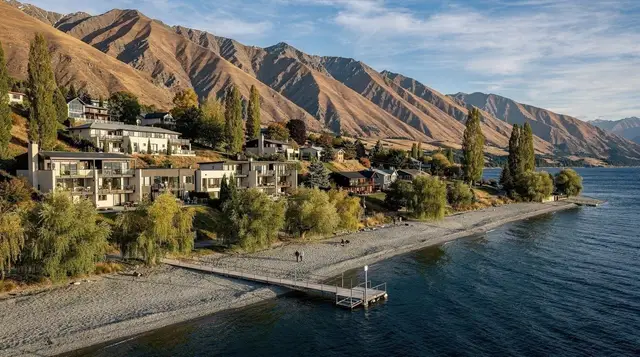
GetYourGuide does not provide a product photo for this activity — the image shows the meeting point, photographed by us.