Where to eat in Queenstown: beyond the Fergburger queue
Where should I actually eat in Queenstown?
Fergburger is genuinely good but the queue can run 30-45 minutes; Fergbaker and Mrs Ferg next door serve the same kitchen with far less waiting. For a sit-down meal, the lakefront strip on Beach Street and Steamer Wharf covers most budgets, and the high-country menus (lamb, venison, Mackenzie salmon) are where Queenstown's food actually earns its price.
What Queenstown’s food scene actually gets right
Queenstown is a small alpine town with a tourist economy, and its restaurant scene reflects that: a lot of turnover, a lot of lake views charged into the bill, and a real cluster of good food underneath it. The honest version is that you can eat badly here if you only follow the queue outside the most photographed burger shop, or you can eat well if you know where the high-country ingredients and the Central Otago wine actually show up on a menu. Both experiences exist within a five-minute walk of each other in the town centre.
This guide covers the four things worth knowing before you sit down anywhere: the Fergburger phenomenon and its quieter siblings, the lakefront and Steamer Wharf dining strip, the high-country ingredients that separate a good menu from a generic one, and what any of this actually costs. No pretence that Queenstown is cheap. It isn’t.
Fergburger, and why you don’t have to queue for it
Fergburger opened in 1994 and has since become the most photographed queue in the South Island. The burgers are large, the patties are properly cooked, and the queue is not an exaggeration: expect 20 to 45 minutes from late morning through to late evening, most days of the year, including in the rain. It’s open until the small hours, which helps if you’re happy eating at midnight, but the middle of the day is consistently the worst time to arrive.
Here’s the part that guidebooks skip: Fergburger is not the only option from the same kitchen family, and it’s not the only good burger in town. Fergbaker, the bakery next door under the same ownership, serves pies, filled rolls and baked goods with no meaningful queue, and it opens earlier than the burger shop for anyone wanting breakfast before an early Milford Sound departure or a bungy slot. Mrs Ferg, also next door, does smoothies, juices and lighter food. Between the three, you can eat well on that one block of Shotover Street without losing an hour of your day to a line.
If the queue itself is part of what you came for, that’s a reasonable trade to make once. Just don’t treat it as compulsory, and don’t plan a tight schedule around a shop with a line you can’t predict. Anyone heading straight to an adrenaline activity or an early tour should budget the uncertainty or eat elsewhere.
The lakefront and Steamer Wharf: where the view gets billed
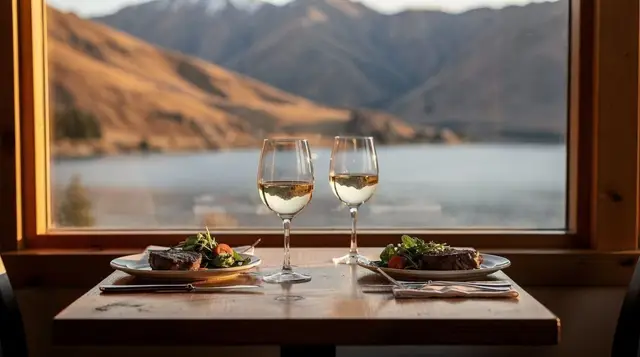
Beach Street, Marine Parade and the restaurants inside and around Steamer Wharf make up Queenstown’s main sit-down strip, most of it looking straight across Lake Wakatipu towards the Remarkables. The view is real and the prices reflect it: a lakefront table typically costs more than the identical dish would a block back from the water, and on a clear evening every outdoor seat fills within minutes of opening.
The range here runs wide. There are casual fish-and-chip counters and pizza places that keep a main under NZD 25, mid-range restaurants doing steak, seafood and pasta in the NZD 30-45 bracket, and a handful of higher-end rooms built around tasting menus and a serious wine list where a dinner for two with wine easily clears NZD 200. None of these are bad choices; the point is to know which category you’re walking into before you sit down, since menus don’t always signal it from the street.
Booking matters more here than almost anywhere else covered in this guide. On a Friday or Saturday night between December and February, walk-ins can face an hour’s wait even with a queue for the queue outside Fergburger just up the road. Book at least a day ahead in peak season; midweek and in the shoulder months, turning up unbooked is usually fine.
High-country cuisine: lamb, venison and Mackenzie salmon
The ingredients that actually distinguish Queenstown’s better kitchens from a generic tourist-town menu come from the surrounding high country rather than the lake itself. Lamb raised on the tussock stations of Otago and Southland is a genuine local product, not a marketing line, and it shows up as racks, shanks and the occasional slow-braised shoulder on menus across town. Venison, farmed rather than wild in almost every case you’ll be served, is leaner and gamier than lamb and turns up as loin, backstrap or in a pie at more casual spots.
Salmon is the third pillar, and it’s worth understanding where it actually comes from: farmed in the hydro canals of the Mackenzie Basin, well north of Queenstown near Twizel and Lake Pukaki, where the fast-flowing, cold water produces a firm, clean-tasting fish that’s become one of the country’s better-known aquaculture products. It appears smoked, cured, or seared, and it’s one of the more reliable “worth ordering” items on a mixed menu.
None of this is exclusive to fine dining. A pub in the town centre can do a lamb shank as well as a restaurant with a lake view; the ingredient is the constant, the setting and the markup are what vary. If a menu lists all three — lamb, venison, and Mackenzie salmon — that’s usually a decent signal the kitchen is sourcing locally rather than running a generic tourist menu with a few New Zealand words added.
For a structured way to try several of these in one sitting alongside Central Otago wine, a Queenstown wine and food tour with paired tastings and lunch covers a cross-section of the region’s food in a single afternoon without needing to book three separate restaurants.
Breweries, distilleries and the drinks scene
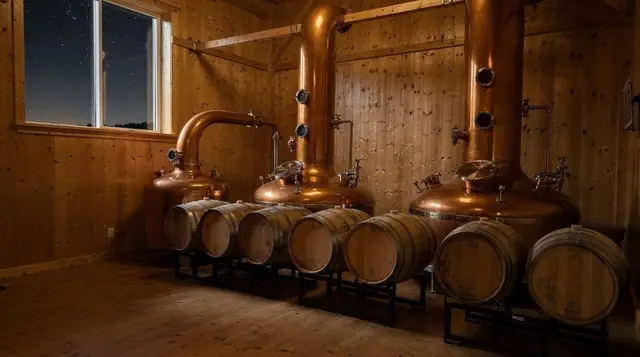
Queenstown’s drinks scene runs well past the Central Otago pinot noir that the region is known for. A handful of craft breweries operate taprooms in and around town, doing the usual range of pale ales, lagers and seasonal styles, and most pair reasonably with the high-country menus described above — a hoppy pale ale cuts through venison better than most reds. Small gin and vodka distilleries have also opened around the Southern Lakes in the past decade, several running tasting flights that make an easy stop on a day that isn’t built entirely around wine.
For something built specifically around drinks rather than a meal, an ice bar crawl through Queenstown’s bars is a straightforward evening option in the town centre that doesn’t require a car or a booking at a restaurant.
If wine is the priority, Gibbston Valley, 25 minutes from town, is where most of the serious cellar-door food happens — see the food-and-wine specific breakdown below.
Gibbston and Arrowtown: the same food scene, different pace
Twenty-five minutes from Queenstown, the Gibbston wine region runs its own, slower food scene: cellar-door lunches attached to vineyards, generally a set menu or a small plates format built to pair with whatever’s being poured that day. It’s a different rhythm from the town centre — no queue, but also no quick bite, and driving yourself back afterwards isn’t an option if you’ve been tasting. A guided Gibbston wine tour solves that by taking care of transport between cellar doors.
Arrowtown, 20 minutes from Queenstown, has a smaller, villagey selection of cafés and restaurants along Buckingham Street with noticeably less queueing than the town centre and a broadly similar price range. It’s a reasonable lunch stop if you’re already heading out that way for the gold-mining history rather than a dedicated food trip.
What it actually costs
Queenstown is consistently the most expensive place to eat in New Zealand, and it’s worth setting expectations in NZD rather than assuming prices track the rest of the country.
| Meal type | Typical cost (NZD, per person) |
|---|---|
| Takeaway burger or pie | 14-18 |
| Café breakfast or lunch | 20-30 |
| Casual sit-down main | 28-40 |
| Lakefront dinner with a glass of wine | 60-90 |
| Tasting-menu dinner for two, with wine | 200+ |
| Gibbston cellar-door lunch | 40-70 |
Two things push these numbers up further in December through February: everything is busier, so kitchens run at capacity and don’t need to discount, and produce and staff costs in a small, remote alpine town are genuinely higher than in a major city. Shoulder-season visitors (March-May, September-November) will generally find the same menus at slightly softer prices and without the booking pressure.
Tipping is not customary in New Zealand. Staff are paid at or above the legal minimum wage regardless of what’s left on the table, and no restaurant expects or chases a tip. Rounding up a bill or leaving a small amount for genuinely good service is fine and appreciated, never obligatory, and it’s worth knowing this before assuming a service charge is missing from the bill — it usually isn’t, because there isn’t one.
A realistic day of eating in Queenstown
For anyone trying to plan meals around a full day of activities rather than build the day around meals, here’s a version that avoids the worst of the queueing and the worst of the markup. Breakfast at Fergbaker or a café in the town centre before an early start; a packed lunch or a quick café stop if the day includes a longer excursion such as Milford Sound or Aoraki / Mount Cook; and a proper sit-down dinner on the lakefront or at Steamer Wharf once the day’s activities are done, booked ahead if it’s a weekend in peak season.
That pattern spreads the budget more evenly than trying to do Fergburger, a wine lunch and a lakefront dinner in the same 24 hours, which is achievable but expensive and, more to the point, unnecessary.
Anyone building a longer stay around wine and food specifically rather than fitting meals around bungy jumps and jet-boating should look at how Central Otago pinot noir fits into the wider region, and compare the main Queenstown wine tours before booking one, since the cellar-door format in Gibbston differs meaningfully from a scenic tasting tour that includes lunch.
For a first visit that’s trying to balance food against everything else Queenstown offers, the first-time guide and the how many days in Queenstown breakdown are the better starting points, and the budget guide is worth reading before assuming every meal here has to cost lakefront prices — plenty don’t.
Queenstown food scene, answered
Is Fergburger worth the queue?
The burgers are properly good and the queue is real, especially from late morning to early evening. If you don’t want to wait, order from Fergbaker (bakery, same owners, next door) or Mrs Ferg (also next door) instead, or turn up right when it opens.
Do I need to book restaurants in Queenstown?
For anywhere on the lakefront or at Steamer Wharf on a Friday or Saturday night in December to February, yes, book at least a day ahead. Midweek and outside peak summer, walk-ins are usually fine.
What is Queenstown’s signature local food?
There isn’t one dish, but a cluster of ingredients: high-country lamb, farmed venison, and salmon raised in the Mackenzie Basin’s hydro canals. Most menus with any local sourcing will have at least one of the three.
Is tipping expected in Queenstown?
No. Tipping is not customary in New Zealand and staff are paid a legal minimum wage regardless. Rounding up or leaving a few dollars for exceptional service is appreciated but never expected, and no restaurant will chase you for it.
How much does a meal in Queenstown actually cost?
A takeaway burger runs roughly NZD 14-18, a casual sit-down main NZD 28-40, and a lakefront dinner with a glass of Central Otago pinot noir can reach NZD 60-90 per person. Queenstown is consistently the most expensive dining destination in New Zealand.
Where can I try Central Otago wine with food, not just at a cellar door?
Several restaurants in town and in Gibbston pair set menus with local pinot noir, and a scenic wine-and-lunch tour is the easiest way to do it without driving yourself back.
Are there good options if I’m not eating meat?
Yes, though the high-country lamb-and-venison end of the menu is meat-heavy by nature. Most restaurants on the lakefront and in the town centre carry at least two or three vegetarian mains, and Queenstown’s café scene is strong for breakfast and lunch regardless of diet.
Is the food scene in Gibbston or Arrowtown different from Queenstown town centre?
Gibbston is built around cellar-door lunches attached to vineyards, generally slower and more expensive per course. Arrowtown has a smaller, villagey selection of cafés and restaurants with less queueing than central Queenstown and a similar price range.
Central Otago wine & food tours on GetYourGuide
Verified deep-linked GetYourGuide tours. Book through these links and we earn a small commission at no cost to you.
GetYourGuide does not provide a product photo for this activity — the image shows the meeting point, photographed by us.