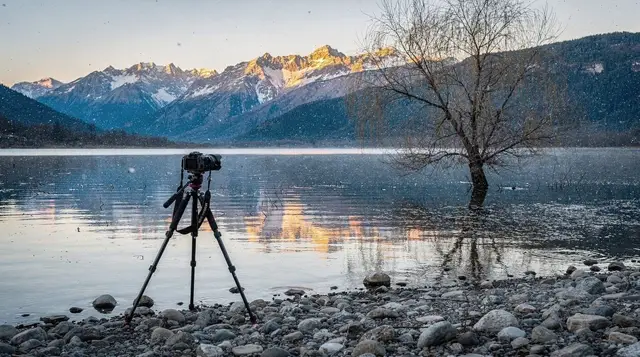
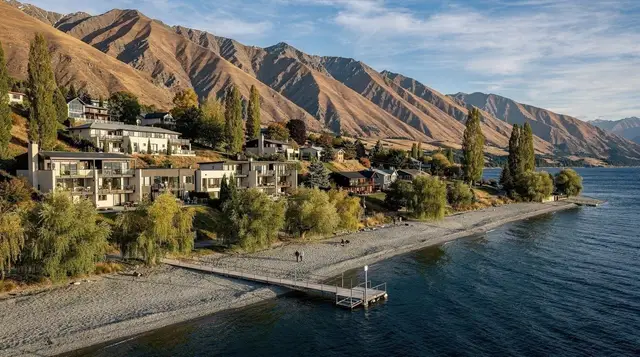
Photography spots around Queenstown
Where are the best photography spots around Queenstown?
Glenorchy's red wharf, the Wanaka tree, Bob's Peak at dusk, Moke Lake at dawn, Arrowtown in autumn and the Milky Way over Lake Tekapo cover the region's classic shots. Time them outside midday tour-bus hours, and check road and weather conditions before you set out.
Queenstown rewards photographers who work around the crowds rather than through them. A handful of locations account for most of the images you’ll have already seen of this part of the South Island: a red wharf, a lone willow, a gondola platform above a lake, a small backcountry tarn, one autumn street and a night sky reserve two hours up the road. All of them are reachable without a helicopter, and most without a guide — but several fill with tripods and phones the moment the light turns good. This guide gives times, orientations and access notes for each, plus the hour that keeps you out of everyone else’s shot.
Plan the shot before you plan the day
None of this works without the basics sorted first. Weather around Queenstown changes fast, and every location below depends on it — a bungy jump can wait for a clear afternoon, a sunset shot cannot. Check the forecast the night before and again at breakfast, and build a backup into the day rather than driving an hour on hope alone.
A few things that catch photographers out specifically:
- Drones. Several of these spots sit on Department of Conservation or reserve land, where drone flights need approval in advance, and flying over people or over the Skyline gondola cableway isn’t allowed at all. Check the rules for the specific reserve before you travel, not once you’re standing there with a drone case.
- Sandflies. Dawn and dusk — exactly when the light is best — are also when the sandflies (te namu) bite hardest around water. Cover up rather than relying on repellent alone if you’re going to be standing still for twenty minutes waiting for the light.
- Unsealed roads. Moke Lake, and the last stretch to several other viewpoints, are on gravel. Most standard rental agreements allow this, but check yours, and slow down — loose gravel photographers have put more cars in ditches here than any of the adventure activities.
- Guided options. If you’d rather have someone else worry about timing, access and settings, a half-day out with a guided photography tour led by an award-winning local photographer covers several of the spots below in one outing, with a vehicle and local knowledge of that day’s light included.
Glenorchy’s wharf, best before the buses arrive
The short red wharf at Glenorchy, 46 kilometres and about 45 minutes from Queenstown along one of the country’s more scenic drives, is one of the most reproduced images of the region — a straight timber jetty running out into Lake Wakatipu with the Humboldt and Richardson mountains behind it. It photographs well because the composition does most of the work: stand at the base, shoot straight down the boards, and the mountains and sky fill the rest of the frame.
The trap is timing. Glenorchy is also the drop-off point for Routeburn Track trampers and the start of several Lord of the Rings location tours, and from around mid-morning the wharf carries a steady rotation of tour groups and their phones. Arrive within the first hour after sunrise instead.
The water is usually at its calmest then, before any wind picks up, which is what gives the mirror reflections you’ll have seen in other people’s shots — and you’ll likely have the wharf to yourself. If you’re continuing past Glenorchy, the road to Paradise and the Dart River valley keeps going for another twenty minutes on gravel, with fewer people the further you go.
Bob’s Peak at dusk, above the lake
The Skyline gondola climbs to Bob’s Peak on a track pitched at 37.1 degrees — the steepest in the southern hemisphere — and the viewing platform at the top looks straight down Lake Wakatipu with the Remarkables opposite. It’s the easiest elevated view of Queenstown to reach: no hike, no permit, just a ticket and a ten-minute ride.
For photography, go up in the hour before sunset rather than at the moment of it. That gives time to find a clear rail position before the platform fills — it does fill, particularly on clear evenings in summer — and to shoot the town and lake in the last of the daylight before the alpenglow hits the Remarkables. Stay past sunset if the last gondola down allows it: Queenstown’s lights coming on below, with the lake still holding some colour in the sky, is a different and less-photographed shot than the standard daytime view. Check the last-descent time before you go up, since it varies by season and there’s no walking down.
Moke Lake at dawn, the quiet alternative
Fifteen minutes off the Glenorchy–Queenstown road on an unsealed side road sits Moke Lake, a small tarn ringed by tussock and mountains with a handful of DOC campsites on its shore and almost none of the crowd that finds Glenorchy or the Wanaka tree. It’s the spot to go if you want the mirror-reflection shot without company.
Dawn is the only time worth going. The lake sits low and still holds cold air overnight, so the water is at its flattest in the first light before any breeze reaches it — by mid-morning the reflections are usually broken. There’s no facility out there beyond basic camping toilets, no phone signal, and no fuel between Queenstown and the lake, so arrive with a full tank and a headtorch if you’re leaving before sunrise. It connects to Queenstown by the same road that continues on to Glenorchy, so the two can be combined into one early start if you’re prepared to choose which one gets the best light that morning.
The Wanaka tree, and when to skip the sunrise crowd
The lone willow standing in Lake Wanaka, 70 kilometres from Queenstown over the Crown Range (about an hour) or 116 kilometres via Cromwell (about an hour and a quarter), is probably the single most photographed tree in New Zealand, and it draws a genuine crowd of tripods at sunrise — arrive at first light expecting to share the shoreline with a dozen other photographers doing exactly the same shot.
If that’s not what you want, two options work better. The first is timing: the crowd usually clears within half an hour of the light going flat, so a slightly later start than the die-hards, or a return visit around mid-morning on a calm day, often gets you a clear run at it. The second is the hour before sunset instead of dawn — noticeably quieter, since most visitors treat the tree as a sunrise subject specifically. Either way, the shot depends on stillness: any wind breaks up the reflection the tree is known for, so check conditions rather than just the clock. Lake Hawea, fifteen minutes away over the Neck, is a workable backup if Wanaka’s shoreline is packed and Hawea’s isn’t.
Arrowtown’s autumn colours, in a two-week window
Arrowtown, 20 kilometres and about 20 minutes from Queenstown, turns in April — the poplars and other introduced deciduous trees along Buckingham Street and through the old gold-mining settlement colour up over a window of roughly two weeks, with the exact dates shifting by about a week each year depending on the season. This is genuinely worth planning a trip around rather than hoping to catch in passing; an April visit built around it is a reasonable way to structure a few days.
Buckingham Street itself is the postcard shot, but it’s also where the tour buses park, and by mid-morning in peak colour the street is full of people doing the same photo. Go before nine in the morning, when the light is lower and warmer through the leaves anyway, or walk the short distance to the old Chinese settlement at the edge of town, where the stone miners’ huts sit among the same trees with almost no one else around. An overcast day, rather than harsh sun, generally gives better colour saturation in the foliage than a bright blue-sky morning.
The Milky Way over the Mackenzie
Lake Tekapo, 265 kilometres and about three hours from Queenstown, sits inside the Aoraki Mackenzie Dark Sky Reserve — roughly 4,300 square kilometres of protected night sky, one of the largest reserves of its kind in the world. It’s a long way to go for one shot, but it’s genuinely dark in a way Queenstown itself no longer quite is, and the Church of the Good Shepherd on the lakeshore gives a foreground that photographs well under a full sky.
The core of the Milky Way is best photographed on a clear, moonless or near-moonless night — check the moon phase before you commit to the drive, since a bright moon washes out everything but the brightest stars. Winter nights are longer and often clearer but properly cold; summer gives easier conditions and a shorter dark window either side of midnight.
If you’d rather not manage exposure settings, tripod positioning and moonrise timing yourself after a three-hour drive, a starlight photography experience run from the reserve handles the technical side, or a more general stargazing tour covers the astronomy without the camera gear if that’s the part you’re really there for. For a shorter version of the same idea closer to base, see how stargazing from Tekapo compares with staying around Queenstown.
A seventh option: Skippers Canyon
Skippers Canyon — the gorge road built into the cliffs above the Shotover River during the gold rush — is one of the most striking landscapes near Queenstown, and one you should not attempt to reach in a rental car: the road is explicitly excluded from almost every standard rental agreement, and it’s a genuinely difficult drive with no room for error. A private photography tour into Skippers Canyon with an experienced 4WD driver is the practical way in, and it puts you there at whatever time the light is working rather than on a fixed group schedule.
Quick reference
| Spot | Distance from Queenstown | Best time | What to watch for |
|---|---|---|---|
| Glenorchy wharf | 46 km, ~45 min | First hour after sunrise | Tour buses from mid-morning |
| Bob’s Peak | In town, via gondola | Hour before sunset onward | Platform fills at sunset itself |
| Moke Lake | ~20 min, unsealed road | Dawn, before any breeze | Gravel road, no fuel or signal |
| Wanaka tree | 70 km via Crown Range, ~1 hr | Last hour before sunset | Sunrise draws the biggest crowd |
| Arrowtown | 20 km, ~20 min | Before 9am, April | Buckingham St fills by mid-morning |
| Lake Tekapo / Milky Way | 265 km, ~3 hrs | Clear, moonless night | Long drive, dress for the cold |
None of these times are guarantees. Queenstown’s weather turns quickly enough that a clear forecast the night before can be gone by the time you’re standing at the wharf, so build in a spare morning or evening if the shot matters to you, and check how conditions typically run by month or when to visit generally before locking in dates. If you’re combining several of these into one trip, the classic film locations around Glenorchy and a stop for the gondola and luge fit naturally alongside the shots above without much extra driving.
Common questions about photographing Queenstown and the Mackenzie
What’s the best time to photograph Glenorchy’s wharf?
Arrive within the first hour after sunrise, before the day-tour buses reach Glenorchy from around mid-morning. Calm early light gives the clearest reflections on Lake Wakatipu, and the road out is usually empty at that hour too.
Is the Wanaka tree always crowded?
At sunrise, yes — it’s the most photographed tree in New Zealand and a regular tour-bus stop. The crowd usually thins within half an hour of the light going flat, and the last hour before sunset is quieter than dawn.
Can I fly a drone at these locations?
Some sit on Department of Conservation or reserve land where drones need prior approval, and flying over people or the Skyline gondola line isn’t permitted regardless. Check the current rules for the specific reserve before you fly, not after.
When is Arrowtown’s autumn colour at its peak?
Usually a window of about two weeks in April, centred on the poplars and deciduous trees along Buckingham Street. The exact dates shift by roughly a week each year, so a mid-April visit is the safer bet than a fixed date.
Do I need a car to get to Moke Lake?
Yes. The final stretch of road in from Queenstown is unsealed and there’s no public transport out there, so it’s a rental car, a tour, or nothing.
When can I photograph the Milky Way at Lake Tekapo?
On a clear, moonless or near-moonless night, from within the Aoraki Mackenzie Dark Sky Reserve. Winter nights are longer and often clearer but sub-zero; summer gives easier conditions with a shorter darkness window.
Is Bob’s Peak worth the gondola fare if the sky is cloudy?
For sunset specifically, no — you’re paying for the view. Overcast days still work for daytime shots of the lake and town, and the gondola and luge run regardless, but check the forecast before paying for a dusk trip.
Photography tours on GetYourGuide
Verified deep-linked GetYourGuide tours. Book through these links and we earn a small commission at no cost to you.
GetYourGuide does not provide a product photo for this activity — the image shows the meeting point, photographed by us.