Queenstown adrenaline: 3 days
Three days is enough to do Queenstown’s headline activities properly, but only if you stop treating the itinerary like a checklist. Bungy, jet-boat, canyon swing, rafting and skydiving all ask something different of your body and your nerves, and stacking the wrong two on the same morning is how people end up green-faced in a shuttle van. This plan spreads the load, keeps a buffer for the Fiordland weather that grounds flights without warning, and tells you honestly where you’ll be queuing.
Why order matters more than the list
Every operator will happily sell you a Kawarau bungy at 9am and a Nevis Bungy at 2pm on the same day. Plenty of people do it. Fewer people enjoy day two afterwards. The adrenaline crash after a big jump or a cold-water swim leaves you flat for a few hours, and Queenstown’s activities are mostly booked in fixed morning or afternoon slots, not on demand.
The other constraint is weather. Skydiving and scenic flights over the Remarkables get cancelled for cloud, wind or low visibility more often than visitors expect — see our guide to booking tours in Queenstown for how operators handle reschedules. Water-based activities on the Shotover River and Kawarau Gorge run in far more conditions, so this itinerary puts the weather-sensitive activity on day one, when you’ve still got two days of slack if it’s rescheduled.
| Day | Focus | Physical load |
|---|---|---|
| Day 1 | Bungy + canyon swing | High (nerve), moderate (body) |
| Day 2 | Jet-boat + white-water rafting | High (body), wet and cold |
| Day 3 | Skydive + gondola luge, buffer built in | Moderate, front-loaded |
Before you start
Book your highest-priority activity — usually the bungy or the skydive — as early as you can, and read our bungy jumping guide to decide which of the three jumps suits you before you commit. Travel insurance for adventure activities matters here: New Zealand’s ACC scheme covers accident treatment costs for visitors, but it does not cover cancellation, lost income or getting you home if something goes wrong, and plenty of standard travel policies exclude bungy and skydiving outright. Check the fine print before day one, not after.
Pack for wet and cold regardless of the season. Rafting and jet-boating soak you even on a warm day, and the Kawarau River and Shotover River run glacier-fed and cold year-round. Bring a change of clothes you can leave in the van.
Day 1: Kawarau Bridge bungy and canyon swing
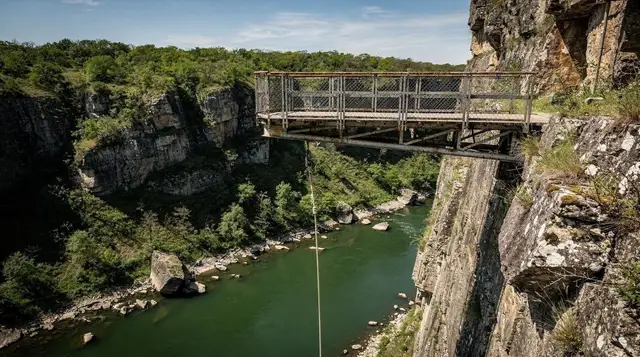
Start at the Kawarau Bridge, where AJ Hackett opened the world’s first commercial bungy site in November 1988. It’s still operating from the same 43-metre bridge over the Kawarau Gorge, and it’s the most approachable of Queenstown’s three bungy jumps — you can ask for a dip in the river on the way down, and spectators watch for free from the viewing deck. If you’d rather compare it against the higher, more committing jumps at The Ledge and the Nevis, our Nevis vs Kawarau vs The Ledge guide lays out the real differences in height, access and style.
Book the Kawarau Bridge bungyIf one jump isn’t enough, the combo ticket pairs the bungy with the Shotover Canyon Swing at the same general site — a 109-metre arc swing with around 60 metres of genuine free fall before the rope catches you, and roughly sixty different ways to launch, from a chair-tip to a backwards dive. It’s a different sensation to a bungy: the fall is longer and the stop is gentler, which suits people who found the idea of a bungy’s abrupt rebound off-putting. Our Shotover Canyon Swing and zipline guide covers the launch styles in more detail.
Combine the bungy with the canyon swingAfternoon: rest. Genuinely. Head back into Queenstown, eat properly — the Fergburger queue is real but the burger delivers — and skip anything more strenuous than a walk along the lakefront. Your body needs the recovery time before tomorrow’s rafting.
Day 2: Shotover Jet and white-water rafting
The Shotover River is the busiest and most concentrated adventure corridor near Queenstown, and today uses all of it. Start with jet-boating: the Shotover Jet is the only operator licensed to run the narrow canyons of the Shotover Gorge, spinning through 360-degree turns with rock walls close enough to touch. If you’d rather compare it against the KJet, which departs from central Queenstown, or the Dart River Jet out of Glenorchy, read our jet-boat operators compared guide first.
For the rafting half of the day, you have a real choice to make. The Shotover runs Grade III–IV through the Oxenbridge Tunnel and Skippers Canyon — technical, cold, and best for people who’ve rafted before or want the harder trip. The Kawarau is Grade II–III, higher-volume and friendlier, with the Dog Leg rapid as its main feature. Our Shotover vs Kawarau rafting comparison breaks down which suits your experience level, and note that the actual grade on both rivers climbs after rain, so check conditions the morning of your trip.
Try white-water surfing on the KawarauIf you’d rather spend the whole day on the water in a calmer, more scenic register, a full-day canyoning trip into the Routeburn Valley is the alternative — abseiling, sliding and swimming through a river gorge rather than rafting it, with none of the crowd of the Shotover run.
Book a full-day canyoning trip in the Routeburn ValleyBy evening you’ll be tired in the good way. Central Otago pinot noir with dinner is the obvious reward — see our Central Otago pinot noir guide if you want to understand what you’re drinking, though a wine tour itself belongs on a calmer day, not this one.
Day 3: skydive, then the gondola and luge as your buffer
This is the day built around uncertainty, because skydiving is the single activity in this itinerary most likely to be delayed. Book the earliest slot the operator offers — morning flights over the Wakatipu Basin tend to have calmer air — and treat the rest of the day as flexible around it. Jump altitude options usually run 9,000, 12,000 or 15,000 feet; the free-fall time scales with altitude, and our skydiving Queenstown guide has the specifics on each.
If the skydive gets pushed to the afternoon or bumped to a standby slot, don’t panic and don’t book something else physically demanding in its place. Use the morning for the Skyline Gondola instead — up to Bob’s Peak at a 37.1-degree gradient, the steepest cable-hauled gondola in the southern hemisphere, followed by a run or two on the luge track. It’s low-effort, entirely weather-tolerant, and gives you views over the lake and the Remarkables while you wait for a flight window.
| Activity | Typical price (NZD) | Duration | Weather sensitivity |
|---|---|---|---|
| Kawarau Bridge bungy | 205–275 | 2–3 hrs incl. transfer | Low |
| Canyon swing | 220–280 | 2–3 hrs | Low |
| Shotover Jet | 145–165 | 1 hr on water | Low |
| Kawarau/Shotover rafting | 210–260 | Half day | Moderate (river level) |
| Skydive (12,000 ft) | 330–380 | Half day incl. wait | High |
| Gondola + luge | 65–90 | 1–2 hrs | None |
Prices move with season and operator; treat these as a planning range, not a quote. Queenstown is the most expensive stop in New Zealand in peak summer, and adventure activities are priced accordingly — budget more if you’re combining several in one trip.
What this itinerary deliberately leaves out
Three days of this intensity doesn’t leave room for the Nevis Bungy or Nevis Swing, both of which sit further out at the Nevis site (about 45 minutes by 4WD) and are worth their own half-day rather than a rushed add-on. It also skips Milford Sound entirely — cramming a 4-hour-each-way drive into an adrenaline-focused trip is how people arrive exhausted for the next day’s rafting. If you want to add it, our Queenstown adventure days guide or a dedicated day trip to Milford Sound fits better as a fourth day, once your body has recovered.
FAQ: planning an adrenaline-focused Queenstown trip
Is 3 days enough for bungy, jet-boat, rafting and skydiving?
Yes, if you spread them across the three days rather than stacking them. Trying to fit all four into two days is possible but leaves no buffer for the skydive being pushed by weather, which is common.
Which bungy jump should I choose: Kawarau, The Ledge or the Nevis?
The Kawarau Bridge is the most accessible and the only one with a river dip option. The Ledge, from Bob’s Peak, allows a running or backward launch. The Nevis is the highest at 134 metres with 8.5 seconds of free fall, reached by 4WD from Queenstown. See our comparison guide for full details.
Does travel insurance cover bungy jumping and skydiving in New Zealand?
Not automatically. New Zealand’s ACC scheme covers accident-related medical treatment for visitors, but not cancellation, lost income or repatriation, and many standard travel insurance policies exclude adventure activities like bungy and skydiving unless you add specific cover.
What happens if my skydive gets cancelled for weather?
Operators typically rebook you for the next available slot or offer a refund if you can’t return. Booking your skydive on day one or early on day three, rather than your last afternoon in town, gives you room to reschedule without losing the activity entirely.
Is the Shotover or Kawarau better for white-water rafting?
The Shotover is Grade III–IV, colder and more technical, running through the Oxenbridge Tunnel and Skippers Canyon. The Kawarau is Grade II–III and more accessible for first-time rafters. Both grades increase after heavy rain.
Do I need a rental car for this itinerary?
No. Every activity in this itinerary — bungy, jet-boat, rafting, canyon swing, skydiving and the gondola — operates shuttle transfers from central Queenstown accommodation, which is part of the ticket price.
How physically demanding is this itinerary?
Moderately to highly demanding. None of the activities require particular fitness, but the cumulative effect of cold water, adrenaline and early starts across three days is tiring. Build in the rest afternoon on day one as described, not as an optional extra.
Bungy, swings & skydives on GetYourGuide
Verified deep-linked GetYourGuide tours. Book through these links and we earn a small commission at no cost to you.
GetYourGuide does not provide a product photo for this activity — the image shows the meeting point, photographed by us.