Queenstown in 1 day: what actually fits
One day in Queenstown works if you accept a hard limit from the start: everything has to stay inside the Wakatipu basin. That’s the front of the lake, the gondola above town, a couple of hours on the water, and one afternoon excursion — Gibbston Valley or Arrowtown, not both. Try to add Milford Sound or Doubtful Sound to the same day and something gets cut short, usually the part you’ll remember. This plan keeps the pace realistic, gives you a rain backup, and tells you honestly where the time actually goes.
Before you start: the trap this itinerary avoids
Queenstown sells day trips to Milford Sound constantly, and they’re genuinely worth doing — just not on the same day as everything below. The round trip is 288 km and about 4 hours’ driving each way on the Milford Road, before you’ve added a 90-minute cruise. Bus tours advertise the trip as a single day and it is, technically, but it’s a 12 to 13-hour door-to-door day that leaves almost nothing for Queenstown itself.
If Milford is the priority, read our Milford Sound day trip guide and give it its own day — ideally with a night in Te Anau either side. We’ve also written honestly about what a 13-hour day trip actually costs you in tiredness and missed stops, if you want the unfiltered version before you decide.
This itinerary assumes no rental car. Queenstown itself is walkable in about ten minutes end to end, the gondola is a five-minute walk from most central accommodation, and both Gibbston and Arrowtown are covered by shuttles and tour pickups, so a car adds nothing to this particular day.
Morning: the waterfront and the Skyline Gondola (8:00am–11:30am)
Start at the lakefront before the town wakes up properly. Queenstown Gardens, a short walk around the peninsula east of the town centre, is quiet before 9am and gives you a first look at Lake Wakatipu without the crowds that build up later.
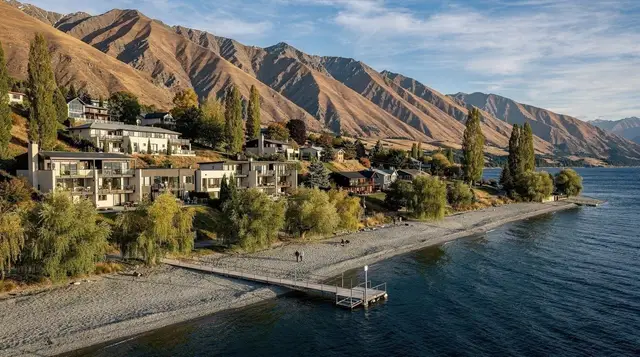
The lake itself is worth a slow look: it’s 80 km long, shaped like a lightning bolt, and roughly 380 m deep in places — deep enough that it never warms much past around 10°C, whatever the season. If you notice the shoreline creeping up and down over the course of the morning, that’s not you imagining things; the lake genuinely rises and falls by 10 to 25 cm every 26 minutes or so, a seiche effect Māori tradition explains as the heartbeat of the giant Matau, said to sleep beneath the lake bed.
By 8:30am, head to the base of the Skyline Gondola on Brecon Street. This is the one queue worth beating: it’s a five to ten-minute ride, but tour groups start arriving from around 10am and the line can stretch to 30 minutes or more by midday in the December-to-February peak. At the top, Bob’s Peak sits above town at a genuinely steep pitch — the gondola track runs at 37.1 degrees, the steepest of any in the southern hemisphere — and the platform gives you a clean view across the basin to The Remarkables, the jagged range opposite town that’s one of only two ranges in New Zealand running directly north–south.
Budget 60 to 90 minutes up top. That covers the view, a coffee, and — if you want it — a run or two on the luge track, which is genuinely good fun and not just a kids’ activity, though it does add NZD 20–50 depending on how many rides you buy. Full details, including current pricing and queue patterns, are in our Skyline Gondola and luge guide. Be back down by 11:15am if you want a proper midday window on the lake.
Midday: on Lake Wakatipu (11:30am–2:00pm)
This is the part of the day to build around one thing on the water, plus lunch, rather than trying to layer in several.
The classic choice is the TSS Earnslaw, the coal-fired steamship that’s been working the lake since 1912 and still burns coal rather than diesel. A short return sailing without the farm stop runs about an hour, which fits neatly into this window; the full Walter Peak farm-visit version runs closer to three hours and will force you to cut the afternoon plan below, so only book that longer version if you’re willing to drop Gibbston or Arrowtown entirely.
If you’d rather be active than aboard a heritage steamer, the lake also works well for watersports. Parasailing gives you a clean, high view back over the basin without needing any real skill or fitness:
a parasailing flight above Lake Wakatipu, which departs from the town centre and takes about an hour including the boat transfer, generally runs NZD 130–180 per person.
For something calmer, sea kayaking is available a short drive out at Moke Lake, a smaller and much quieter lake tucked into the hills behind town — worth knowing about if the main lakefront feels busy:
a guided kayaking trip on Moke Lake includes transfers from Queenstown and typically runs two to three hours, so treat it as an alternative to the gondola-plus-cruise combination above rather than an addition to it.
For lunch, the honest advice is to accept the queue or avoid it deliberately. Fergburger has had a line out the door since it opened in 1994 and that hasn’t changed; if you don’t want to lose 20–40 minutes standing in it, the lakefront cafés and takeaway options nearby are perfectly good and considerably faster. Either way, budget NZD 15–25 for lunch.
Afternoon: Gibbston Valley or Arrowtown (2:00pm–6:00pm)
Pick one. Both are doable without a car, both take roughly the same amount of time to reach, and trying to combine them turns a relaxed afternoon into a rushed one.
Option A: Gibbston Valley (25 km, about 25 minutes)
Gibbston is Central Otago’s wine country in miniature — the highest and coolest of the region’s wine subregions, and the closest to Queenstown. It’s built around the Kawarau Gorge, and pinot noir accounts for roughly three-quarters of what’s planted here. A single tasting at one of the valley’s cellar doors runs NZD 15–30, often waived with a purchase; our Gibbston Valley wineries guide and Central Otago pinot noir guide cover which cellar doors are worth the stop if wine is the main draw.
Gibbston is also where commercial bungy jumping was born: AJ Hackett opened the Kawarau Bridge site in November 1988, and it’s still running from the same 43 m bridge today. Watching jumpers from the bridge viewing platform is free; if you want to do it yourself, or prefer the swing version, this combo pairs the two:
a combined Kawarau Bridge bungy and swing session typically runs NZD 250–320 depending on which elements you book, and takes about two hours including transfers.
If you’d rather stay dry-adjacent but still get an adrenaline hit, the Kawarau River also has a gentler whitewater option that doesn’t require rafting experience:
white water surfing on the Kawarau River runs around two to three hours including gear and a safety briefing, generally NZD 150–200 per person, and works as a genuine alternative to wine tasting if that’s more your afternoon.
Option B: Arrowtown (20 km, about 20 minutes)
Arrowtown is the slower, more historical choice. It was built almost overnight during the 1862 gold rush on the Arrow River, and Buckingham Street still has around sixty original buildings from that era. The Chinese settlement at the edge of town is one of the more honest heritage sites in the region — the stone huts still standing are the real remains of the Cantonese miners who worked here through the 1860s and after, not a reconstruction. The Lakes District Museum on the main street covers the gold-rush history in more depth if you want an hour indoors, which also makes Arrowtown the better pick if the weather turns.
Arrowtown has no bungy or wine-tasting equivalent, but it’s the right choice if you’d rather walk quiet streets and read plaques than book another paid activity — and it’s the cheaper afternoon of the two by a wide margin, with the museum entry the only real cost (NZD 10–15).
Evening: back in Queenstown
Either shuttle gets you back to town by around 6pm, in time for dinner without a rush. The lakefront restaurants along Beach Street and Marine Parade cover most budgets, from casual fish and chips to a proper sit-down dinner with a lake view; expect NZD 25–45 for a main course at most places. If you skipped Fergburger at lunch and still want to try it, the queue thins out noticeably after 8pm. New Zealand doesn’t have a tipping culture, so the price on the menu is the price you pay.
If your legs are still willing, a handful of craft breweries and small gin distilleries around town make for a low-key end to the day rather than another booked activity — our Queenstown restaurants and food scene guide has specifics.
If it’s raining: your plan B
Queenstown gets weather changes fast, and this itinerary leans on outdoor viewpoints, so it’s worth having a fallback rather than hoping the forecast is wrong. The gondola keeps running in light rain, but the luge track closes in heavy rain or strong wind, and the view from Bob’s Peak is the first thing to disappear in low cloud — so on a genuinely wet morning, swap the gondola for a later, shorter visit and start the day indoors instead.
Arrowtown’s museum and the Chinese settlement’s covered display areas both work well in rain, and Gibbston’s cellar doors are indoor stops by definition, so either afternoon option survives bad weather better than the morning does. A full rundown of what stays open and what doesn’t is in our Queenstown rainy day guide — worth a look the night before if the forecast looks doubtful.
Queenstown in 1 day: frequently asked questions
Can I fit Milford Sound into this itinerary as well?
No. Milford Sound is 288 km and about 4 hours’ drive each way from Queenstown, so a return trip alone takes 8 hours before you add the cruise. Combining it with a day inside the Wakatipu basin means missing one or the other — treat Milford as its own full day.
What time should I arrive at the Skyline Gondola to avoid queues?
Arrive by 8:30am. The gondola opens early and queues build fast once tour groups arrive from around 10am, especially in summer (December to February).
Do I need a rental car for this itinerary?
No. Queenstown’s centre, the gondola, and lake cruises are all walkable or a short stroll from most accommodation. Gibbston Valley and Arrowtown both run scheduled shuttles and wine-tour pickups, so this plan works entirely without a car.
Should I choose Gibbston Valley or Arrowtown for the afternoon?
Gibbston suits anyone interested in wine, watersports on the Kawarau River, or watching (or doing) the original Kawarau Bridge bungy. Arrowtown suits anyone who prefers history and a slower pace, particularly the old Chinese settlement and the Lakes District Museum.
What’s the backup plan if it rains all day?
The gondola still runs in light rain but the luge closes in heavy rain or high wind, and Bob’s Peak loses its view entirely. Swap the morning for the Chinese settlement and museum in Arrowtown, or a wine tasting in Gibbston — both work fine indoors.
Is the TSS Earnslaw cruise worth it with only a few hours at midday?
The short return cruise without the Walter Peak farm stop runs about an hour and fits a midday window easily. The full farm-visit version runs closer to three hours and eats into the afternoon, so it only works if you drop Gibbston or Arrowtown altogether.
How much does a day like this actually cost?
Excluding accommodation, expect roughly NZD 250–450 per person: gondola and luge (NZD 60–100), lunch (NZD 15–25), one midday or afternoon paid activity (NZD 130–320 depending on choice), dinner (NZD 25–45), and shuttle transport (NZD 20–40 return). Queenstown is New Zealand’s most expensive destination in peak season, and this day reflects that rather than hiding it.
Is one day too rushed to enjoy Queenstown properly?
It’s tight but workable if you commit to one afternoon option rather than both, and treat the gondola and lake activity as the fixed points around which everything else flexes. For a less rushed version of the same basin, see our two-day itinerary; for how much time Queenstown really needs, read how many days in Queenstown.
tours.1 days
Verified deep-linked GetYourGuide tours. Book through these links and we earn a small commission at no cost to you.
GetYourGuide does not provide a product photo for this activity — the image shows the meeting point, photographed by us.