Why the ice reaches so far into the rainforest
Franz Josef Glacier — Kā Roimata o Hine Hukatere in te reo Māori — is one of the few glaciers on the planet that descends into temperate rainforest. The ice pushes down through steep, heavily forested terrain to around 300 m above sea level, close enough to the coast that you can stand among ferns and rātā trees and look straight up a valley of ice. Nowhere else at this latitude does a glacier reach so low. Heavy rain feeding the névé high above and a steep drop to the terminal face keep the ice moving fast, which is also why it has been so unpredictable to manage on foot.
The glacier sits on New Zealand’s West Coast, on the opposite side of the Southern Alps from Queenstown, with Fox Glacier / Te Moeka o Tuawe just 25 km to the south. Together they’re usually planned as a pair — see Franz Josef vs Fox Glacier if you’re deciding which to base yourself in, or whether to see both.
The 2012 rule that changes everything about visiting
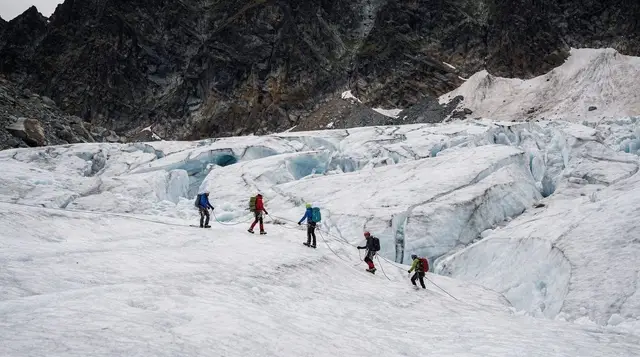
This is the detail that trips people up most: since 2012, walking onto Franz Josef Glacier itself has not been possible. As the ice retreated up a narrower, steeper section of valley, the DOC-managed access closed for safety — the terminal zone is prone to rockfall, sudden ice collapse and unstable moraine, and guided walking parties could no longer be kept safe on it. Older guidebooks, blog posts and even some brochure photography still show groups walking roped together on the ice in crampons. That doesn’t happen at Franz Josef any more.
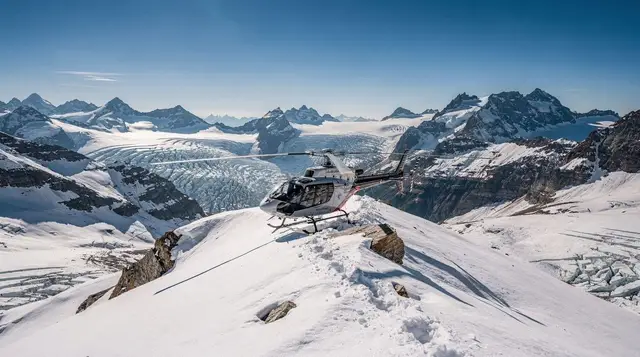
The only way onto the glacier today is by helicopter, landing directly on stable ice higher up the névé. If a “glacier walk” is advertised without mentioning a helicopter component, treat it with suspicion — it’s either describing the valley walk to the lookout (which does not reach the ice) or it’s out of date. See Alpine and glacier landings explained for how snow landings work and what they involve.
Heli-hikes: what actually happens on the ice
A heli-hike is a return helicopter flight that lands a small group directly on the glacier, where a guide leads a walk of an hour or more through ice formations, crevasses and ice caves that shift from season to season. Crampons and equipment are provided; fitness requirements are moderate rather than extreme, but the terrain is genuinely uneven ice, not a groomed path.
a helicopter ride over three glaciers with a landing on Franz Josef is one of the more complete options if you want the flight and the landing in one trip without a long walking component. For a longer day that pairs a snow landing with time to eat lunch surrounded by alpine peaks, a picnic in the mountains with helicopter transfers is a slower-paced alternative to a straight there-and-back hike.
Every heli-hike and scenic flight out of Franz Josef is weather-dependent. Cloud on the peaks, wind through the valley or low visibility grounds the helicopters, and cancellations happen often enough that operators build flexible rebooking into their policies rather than treat it as a rare event. Don’t schedule a heli-hike for your only day at Franz Josef if you can help it — see travel insurance for adventure activities, since many standard travel policies exclude helicopter activities specifically, not just the well-known ones like bungy.
Scenic flights, if landing isn’t the point
Not everyone wants a guided ice walk — some visitors just want to see the scale of the glacier and the alpine terrain around it from the air. a 35-minute flight over both Franz Josef and Fox Glacier covers both icefields without a walking component, useful if time or mobility is limited, or if you’ve already done a heli-hike at one glacier and want the wider view without repeating it. Flights like this typically include a brief snow landing for photos rather than a guided walk on the ice.
For general background on how these products differ from a full heli-hike — flight time, landing time, what’s actually included — see glacier heli-hike guide.
The valley walk to the terminal face
If you’re not flying, or the weather has grounded every helicopter for the day, there’s still a reason to visit: a walking track leads from the glacier car park up the valley floor to a lookout point facing the terminal face. It’s an easy, mostly flat walk on a formed track, usually well under two hours return, through a landscape of glacial outwash, regenerating forest and bare rock still marked by the ice that covered it within living memory.
The walk won’t put you on the glacier — the closure applies to the ice itself, not the valley approach — but it’s the only free, weather-independent way to see the terminal face up close, and it makes the scale of the retreat obvious in a way a helicopter flight, moving fast overhead, doesn’t. Along the way, look for signage marking where the ice front stood in past decades; walking past several of these markers in a few hundred metres is a more effective way to grasp how far the glacier has pulled back than any single statistic.
The retreat, and why it’s hard to give one number
Franz Josef is one of the most closely monitored glaciers in the Southern Hemisphere, and its history isn’t a simple straight-line retreat. Periods of retreat have been interrupted by short readvances when a run of wet, cold years fed the névé faster than the terminus could melt back — which is part of why the valley below is littered with terminal moraine at multiple points, each marking where the ice front briefly stabilised before pulling back again.
The net trend over the past century has been retreat, and it’s this instability — not simply “the glacier is smaller now” — that’s the real reason foot access closed in 2012: a glacier that can advance and retreat quickly is also one that can collapse or calve without warning at its terminus.
For a sense of how this compares elsewhere in the region, Tasman Glacier from Queenstown covers New Zealand’s longest glacier, whose terminal lake — non-existent before the 1970s — has been growing every year since as the ice retreats into it.
The village, and what to do when the helicopters aren’t flying
Franz Josef township is small — a strip of accommodation, cafés and tour desks that exists almost entirely to service glacier visitors — but it has more infrastructure than Fox Glacier village to the south, including a wider range of restaurants and places to stay. It’s a sensible base for a night even if you’re planning to see both glaciers.
The village’s hot pool complexes are the standard wet-weather fallback: a mix of shared outdoor tubs at varying temperatures and private tubs bookable by the hour, with day spa treatments on offer at some. After a day of driving the Haast Pass or waiting out grounded flights, they’re a reasonable way to spend an evening rather than a highlight to plan a trip around. See onsen, hot pools and sauna around Queenstown for how they compare with options closer to base, if you’d rather do this nearer Queenstown instead.
If the rain is heavy — and on this stretch of coast it often is — a glacier-adjacent alternative is time on the water. a three-hour kayak tour on Lake Mapourika or a two-hour cruise on the same lake both run in conditions that ground helicopters, and the glacier-fed lake itself, ringed by rainforest, is worth the detour on its own terms.
Getting here from Queenstown
Franz Josef is about 350 km from Queenstown by road, roughly 5.5 hours’ driving via Wanaka and the Haast Pass — one of only two routes across the Southern Alps in the lower South Island, and a genuinely scenic but winding drive that shouldn’t be rushed. A same-day return from Queenstown is possible in theory but a very long day in practice; most visitors either stay a night at Franz Josef or build it into a longer loop that also takes in Fox Glacier and Lake Matheson, 6 km from Fox and known for its still-morning reflections of Aoraki on a clear day.
For route notes specific to this drive — fuel stops, what the pass is like in different seasons, how it compares with driving via the Lindis Pass to Aoraki instead — see Queenstown to Franz Josef and the broader driving in New Zealand: South Island guide. If you’d rather have the route planned out day by day, Queenstown to West Coast glaciers in 4 days lays out a loop that includes both glaciers without the single very long driving day.
Franz Josef or Fox Glacier — and whether to do both
Both glaciers are heli-access only, both sit in the same rainforest-to-ice landscape, and both are reached by the same road. The practical differences are more about base and mood than the ice itself: Franz Josef’s village is bigger and busier, with more choice of food and accommodation; Fox is quieter, and pairs naturally with the Lake Matheson walk. Doing both heli-hikes on the same trip is possible but adds cost without adding much variety — most visitors pick one glacier for a heli-hike and treat the other as a drive-through or a valley walk. Franz Josef vs Fox Glacier sets out the trade-offs in more detail.
Franz Josef options compared
| Option | Approx. duration | Ice landing? | Best for |
|---|---|---|---|
| Valley walk to the lookout | 1–2 hours | No | Free, weather-independent, budget days |
| Scenic flight with snow landing | 30–40 minutes | Brief landing, no guided walk | Limited time, first-timers, photos |
| Full heli-hike | Half day | Yes, guided walking on ice | The main event, if weather allows |
| Lake Mapourika kayak or cruise | 2–3 hours | No | Wet-weather days, a calmer alternative |
| Multi-glacier scenic flight | 30–40 minutes | Brief, covers Franz Josef and Fox | Comparing both glaciers from the air |
Questions about Kā Roimata o Hine Hukatere
Can you still walk onto Franz Josef Glacier?
No. Access on foot to the ice itself was closed in 2012 as the glacier retreated into a steep, unstable section of valley prone to rockfall and ice collapse. Today the only way onto the glacier is by helicopter.
How much does a Franz Josef heli-hike cost?
Budget roughly NZD 450–650 per person for a heli-hike with guided time walking on the ice, and less for a scenic flight with a snow landing but no walking. Prices vary by flight time and operator, and weather cancellations are common, so build in a spare day if you can.
Is Franz Josef or Fox Glacier better?
Both sit within 25 km of each other and both are heli-access only. Franz Josef has the larger village with more accommodation and food options; Fox is quieter and pairs naturally with Lake Matheson’s glacier reflections. Many visitors base themselves in one and visit both.
Can you see the glacier without taking a helicopter flight?
Yes. A walking track leads from the car park up the valley to a lookout facing the terminal face, at a safe distance from the ice. It shows how far the glacier has retreated but doesn’t put you on the ice itself — for that, a helicopter is the only option.
How far is Franz Josef from Queenstown, and is it doable in a day?
It’s about 350 km and 5.5 hours’ drive one way via Wanaka and the Haast Pass. A same-day return from Queenstown is a very long day on a winding road; most people either stay overnight at Franz Josef or fold it into a multi-day West Coast loop.
What are the hot pools at Franz Josef village like?
The village has commercial hot pool complexes with a mix of shared outdoor tubs at different temperatures and private tubs bookable by the hour, plus day spa add-ons. They’re a good wet-weather fallback when flights are grounded.
Why does the glacier reach so much lower than other glaciers?
Heavy Tasman Sea rainfall and steep terrain feed the ice fast, pushing the glacier down through temperate rainforest to around 300 m above sea level — a combination of latitude, rainfall and slope found almost nowhere else on Earth.