Tasman Glacier from Queenstown: boats, heli-hikes and ski-planes
Can you visit the Tasman Glacier as a day trip from Queenstown?
Yes, but it's a long day: about 265 kilometres and 3 hours 30 minutes each way by road via Cromwell, the Lindis Pass and Twizel. A direct scenic flight or helicopter tour from Queenstown cuts the travel time to under an hour each way, at a higher price.
New Zealand’s longest glacier, and its youngest lake
The Tasman Glacier runs about 23 kilometres down the eastern flank of Aoraki, fed by névé fields near the Tasman Saddle at over 2,000 metres and grinding down to its terminal face at around 700 metres. It’s the longest glacier in the country, longer than the Franz Josef and Fox glaciers combined, and it sits in a very different setting to those two: instead of pushing into rainforest on the wet West Coast, it flows down a wide, grey, boulder-strewn valley in the dry Mackenzie Basin, hemmed in by lateral moraine walls that look almost man-made.
What most people photograph today isn’t really the glacier itself. It’s Tasman Lake, a body of grey, silty meltwater sitting in front of the ice that didn’t exist before the 1970s. As the glacier’s snout retreated below the level of the moraine dam holding it in, meltwater started pooling behind that dam instead of draining away, and the lake was born. It has been growing most years since, now several kilometres long, filled with floating icebergs calved from the glacier’s face and streaked with rock flour that turns the water an opaque grey-green rather than the turquoise of Lake Pukaki downstream, where the finer sediment has had time to settle.
Why the lake keeps growing
This is worth saying plainly rather than dressing up: the Tasman Glacier is retreating, and its lake is expanding as a direct result, by something on the order of a few hundred metres a year in recent decades. That’s not a dramatic one-off collapse; it’s the same slow, well-monitored process that has been reshaping most of New Zealand’s alpine glaciers for decades, and scientists have been tracking this particular lake’s growth since it first formed. It’s a fact to mention to visitors, not a reason to sensationalise the trip. The upside, from a visitor’s point of view, is that the lake is what makes a boat cruise possible in the first place: without it, there’d be no water to put a boat on.
Getting there from Queenstown
It’s a genuine day-trip distance, not a quick detour. From Queenstown it’s about 265 kilometres and roughly 3 hours 30 minutes of driving, via Cromwell, the Lindis Pass, Omarama and Twizel, before the final run up the Tasman Valley road to Aoraki/Mount Cook Village. The road is sealed the whole way and doesn’t have the hairpin reputation of the Crown Range or Milford Road, but it is long, and the Mackenzie Basin section is exposed to strong crosswinds that catch campervans and roof-box cars off guard.
Three realistic ways to structure the visit:
- Self-drive day trip. Doable but long: allow 8 to 9 hours for the round trip plus whatever time you spend at the glacier, which for a boat cruise means arriving with a couple of hours to spare either side of the booked departure.
- Guided day tour from Queenstown. A driver handles the road, usually with stops at Lake Pukaki or Lake Tekapo on the way, and the day is built around a specific glacier activity. A day trip from Queenstown to Mount Cook by private car is the version to book if you’d rather not drive yourself.
- Direct flight. A scenic flight or helicopter transfer from Queenstown cuts travel time to under an hour each way and turns the whole outing into a half-day, at a significantly higher price than the road options.
If glaciers are the whole point of the trip and time is limited, see how this compares to heading west instead: Franz Josef versus Fox Glacier covers the West Coast alternative, which is closer to Queenstown by road but has its own access rules (see below).
Boat cruises on Tasman Lake
This is the accessible option, and for most visitors, the right first choice. A small boat takes you out among the icebergs on Tasman Lake, close enough to the calving terminal face to feel its scale without being in the drop zone, over water that’s typically around 2°C year round. Cruises depart from a shed a short drive from Aoraki/Mount Cook Village, with a walk down through the terminal moraine to the boat launch beforehand.
Cruises run roughly an hour to an hour and a half including the walk in, and cost in the region of NZD 170 to 190 per adult. They’re weather-dependent but less fussy than flying: rain doesn’t stop a cruise, though sustained high wind or an unstable moraine track can. Because the lake changes shape as the glacier calves and the ice shifts, no two cruises look quite the same, which is part of the appeal if you’ve already done a glacier boat trip elsewhere.
Heli-hiking the glacier
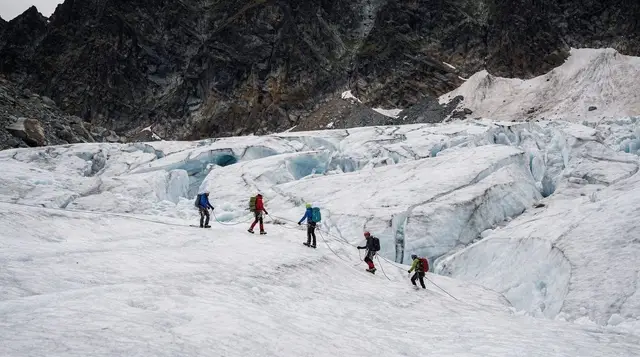
Walking up onto the ice from the lake edge isn’t offered, and for good reason: the lower glacier is buried under rock debris, riddled with crevasses, and the terminal face calves without warning. Guided foot access instead means a heli-hike: a helicopter lifts you from the ground up to the glacier’s stable névé, well above the crevassed and debris-covered lower tongue, where a guide leads a roped walk in crampons across clean snow and ice, with views back down the valley to the lake and out to Aoraki itself.
A heli-hike onto the Tasman Glacier typically runs three to four hours including the flights, and is the closest most visitors get to actually standing on the ice here. It’s the Tasman Valley’s equivalent of what changed on the West Coast glaciers in 2012, when foot access to Franz Josef and Fox moved onto a helicopter-only basis; see the guide to glacier heli-hikes for how the two compare, and expect the same caveat that applies everywhere in this valley: flights don’t go in poor weather, and cancellations or reschedules happen often enough that it’s worth building a spare day into the itinerary if this is the priority.
Ski-plane and scenic flights
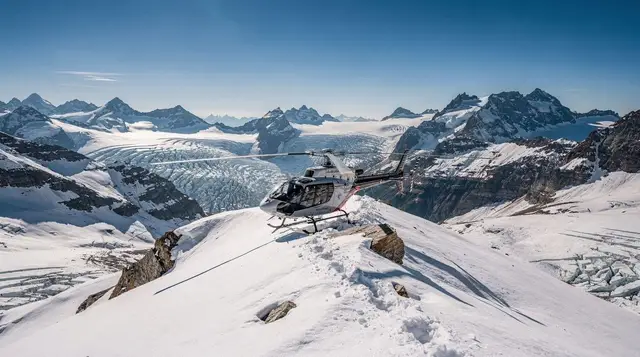
A ski-plane doesn’t land you on the glacier for a walk; it’s a fixed-wing aircraft fitted with skis that flies a scenic loop over the Tasman Glacier, the Aoraki massif and the surrounding névé fields, usually touching down briefly on a high snowfield before flying back out. It’s a way to see far more terrain in a short flight than a boat cruise or heli-hike can show, including the upper glacier and neighbouring peaks that aren’t visible from the valley floor.
Helicopter options range from short scenic flights over the glacier to longer trips that add an alpine landing:
- A Tasman Glacier helicopter flight for a shorter scenic loop without a hike.
- A 3-hour Tasman Glacier helicopter ride and hike that combines the flight with time on the ice.
Both, like the heli-hike, depend entirely on the weather closing in around Aoraki, which it does often; see alpine and glacier landings explained for what these flights actually involve and how operators handle cancellations.
Comparing the options
| Option | Typical duration | Approx. cost (NZD, per adult) | On the ice? | Weather sensitivity |
|---|---|---|---|---|
| Boat cruise on Tasman Lake | 1–1.5 hours | 170–190 | No, alongside it | Low to moderate |
| Heli-hike | 3–4 hours | 600–800+ | Yes, guided, roped | High |
| Helicopter scenic flight | 20–40 minutes | 300–500 | Brief landing, optional | High |
| Ski-plane flight | 40–60 minutes | 400–600 | Brief snowfield landing | High |
| Guided day trip from Queenstown | Full day (10–12 hours) | 400+ including one activity | Depends on activity chosen | Moderate to high |
Prices move with the season and the operator, and none of these figures include the roughly 3 hour 30 minute drive each way if you’re not flying direct from Queenstown.
Making a day of the wider basin
Because it’s such a long way from Queenstown, most visitors pair the Tasman Glacier with the rest of the Mackenzie Basin rather than treating it as a single-purpose trip. The Hooker Valley Track is the classic pairing: a flat, three-hour walk to a lake at the foot of the Hooker Glacier, on the opposite side of the same massif, bookable the same day as a Tasman Lake cruise if timing allows.
Lake Tekapo and its dark-sky reserve sit on the return route and reward an overnight stop far more than a same-day glacier visit does; see stargazing at Tekapo versus Queenstown and the dark sky reserve guide if the stars are part of the plan.
For anyone extending the trip further, the four-day Queenstown to West Coast glaciers itinerary loops in Franz Josef and Fox on the other side of the divide, and Mt Cook: Aoraki Ultimate bundles several of the region’s activities into one longer package for visitors basing themselves at Aoraki/Mount Cook Village rather than doing it all from Queenstown in a single push.
If the return drive is the sticking point, staying a night at Aoraki/Mount Cook Village or in Twizel turns a rushed 8-hour round trip into a relaxed overnight, with the road back to Queenstown open at either end. Whichever way it’s arranged, this isn’t a casual add-on to a Queenstown weekend; it’s a genuine excursion, and honest planning is the difference between a good day and an exhausting one. For the read on why the brochure version of glacier day trips often glosses over the driving, see what the brochure doesn’t say about glaciers.
Tasman Glacier day trips: frequently asked questions
How long is the Tasman Glacier?
About 23 kilometres, making it New Zealand’s longest glacier. It flows down from the Tasman Saddle area at the head of the Tasman Valley, on the eastern side of Aoraki.
Why does Tasman Lake keep getting bigger?
The lake first appeared in the 1970s as the glacier’s snout retreated below the surrounding moraine and meltwater pooled behind it. As the glacier keeps retreating and calving into the water, the lake keeps growing, roughly a few hundred metres a year. It’s an ongoing, well-documented process, not a sudden collapse.
Can you walk on the Tasman Glacier?
Not casually. The lower glacier is broken up by crevasses and buried under rock debris, and the terminal face calves icebergs without warning, so walking up from the lake edge isn’t offered. Guided access to stable ice higher up is by helicopter.
Is a boat cruise on Tasman Lake worth it?
For most visitors, yes. It’s the cheapest way to get close to the ice, running among floating icebergs with the terminal face in view, and it doesn’t depend on clear skies the way a scenic flight does, though it can still be cancelled in high wind or heavy rain.
What’s the difference between a heli-hike and a ski-plane flight?
A heli-hike lands you on the glacier’s névé for a guided walk in crampons, with a guide roped up for crevasse safety. A ski-plane doesn’t land on the ice at all; it’s a scenic flight over the glaciers and the Aoraki massif that typically touches down on a snowfield briefly, then flies on.
How much does it cost to see the Tasman Glacier from Queenstown?
A boat cruise on Tasman Lake runs roughly NZD 170 to 190 once you’re at Aoraki/Mount Cook Village. A helicopter flight with a landing adds several hundred dollars more, and a full day trip from Queenstown that bundles transport, the drive and a glacier activity typically runs from NZD 400 upward per person.
What’s the best time of year to see the Tasman Glacier?
Late spring through autumn (November to April) gives the longest daylight and the most stable flying weather, though the Mackenzie Basin can turn windy any month. Winter cruises and flights still run, weather permitting, with a starker, snow-covered landscape.
Do I need to book in advance?
For boat cruises and heli-hikes, yes, especially in summer when the Mackenzie Basin is busy and weather backlogs push bookings onto the next clear day. Same-day availability exists but shouldn’t be relied on if the trip is the main reason for the detour.
Glacier heli-hikes & flights on GetYourGuide
Verified deep-linked GetYourGuide tours. Book through these links and we earn a small commission at no cost to you.
GetYourGuide does not provide a product photo for this activity — the image shows the meeting point, photographed by us.