Franz Josef glacier heli-hike: what actually happens
How does a Franz Josef glacier heli-hike work?
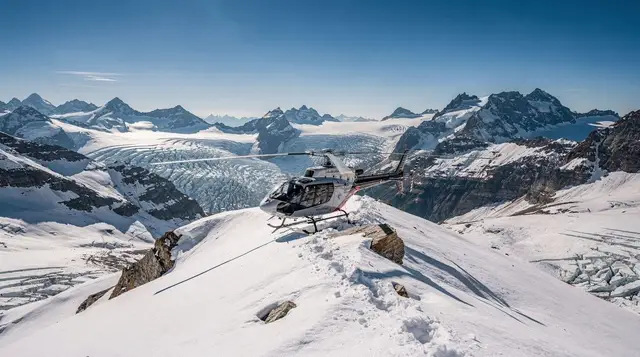
A helicopter flies you from Franz Josef township onto Kā Roimata o Hine Hukatere in about five minutes, where a guide fits crampons and leads two to three hours walking on the ice. Cancellation for weather is common at any time of year, so build a spare day into your itinerary rather than booking for your only day in town.
Why the helicopter isn’t optional
Franz Josef and Fox Glacier used to be walk-up attractions. Guided groups climbed onto the ice from the valley floor, and for decades that was the whole story of visiting Franz Josef Glacier. That changed in 2012, when the terminal face retreated up a steep section of unstable valley wall that guides could no longer access safely on foot. Ground access has been closed ever since, on both Franz Josef Glacier and Fox Glacier, and it isn’t reopening as the ice keeps retreating.
The only way onto either glacier now is by helicopter. That single fact reshapes the whole day: cost, timing, weather sensitivity, and what you actually see. If you want the postcard view of the glacier without landing on it, Lake Matheson gives you that reflection for the price of a walk, and it’s worth doing regardless of whether the heli-hike goes ahead.
How the day unfolds
Check-in happens at the operator’s office in Franz Josef township, usually 30 to 60 minutes before your scheduled flight time — though on marginal weather days, operators often ask you to check in earlier and wait for a call, rather than commit to a fixed slot. You’ll be weighed (helicopters have strict payload limits), fitted with boots and a jacket if you haven’t brought your own, and sat through a safety briefing covering crampon use, helicopter boarding procedure, and what to do if the weather closes in while you’re on the ice.
The flight itself is short: about five minutes from the heliport to a landing spot on the glacier, low enough over the rainforest and the lower icefall that it’s worth having a camera ready before you’ve properly settled into your seat. This is temperate rainforest running almost to the ice edge, one of the more unusual pairings of vegetation and glacier anywhere in the world, and it’s easy to miss because the flight is so brief.
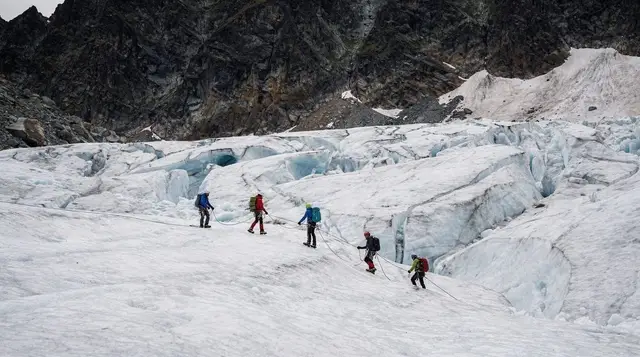
Once you land, a guide fits crampons over your boots and the walking begins. Standard hikes run two to three hours on the ice, moving across crevasse fields, ice caves, and blue ice tunnels that the guides carve and monitor day to day — the terrain literally changes week to week as the glacier moves, so no two visits look quite the same. Guides carry the group’s safety gear and set the pace; you’re not required to have any ice-walking experience.
At the end of the walk, the helicopter returns to collect you and flies you back to town, and the whole outing — briefing to being back at the office — typically takes three to four hours.
| Stage | Approximate time |
|---|---|
| Check-in and gear fitting | 30–60 min |
| Safety briefing | 15–20 min |
| Helicopter flight (each way) | ~5 min |
| Time walking on the ice | 2–3 hours |
| Total, door to door | 3–4 hours |
What the gear actually feels like
Crampons are the main adjustment. They’re metal spikes strapped or clipped to the boots, and walking in them takes a few minutes to feel normal — you plant your foot flatter than usual and let the spikes do the gripping rather than rolling onto the toe as you would in ordinary boots. Guides demonstrate this before you set off, and the pace on the ice is deliberately unhurried.
Boots, crampons, and often a waterproof outer layer are included in the tour price; check what’s supplied when you book, since it varies slightly between operators. What you need to bring yourself is warm layers underneath — merino or fleece rather than cotton — gloves, and sunglasses. The glare off the ice is strong even under cloud, and the air on the glacier is noticeably colder than in the township regardless of season.
Terrain on the ice ranges from flat, snow-covered sections to short, guided scrambles up ice steps, plus walks through carved tunnels and past seracs. It’s active walking, not a stroll, but it’s not technical climbing either — the guides choose the day’s route around what’s safely walkable.
Walking on the ice: pace, photos and group etiquette
Once the crampons are on, the rhythm of the day is set by the guide, not by the fastest person in the group. You walk in a loose line, stop often, and are asked to stay on the route that has been checked that morning. Wandering off for a better photo is the quickest way to annoy a guide, and it matters for safety as well: the edges of crevasses and the lips of ice caves are exactly where the best pictures are, and exactly where you should wait to be invited.
Keep your hands free. Gloves are easier to manage than you expect, but a phone gripped in a bare hand while you plant spikes on sloping ice is how people lose their footing. A wrist strap or a pocket you can zip closed does more for your photos than any camera upgrade. Most guides will happily take a group shot at a safe spot, so ask rather than improvising.
Take the stops seriously too. When a guide pauses to explain how the ice moves or why a tunnel has changed since last week, that is the part of the day that turns a walk into something you understand. The glacier is a slow river, and the blue you see in the deeper ice is the reward for listening to the explanation instead of rushing ahead.
Fitness, age and who should sit this one out
Most operators set a minimum age of around 10 to 12 for the standard walking tours, with no fixed upper age limit provided you’re reasonably mobile and can walk on uneven ground for two to three hours. There’s no requirement to be particularly fit, but you should be honest with yourself about stamina and balance before booking, since turning back partway through isn’t simple once you’re on the ice with a group.
If mobility, very young children, or a fear of heights in a small helicopter rule out the walking version, the shorter flights are the better fit. A pure scenic flight with a snow landing gets you onto the ice and gives you the aerial views without the walking component, and runs 20 to 40 minutes rather than half a day.
a 35-minute flight over both Franz Josef and Fox Glacier, with a snow landing but no walking is the simplest way to see both icefields from the air in one outing, and it’s considerably more weather-tolerant than the full hike because it doesn’t need three consecutive hours of clear conditions.
Heli-hike, scenic flight, or snow landing: which one
These get bundled together in marketing but they’re genuinely different products, and picking the wrong one for your interests wastes money either way.
| Tour type | Time on ice | Flight time | Best for |
|---|---|---|---|
| Scenic flyover, no landing | None | 20–35 min | Photos, tight schedules, motion-sensitive travellers |
| Snow landing, no hike | 10–20 min standing on snow | 25–40 min | A taste of the ice without the walking commitment |
| Full heli-hike | 2–3 hours walking | ~10 min total | Ice caves, crevasses, a proper glacier experience |
| Multi-glacier flight | Landing on one or both | 30–45 min | Seeing Franz Josef and Fox Glacier together |
the 2.5-hour glacier hike with helicopter transfer is the standard version most people mean when they say “heli-hike,” and it’s the one that actually gets you walking through ice tunnels and crevasse fields rather than just standing near them. For a shorter alternative that still puts you on the snow with a landing but trims the walking time and the price, the Grand Tour by helicopter with a snow landing covers more ground from the air and is a reasonable compromise if a full afternoon on the ice isn’t what you’re after.
For alpine and glacier landings explained in more general terms, including how these compare to helicopter tours over The Remarkables and other alpine terrain near Queenstown, see our separate guide on helicopter tours around Queenstown — useful context if you’re weighing a Queenstown-based flight against travelling to the glaciers.
The cancellation problem — and the two-day rule
This is the part brochures gloss over. Heli-hikes are cancelled for weather often, and not only in winter. The West Coast sits directly in the path of weather systems coming off the Tasman Sea, and conditions at glacier altitude — wind, cloud base, visibility — can be unflyable even when it looks clear and mild down in Franz Josef township. Helicopters need a real weather window, not just an absence of rain.
There’s no published annual cancellation rate that operators advertise, for obvious reasons, but talk to anyone who’s spent time in the township and the pattern is consistent: multi-day cancellations happen through every season, and travellers who’ve allowed only one day for the glaciers regularly miss out entirely. This is one of the most avoidable disappointments in this part of New Zealand, because the fix is simple and doesn’t cost anything beyond time: build two full days into your Franz Josef stop, not one, so a cancelled morning can roll to the afternoon or the following day rather than ending your chance altogether.
Most operators offer a free reschedule if they cancel for weather, sometimes a refund if no other slot works within your stay — check the specific policy when you book rather than assuming. What no policy can fix is a one-night stop where you’re due in Queenstown or on a flight out the next morning; that itinerary simply doesn’t leave room for New Zealand weather to cooperate.
If your route runs through the region as part of a longer loop, Queenstown to Franz Josef and the four-day itinerary to the West Coast glaciers both build in the extra day rather than treating the glacier as a single-day tick-box, which is the more realistic way to plan around this.
Fitting the glacier into a longer trip
Most people who book a heli-hike are not based in Franz Josef at all. They are crossing the South Island, usually between Queenstown and the east coast, and the glacier is one stop in a longer loop. That makes the order of your route important. Reach the glaciers early in the trip, with spare days still ahead of you, and a grounded helicopter costs you a rescheduled morning. Reach them at the end, with a flight home already booked, and the same weather costs you the whole experience.
The drive up the coast is part of the appeal rather than a chore to be endured. Driving in New Zealand’s South Island covers the practical side, and the road over Haast Pass is one of the scenic highlights of the whole country, with Makarora and Lake Hawea making natural places to break the journey. If you would rather not drive at all, buses and shuttles around the southern lakes explains what is realistic.
If you are still deciding between the two West Coast glaciers, Franz Josef versus Fox Glacier lays out the differences in more detail than there is room for here. And if the weather wins and the helicopters stay on the ground, the Queenstown rainy-day guide and the advice in what the brochure doesn’t say about glaciers are worth reading before you decide how much flexibility to build in.
Setting honest expectations
A glacier heli-hike is memorable, but it is not a wilderness expedition. You will be with a group, on a route chosen for safety, with a helicopter waiting at both ends. That is exactly why it works for people with no mountain experience, and it is also why it helps to arrive without a fixed picture in your head. Some days the ice is dazzling and the sky is clear; on others the cloud sits low, the light is flat, and the experience is quieter and moodier. Both are real glacier days, and neither is a failure of the tour.
What you can control is preparation. Read the cancellation terms, pack your warm layers, give yourself a spare day, and decide beforehand which version of the trip suits your budget and your appetite for walking. Do those four things and the rest is down to the mountains, which have always set the terms on this coast.
Booking tips and what else to see while you wait
Book ahead in summer (December to February), when demand is highest and good-weather slots fill first, but don’t pay in full without checking the cancellation and rescheduling terms. Morning flights are sometimes marginally more reliable before afternoon cloud builds over the mountains, though this isn’t a guarantee and operators will tell you conditions can flip either way through the day.
While you’re waiting out weather in Franz Josef, Lake Matheson is an easy walk with a well-known reflection view of Aoraki on a calm morning, and doesn’t depend on a helicopter being able to fly. Fox Glacier, 25 kilometres south, is worth the drive even without a tour booked, for the valley approach alone.
For travellers coming from Queenstown, weigh the heli-hike against Tasman Glacier from Queenstown, which is closer and involves less driving but is a different, generally shorter kind of glacier experience. And because helicopter tours, like skydiving in Queenstown and other weather-dependent activities, are commonly excluded from standard travel insurance policies, it’s worth reading travel insurance for adventure activities before you book, and checking your own policy’s wording specifically for helicopter flights and glacier travel.
Finally, don’t assume the cheapest flight-only option is a lesser version of the hike — it’s a different product, and for some travellers, especially those short on time or uneasy about a full afternoon on ice, it’s genuinely the better fit. Decide what you actually want to see and do before comparing prices, not after.
Glacier heli-hikes & flights on GetYourGuide
Verified deep-linked GetYourGuide tours. Book through these links and we earn a small commission at no cost to you.
GetYourGuide does not provide a product photo for this activity — the image shows the meeting point, photographed by us.